


Table of contents
Summary
- See how technology is reshaping the global automotive industry.
- An overview of the leading countries driving production and innovation in automotive interiors.
- Get monthly fashion insights straight to your inbox. Subscribe to our newsletter!
Supplying textiles for automotive interiors requires much more than production capacity. Manufacturers must deliver precision, consistent quality, and strict compliance with technical standards.
On the other side of the supply chain, automakers raise expectations even further by demanding shorter lead times. Meanwhile, international competition forces textile companies to operate more efficiently while maintaining high performance levels.
In this scenario, technology becomes a strategic asset. And this article explores how the right solutions can help solve the main challenges faced by suppliers.
Happy reading!




How big is the global automotive industry market?
The auto industry is one of the largest in the world, predicted to hit around USD 6.4 billion by 2031, according to Towards Automotive research. It connects vehicle manufacturers, parts suppliers, technology providers, and textile producers that supply materials for interiors and structural components.
For companies working with automotive upholstery and interior textiles, understanding this market size helps define growth strategies and investment priorities.
Market scale also influences production standards, delivery expectations, and innovation speed. As demand for safer, more comfortable, and more sustainable vehicles increases, suppliers must adapt quickly.
That’s why production volume, sales volume, and regional manufacturing hubs play a key role in shaping business opportunities.
Production volume
This volume creates continuous demand for interior components such as seat covers, door panels, headliners, and technical fabrics. For textile manufacturers, stable production output means long-term contracts, recurring orders, and strict quality requirements.
Sales volume
Strong sales performance usually leads automakers to expand production lines and increase orders from suppliers. For automotive textile manufacturers, this directly impacts order volumes and delivery schedules.
Main automotive production hubs around the world
Car manufacturing is concentrated in strategic regions that combine industrial infrastructure, skilled labor, and strong supply chains.
These hubs shape global manufacturing standards and influence how suppliers operate, invest, and scale production:
China
The country leads global vehicle manufacturing due to its massive domestic market and strong industrial ecosystem. For textile suppliers, this represents high-volume demand and continuous production cycles.
Chinese manufacturers also invest heavily in electric vehicles (EV) and smart mobility solutions. This shift creates new opportunities for advanced interior materials, lightweight fabrics, and innovative upholstery designs.
At the same time, competition in the Chinese market remains intense. Suppliers must focus on efficiency, automation, and cost control to remain competitive.
Read more: 4 advantages of technology in automotive furniture design
United States
The United States hosts large production plants and advanced manufacturing facilities that serve both North America and international markets.
American automakers increasingly focus on customization and premium interior features. It drives demand for high-quality upholstery, durable materials, and flexible production capabilities.
For suppliers, working with US manufacturers often requires compliance with strict regulatory standards.
Germany
Germany is widely recognized for engineering excellence and high-quality vehicle production. The country is home to some of the world’s most prestigious automotive brands and advanced manufacturing technologies.
Companies there place strong emphasis on precision, performance, and interior quality. This creates demand for premium textiles, innovative materials, and extremely accurate cutting processes.
Japan
Its manufacturing culture focuses on lean processes, waste reduction, and continuous improvement. Japanese automakers prioritize reliability and long-term durability.
This directly affects material selection and upholstery performance standards, especially for high-use interior components. For textile manufacturers, this market rewards operational excellence and production consistency.
South Korea
South Korea has established itself as a global automotive production hub with strong export capacity. The country combines modern manufacturing facilities with high levels of automation.
Korean automakers invest heavily in technology, design, and smart vehicle features. Suppliers benefit from this dynamic environment but must keep pace with rapid innovation cycles.
Flexible production systems become essential to adapt to changing product requirements.
Read more: Benefits of investing in an automatic fabric cutting machine
India
The country continues to expand its automotive production capacity, attracting investments due to its growing domestic market and competitive manufacturing costs.
Their automotive sector focuses on scalable production and affordability while improving interior quality standards. As production volumes increase, manufacturers also invest more in automation and digitalization.
Read more: All you need to know about global industrial production
Why are automotive interiors important to a vehicle’s final value?
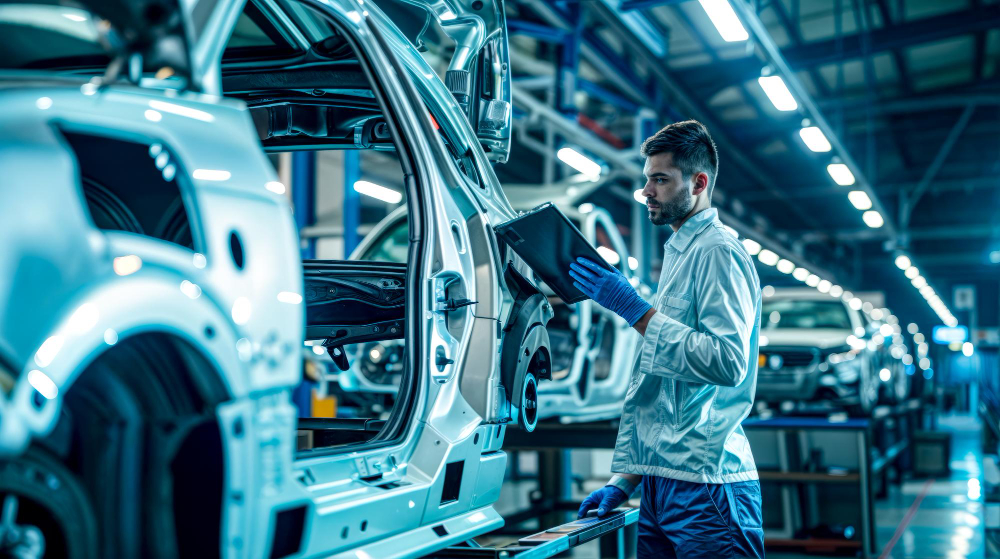
Automotive interiors strongly influence how customers perceive a vehicle. Comfort, visual quality, and material finish directly affect the first impression when someone enters a car. Seats, panels, and upholstery help define whether a model feels premium, standard, or entry-level.
Interior quality also impacts long-term customer satisfaction. Durable fabrics, ergonomic design, and resistance to wear improve the ownership experience. Vehicles with well-designed interiors tend to retain value better and generate stronger brand loyalty.
From a manufacturing perspective, interior components represent a significant portion of production costs. For this reason, automakers expect suppliers to deliver consistent quality while maintaining cost control.
Read more: Discover how machines that cut fabric can improve production
How can I choose durable fabrics for automotive upholstery?
Choosing the right fabric goes beyond appearance. Automotive upholstery must withstand daily use, temperature variations, friction, and exposure to sunlight. Durability ensures longer product life cycles and reduces warranty claims and replacement costs.
Performance testing is another key factor. Materials should meet industry standards for abrasion resistance, flame retardancy, and color fastness.
Production compatibility also matters. Fabrics must perform well during cutting, sewing, and assembly. Materials that are easy to handle and stable during processing reduce waste and improve manufacturing efficiency.
When selecting automotive upholstery fabrics, consider the following criteria:
- High abrasion and tear resistance
- UV and heat stability
- Easy cleaning and stain resistance
- Compliance with automotive safety standards
- Compatibility with automated cutting systems
Read more: Emerging auto trends that are shaping the future of textiles
What are the main challenges in automotive upholstery production?
The automotive market requires high efficiency, precision, and scalability. Below are the main operational challenges faced by suppliers:
High production volume
Automotive suppliers rarely work with small batches. Production programs usually involve thousands of identical parts delivered on strict timelines.
When output grows, manual operations quickly become a bottleneck. Cutting tables fill up, operators slow down to avoid mistakes, and delivery deadlines become harder to meet. In many factories, this leads to overtime, rework, and rising operational costs.
To handle large volumes efficiently, manufacturers need scalable processes. Automated cutting lines, digital production planning, and synchronized workflows allow companies to increase output without sacrificing consistency or delivery reliability.
Repeatability
Every unit must match the same dimensions, tolerances, and finishing standards. Otherwise, assembly lines face fitting issues and quality inspections become more complex.
As production runs grow longer, maintaining this consistency becomes harder. Small deviations in cutting or material positioning can multiply across hundreds or thousands of pieces.
Cutting precision
Precision directly affects both product quality and assembly performance. Poorly cut components can create tension in seams, misalignment during installation, and visible defects in finished interiors.
Manual cutting depends heavily on operator skill and fatigue levels. Over long shifts, maintaining the same level of accuracy becomes difficult. Even minor errors can result in wasted material and rejected parts.
Automated cutting systems solve this by working with exact digital patterns. The machine follows predefined tolerances, maintains consistent edge quality, and delivers identical results in every batch.
Want to discover all the benefits an automated cutting room can bring to your business strategy? Download our exclusive free guide now!
Material optimization
Fabric represents a major cost factor in automotive upholstery production. Poor marking and inefficient layout planning quickly translate into higher raw material expenses.
Digital marking solutions help manufacturers use every centimeter of fabric more efficiently. By optimizing pattern placement, companies reduce waste, improve sustainability performance, and protect profit margins.
Read more: What are the best leather cutting tools in the industry?
How can technology optimize automotive upholstery cutting?
Digital cutting technology changes the entire production dynamic. Instead of relying on manual layout and physical templates, manufacturers work with integrated digital patterns and automated workflows. This shortens preparation time and reduces setup errors.
Advanced nesting software plays a key role in this process. It automatically arranges patterns to maximize material usage while maintaining technical requirements such as grain direction and tolerance spacing.
Production management tools also improve operational visibility. Managers can track cutting performance, identify bottlenecks, and adjust production plans in real time.
Most importantly, technology allows suppliers to scale. Whether production increases, new models are introduced, or customization becomes necessary, digital cutting systems provide the flexibility needed to adapt without disrupting workflow stability.
Increase your automotive production with Audaces technologies!
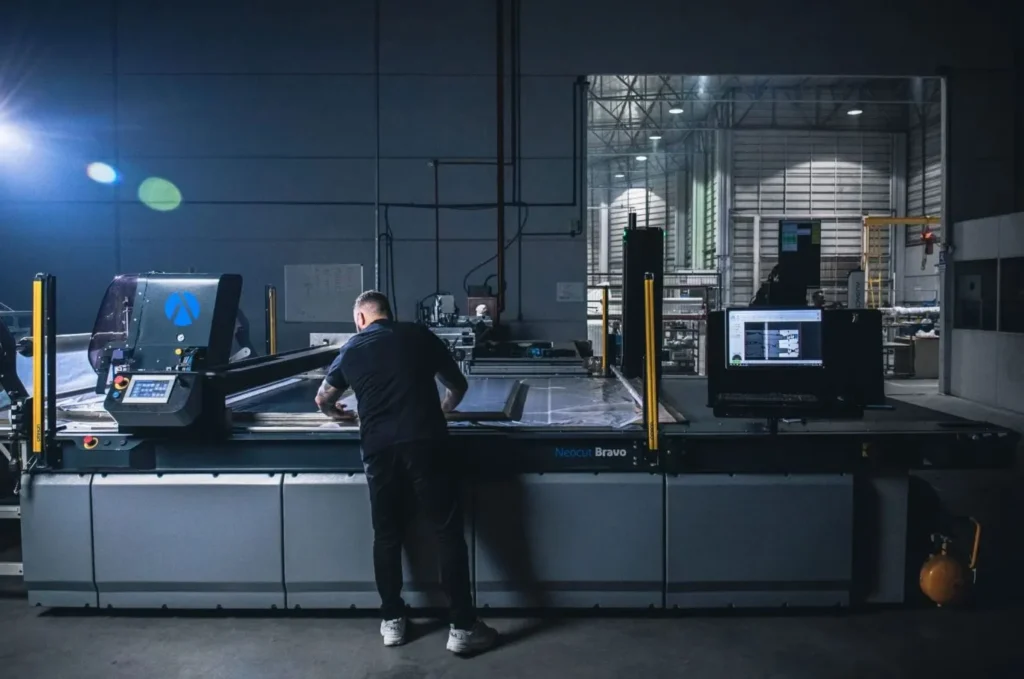
Audaces Cutting Room
By embracing cutting-edge technology, manufacturers can achieve significant improvements in the production process. From greater design flexibility to enhanced efficiency and reduced costs.
This is where Audaces Cutting Room steps in! Rely on Audaces’ cutting-edge machinery to automate your production process.
Achieve impeccable cuts on curves and details, speeding up your deliveries and minimizing fabric waste through automation.
Audaces ICF
An intelligent technology that connects people and cutting room equipment with high security. It provides the best tools for planning and managing spreading and cutting processes.
In addition to streamlining your workflow, the online platform ensures access for all stakeholders. All information is available in real time via smartphone. Managers can effortlessly schedule cut orders, specifying details like spreads, layers, cuts, and fabric quantities.
Moreover, Audaces ICF monitors and alerts about differences between planned and actual results, with automatic correction suggestions.
Ready to improve your automotive production performance? Talk to an Audaces consultant and get a free manufacturing diagnosis tailored to your business!
FAQ
The auto industry is one of the largest in the world, predicted to hit around USD 6,4 billion by 2031. It connects vehicle manufacturers, parts suppliers, technology providers, and textile producers.
They include China, United States, Germany, Japan, South Korea, and India.
Automotive interiors strongly influence how customers perceive a vehicle. Seats, panels, and upholstery help define whether a model feels premium, standard, or entry-level.