

Summary
- Knowing key production terms helps managers make faster, safer decisions on the factory floor.
- Clear terminology improves communication between teams, suppliers, and partners.
- Get monthly industry insights straight to your inbox. Subscribe to our newsletter!
Managing textile production involves constant decisions, tight deadlines, and many technical details. In this scenario, knowing the right terms makes a real difference. It helps you understand processes better and avoid misunderstandings.
Production vocabulary also plays a key role in communication. Teams work more efficiently when everyone speaks the same language.
In this article, we explain the most important production terms every textile production manager should know. The goal is to help you stay updated and confident in daily routines and strategic decisions.
Happy reading!

Why staying up to date with production terms matters
Knowing the right production terms helps you understand what is really happening and react quickly when something changes.
This reduces mistakes, which is great because misinterpreting a concept can lead to wrong decisions, rework, or delays. On the other hand, when everyone uses the same vocabulary, processes become more consistent and easier to control.
Another important point is communication across teams. Production does not work in isolation. Planning, purchasing, quality control, and logistics depend on clear and precise information. Having familiarity with production terminology improves alignment between departments and supports better collaboration.
Finally, staying up to date with production terms means staying current with the industry.
New technologies, methods, and tools constantly reshape textile manufacturing. This knowledge helps you follow trends, understand innovations, and apply improvements with confidence.
20 production terms you need to know
Below, we highlight the key production terms every textile production manager should be familiar with.
They cover different stages of the process and help clarify how daily operations work in practice.
Production / Product development

1) CMT (Cut, Make & Trim)
CMT refers to a production model in which the factory is responsible for cutting the fabric, sewing the garment, and adding trims.
The brand or buyer supplies the fabric, patterns, and technical specifications. This model is common in textile and apparel manufacturing because it clearly defines responsibilities.
From a production management perspective, CMT helps control costs and simplify sourcing. Since materials come from the buyer, factories can focus on execution and efficiency on the production line.
At the same time, managers must ensure that all inputs arrive on time to avoid downtime.
2) Grading
This is the process of scaling a pattern to create different sizes while maintaining correct proportions.
Starting from a base size, measurements increase or decrease according to predefined rules. This step ensures consistency across the entire size range.
Because of that, grading has a direct impact on fit and customer satisfaction. A garment may work perfectly in one size, but poor grading can compromise all others.
It’s a priority to confirm that grading rules align with the brand’s sizing standards and target market.
Read more: What is grading and how to do it in 3 simple steps
3) Pattern making
It’s the stage where garment shapes are created based on design specifications and measurements.
These patterns guide both cutting and sewing, making them the foundation of the entire production process. Any error at this stage tends to multiply downstream.
Today, many companies rely on digital pattern making tools. These solutions improve accuracy, speed up revisions, and simplify collaboration. They also integrate more easily with grading and cutting processes, creating a smoother workflow.
4) Marker making
Marker making is the process of arranging pattern pieces on the fabric to optimize material usage.
The main goal is to reduce waste while respecting fabric grain, direction, and technical constraints. Even small layout improvements can make a difference.
Because fabric represents a large portion of production costs, marker efficiency is closely monitored by production managers. Poor marker planning leads to higher consumption and lower margins, especially in large production runs.
For this reason, automated marker making software has become standard in industrial environments.
Read more: The ultimate guide to create a marker for fabric cutting
5) Sample / Prototype
A sample, or prototype, is the first physical version of a garment produced for evaluation. It allows teams to assess fit, construction, materials, and overall design before moving forward. At this stage, issues are easier and cheaper to fix.
Prototypes play a key role in risk reduction. They reveal sewing difficulties, measurement inconsistencies, or fabric behavior that may not appear in technical documents.
When sampling is well managed, approvals happen faster. Clear evaluation criteria and smooth communication between teams help prevent delays later in the production cycle.
Discover how to create perfect patterns and markers in just a few clicks with our exclusive ebook!
6) Top sample
The top sample is the final approved version of a garment before bulk production begins.
It incorporates all corrections made after previous samples and serves as the official reference for manufacturing.
Keeping the top sample available on the production floor supports consistency. It also helps quality control teams quickly identify deviations during manufacturing.
7) Bulk production
It’s the stage where garments enter the manufacturing process in large quantities after final approval. By this point, materials, patterns, and processes must be fully clear. Any late adjustment can generate significant costs.
Because of this, planning becomes critical. Production managers must coordinate schedules, labor, and material flow to meet deadlines. A small disruption can quickly affect delivery dates.
Read more: How can mass production boost your apparel manufacturing?
8) Yield
Yield refers to how efficiently a company uses fabric during cutting. It’s usually a percentage comparing usable fabric to total fabric consumption. A higher yield means less waste and better cost efficiency.
This is a key indicator because fabric is one of the main cost drivers. Low yield increases consumption and directly impacts margins. Improving this metric often becomes a strategic priority.
Better pattern making, grading, and marker making all contribute to higher yield. In this context, technology plays an important role by identifying optimization opportunities that manual processes may overlook.
9) Laser cutting
This technology uses a focused laser beam to cut fabric with high precision. It delivers clean edges and accurate reproduction of pattern shapes, which is especially useful for complex designs.
In production, it improves consistency and reduces fabric distortion. Laser cutting can also increase cutting speed for certain materials, making it attractive for specific applications.
Although the initial investment is higher, it can reduce waste and rework over time.
10) Lead time
Lead time is the total time required to complete a production cycle, from order confirmation to final delivery.
It includes development, sourcing, manufacturing, and logistics. Managing this timeline is essential for competitiveness.
Production managers track lead time to ensure realistic planning and clear expectations. Delays at any stage tend to affect the entire schedule, making visibility and coordination critical.
Reducing lead time often depends on process optimization and strong communication.
Technical documentation / Product management

11) Tech pack
It’s a detailed document that gathers all the information needed to produce a garment. It includes measurements, construction details, materials, trims, stitching instructions, and visual references.
In practice, it works as the main guide for turning a design into a finished product.
Because it centralizes technical data, the tech pack helps avoid misunderstandings during development and production.
Clear specifications reduce back-and-forth communication and make expectations explicit from the beginning. This is especially important when working with external factories or multiple suppliers.
Read more: Choosing the best tech pack software for fashion production
12) BOM (Bill of Materials)
The Bill of Materials, or BOM, lists all components required to produce a garment. Fabrics, trims, labels, threads, packaging, and quantities appear in this document.
Beyond listing materials, the BOM plays a key role in cost control. It helps calculate product costs, compare supplier options, and plan purchases more accurately. Any inconsistency in this document can lead to shortages or excess inventory.
When kept up to date, the BOM also improves traceability.
13) PLM (Product Lifecycle Management)
It refers to systems and processes used to manage a product from initial concept to end of life
In the fashion industry, PLM connects design, development, sourcing, and production information in a single environment.
By centralizing data, it improves visibility across stages. Teams access the same information, reducing errors caused by outdated files or duplicated work. This clarity helps streamline workflows and shorten development cycles.
Read more: Discover PLM and its benefits for fashion manufacturing
14) DPP (Digital Product Passport)
The Digital Product Passport is a digital record that contains information about a product’s origin, materials, and production processes. It aims to increase transparency across the supply chain and support more responsible practices.
In fashion, DPPs help document where materials come from and how companies produce garments.
Brands can share this information internally or with partners, and in some cases with consumers. As regulations evolve, this level of documentation is becoming increasingly relevant.
Beyond compliance, DPPs create opportunities for better product tracking and communication.
They help brands tell more accurate product stories while improving control over data throughout the supply chain.
Read more: What is a digital product passport in fashion?
15) SKU (Stock Keeping Unit)
A SKU is a unique code used to identify a specific product variation. Size, color, model, and other attributes usually define each SKU. This system allows to track products individually.
In daily operations, SKUs support inventory management and sales tracking.
They make it easier to monitor stock levels, identify best sellers, and avoid confusion between similar items. Without clear SKUs, errors multiply quickly.
Well-structured SKU systems also improve integration between production, logistics, and sales channels. They ensure consistency across physical stores, warehouses, and digital platforms, supporting better control and reporting.
Fabrics / Raw materials

16) GSM (Grams per Square Meter)
GSM refers to the weight of a fabric measured in grams per square meter. It’s one of the most common indicators used to describe fabric density and thickness.
Higher GSM fabrics tend to feel heavier and more structured. Meanwhile, lower GSM fabrics are usually lighter and more breathable.
This measurement influences how a garment behaves in real use. Drape, opacity, thermal comfort, and durability all relate closely to GSM. That’s why choosing the right weight helps ensure that the fabric performs as expected for its intended application.
17) PFD (Prepared for Dye)
It stands for Prepared for Dye and describes fabrics that are specially treated to receive dye evenly. These fabrics are not dyed yet, but they undergo preparation processes that remove impurities and stabilize fibers.
Because of this treatment, PFD fabrics deliver more consistent color results. This makes them especially useful in collections with specific branding or seasonal palettes.
Logistics / Supply chain

18) MOQ (Minimum Order Quantity)
MOQ refers to the smallest quantity a supplier is willing to produce or sell. It applies to fabrics, trims, finished garments, and even packaging materials. This requirement directly influences purchasing decisions.
High MOQs can limit flexibility, especially for smaller collections or test runs. On the other hand, meeting larger quantities often reduces unit costs.
Balancing these factors is essential when planning production volumes.
19) Supply Chain Management
This involves coordinating all activities related to sourcing, production, and delivery. It connects suppliers, manufacturers, logistics partners, and distribution channels into a single flow.
Technology plays an important role in modern supply chains. Digital tools support tracking, forecasting, and communication, making operations more responsive and resilient.
When information moves smoothly between stages, delays become easier to anticipate and address. This coordination helps maintain consistency and reliability.
Read more: How to overcome the challenges in the textile industry’s supply chain
20) Retail
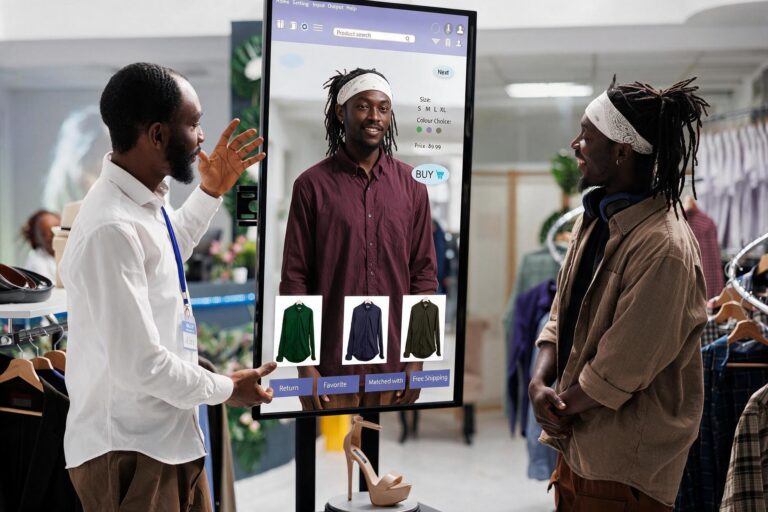
Retail represents the point where products finally meet the consumer. Whether through physical stores or online channels, this stage transforms production work into real market presence and sales opportunities.
What happens in retail is closely tied to earlier production decisions. Fit, material quality, product availability, and delivery timing all influence how customers perceive a brand.
When production and retail expectations are aligned, the customer experience becomes more consistent and reliable.
At the same time, retail does not mark the end of the process. Sales results, stock rotation, and consumer behavior generate valuable data that feeds back into planning and development.
These insights help shape future collections and improve supply strategies over time.
Speed up your fashion production with Audaces Cutting Room
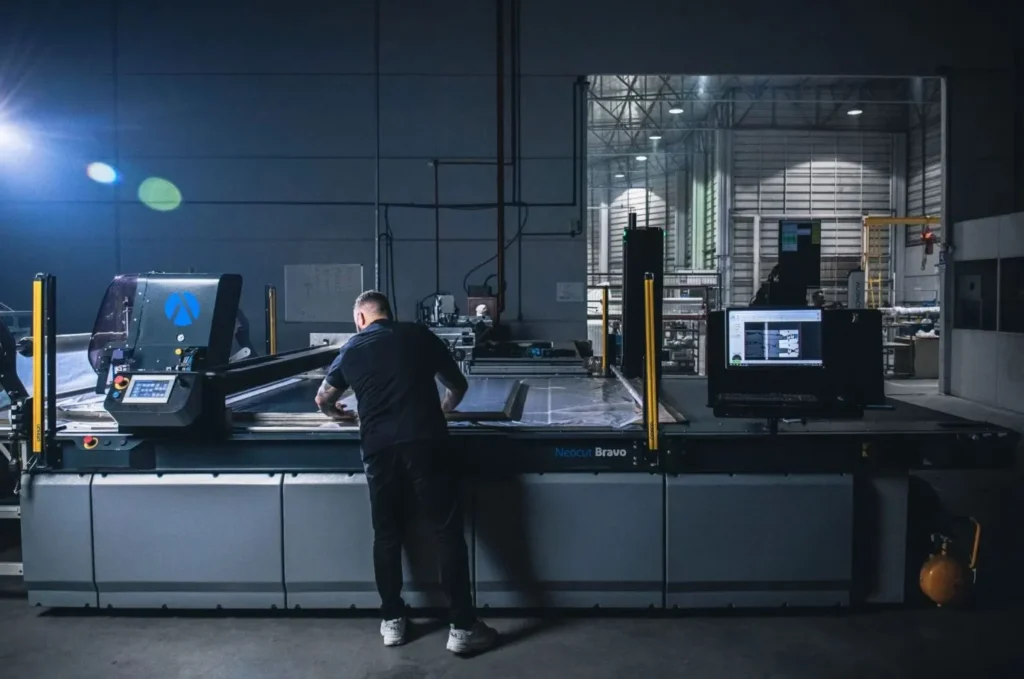
By embracing cutting-edge technology, garment manufacturers can achieve significant improvements in the production process. From greater design flexibility to enhanced efficiency and reduced costs.
This is where Audaces Cutting Room steps in! Our experts will thoroughly assess your company’s needs and create a comprehensive report.
Then, our team will develop a personalized project to achieve your goals and unlock your company’s full potential.
Rely on Audaces’ cutting-edge machinery to automate your production process. Achieve impeccable cuts on curves and details, speeding up your deliveries and minimizing fabric waste through automation.
Was this article helpful? Get our latest content first by subscribing to the Audaces newsletter!
FAQ
They include CMT, grading, pattern making, marker making, top sample, bulk production, and yield.
They include tech pack, BOM, PLM, DPP, and SKU.
They include GSM (Grams per Square Meter) and PFD (Prepared for Dye).