

Table of contents
Summary
- Automatic fabric cutting machines improve efficiency and accuracy during production.
- This technology supports scalability and consistent product quality as your business grows.
- Get monthly industry insights straight to your inbox. Subscribe to our newsletter!
Automation is changing the way fashion and textile businesses operate. Brands of all sizes now look for tools that help them work faster, maintain consistency, and respond to demand with confidence.
One of the technologies leading this shift is the automatic fabric cutting machine. It plays a key role in improving efficiency and product quality.
In this article, you’ll discover the key differences between manual cutting and automatic systems. You’ll also explore the main benefits of automatic fabric cutting, from reduced waste to improved workflow and scalability.
Happy reading!



What is automatic cutting?
Automatic cutting is a technology-driven process that uses machinery to cut fabric with precision, speed, and consistency.
Unlike traditional cutting methods operated manually, this system follows digital instructions sent directly from a cutting system. The result is a cutting process that’s faster, more accurate, and less dependent on manual intervention.
This technology plays a strategic role in modern fashion and textile production. As collections become more diverse and production timelines get shorter, automatic cutting helps businesses respond quickly to demand.
It ensures quality and precise cutting, even when working with complex or delicate fabrics.
Automatic cutting also improves workflow efficiency. Since the machine automatically follows the predefined layout, it reduces errors and minimizes rework. It creates a more streamlined production, which is especially valuable when scaling or working with tight deadlines.
Automatic cutting vs. manual cutting: what’s the difference?
Manual cutting depends on the experience and accuracy of the operator. While skilled professionals can achieve good results, manual processes often lead to inconsistencies. Fatigue, fabric movement, and human error can affect quality, especially in industrial-scale operations.
In contrast, automatic cutting relies on digital files and advanced mechanisms to deliver consistent results. The machine maintains precision from the first cut to the last, regardless of quantity
Another clear difference is speed.
Manual cutting is slower and requires multiple steps, while automatic cutting works continuously with minimal interruption. That means faster turnaround times, better use of labor, and more competitive production capacity.
What does an automatic fabric cutting machine do?
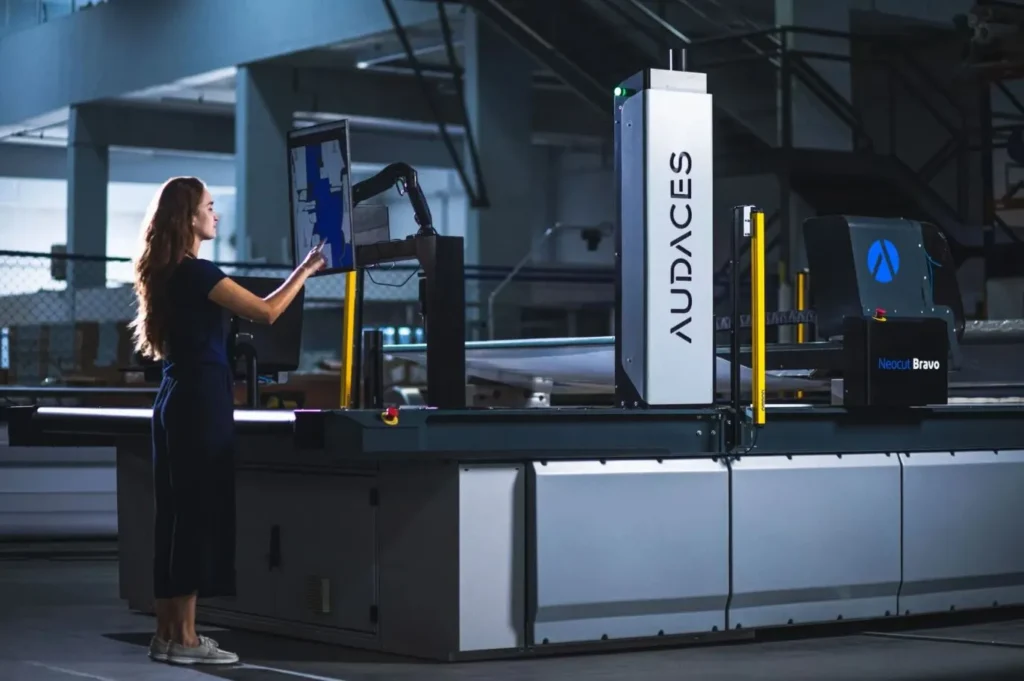
An automatic cutting machine reads digital layouts to cut fabric with accuracy and speed. It uses technologies like vacuum systems, sharp blades, and automated positioning to ensure each layer stays aligned.
These machines can cut single or multiple layers of fabric, depending on the model.
They usually support different types of fabrics and materials, from knits and denim to technical or delicate textiles. That makes them suitable for many segments, including fashion, uniforms, upholstery, and accessories.
Read more: Discover how machines that cut fabric can improve production
Key benefits of an automatic cutting machine
Cutting quality
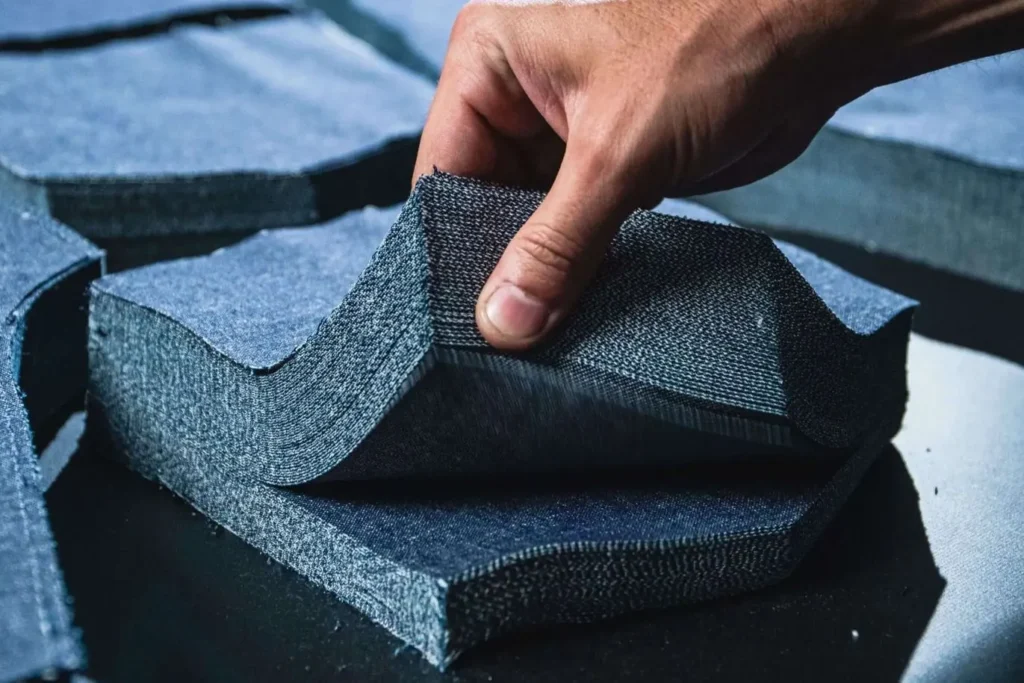
Fabric cutters deliver clean lines and accurate cuts that respect the original pattern measurements. This level of reliability helps prevent fitting issues and reduces correction work later in production.
Since the cutting process follows a standard, the final result remains consistent across batches. This guarantees uniformity in production, essential for professional brands with multiple sizes or mass-production requirements.
Better finishing
With sharper and more consistent cuts, garments naturally achieve a higher-quality finish. Edges remain smooth and precise, allowing seams, hems, and details to align perfectly during sewing and assembly.
This improvement also enhances the visual presentation of the product.
Whether in sewing, fitting, or final touch-ups, better cutting lays the foundation for garments that look premium.
Read more: 7 key factors to look for in the best fabric cutting systems
Fabric savings
Automatic cutting machines go beyond simple optimization: they use zero spacing technology to arrange patterns as closely as possible. This approach eliminates unnecessary gaps between shapes and maximizes every centimeter of fabric.
The result is a more efficient layout that significantly reduces waste without compromising pattern integrity or cutting accuracy.
Another advantage is the ability to handle tall and long fabric spreads with the same level of precision. It maintains alignment across layers, even in high-volume production. That means you can cut more pieces at once while still benefiting from optimized use of materials.
Easy operation
Modern cutting machines are usually intuitive and user-friendly. Operators don’t need advanced technical experience to run them because the interface guides the workflow step-by-step.
The simplicity reduces training time and eliminates dependency on highly specialized labor. It also reduces stress during production peaks, since the machine handles the most demanding work.
Fast pace with no interruptions
Once you program them, automatic cutting machines work continuously and efficiently. There’s no slowdown caused by fatigue or repetition, which often happens in manual cutting environments. This continuous rhythm supports fast production cycles.
It helps brands meet deadlines, respond to market fluctuations, and accelerate product delivery without compromising quality.
Read more: 6 benefits of a cutting room for your fashion manufacturing
Consistent production
Every piece cut today will match exactly the pieces cut tomorrow or next month, for example. And this is essential for brands that produce multiple batches. It ensures repeatability and reduces variation, even when handling different fabrics, models, or production timelines.
Sewing, assembling, and finishing stages become faster because the parts arrive standardized and ready for execution. Teams no longer need to spend extra time adjusting shapes, correcting measurements, or compensating for cutting errors.
The workflow becomes smoother and more predictable, improving productivity across the entire production chain.
Want to discover all the benefits an automated cutting room can bring to your business? Download our exclusive free guide now!
How does automatic fabric cutting support sustainability?
Automatic fabric cutting contributes directly to sustainability by reducing material waste. Since the machine follows optimized layouts with zero spacing technology, every cut uses the maximum available fabric.
This efficiency lowers waste generation and reduces the need for excess raw materials. It’s especially important when working with high-impact fabrics like denim, polyester, or technical textiles.
It’s also important to remember that sustainability goes beyond environmental benefits. Automation also supports safer working conditions. Since the operator focuses on controlling the technology, the risk of injuries and physical strain decreases.
It’s a more conscious and balanced approach that improves both environmental management and workplace well-being.
Why is it essential to upgrade your cutting machine?
Technology evolves quickly, and keeping your cutting machine updated ensures your production remains aligned with new industry standards.
Updates bring better performance, new features, enhanced reliability, and greater integration with modern systems and software.
Artificial Intelligence
AI is transforming the cutting process by automating decision-making and adapting workflows in real time. AI algorithms analyze patterns, fabric type, and volume to recommend the most efficient way to mark and cut pieces.
It can identify repetitive errors, adjust blade movement, optimize nesting strategies, and predict maintenance needs before problems occur.
This predictive capability prevents interruptions and saves time and resources.
Read more: The ultimate 6-step guide to choosing cutting plan software
Cloud computing
Cloud computing makes cutting operations more connected and accessible. With cloud integration, you can store and access your digital patterns, nesting layouts, and production queues from anywhere.
Data stored in the cloud remains synchronized across devices and systems. Any update to a file or version is instantly available to the cutting machine and production team. This avoids confusion, prevents the use of outdated files, and improves traceability throughout the workflow.
The cloud also offers scalability. As your business grows, you can expand storage, connect more machines, and integrate new software.
Read more: How can a good cutting plan transform your production?
Internet of Things (IoT)
This technology connects the cutting machine to a broader network of devices and software. This connection allows the machine to send and receive real-time data, improving transparency and tracking throughout production.
Managers and operators can monitor performance, fabric usage, energy consumption, and machine status from anywhere.
IoT also supports automated maintenance. The system can detect irregular behavior and notify the operator or service center before it becomes a serious issue.
Smart sensors
They detect blade condition, fabric tension, vacuum pressure, and movement accuracy. If something needs adjustment, the system responds immediately to maintain stability and cutting precision.
These sensors also contribute to safety. They identify irregularities before they cause damage, protecting both the equipment and the fabric. This proactive approach reduces waste and prevents costly interruptions in production.
Read more: Find out which 4 cutting tools are worth your investment
What is the best cutting machine brand?
Choosing the best cutting machine depends on reliability, performance, support, and technological advancement. Many brands exist, but not all offer the combination of intelligent automation, precision, and long-term durability.
The ideal machine should balance cost, efficiency, and innovation to support growth and competitiveness.
Audaces stands out as a leading brand in the market, especially for companies looking to modernize production.
Our solutions are designed specifically for the fashion and textile industry. They offer intuitive operation, high performance, and seamless integration with CAD and workflow systems.
For high-quality automatic cutting, choose Audaces solutions
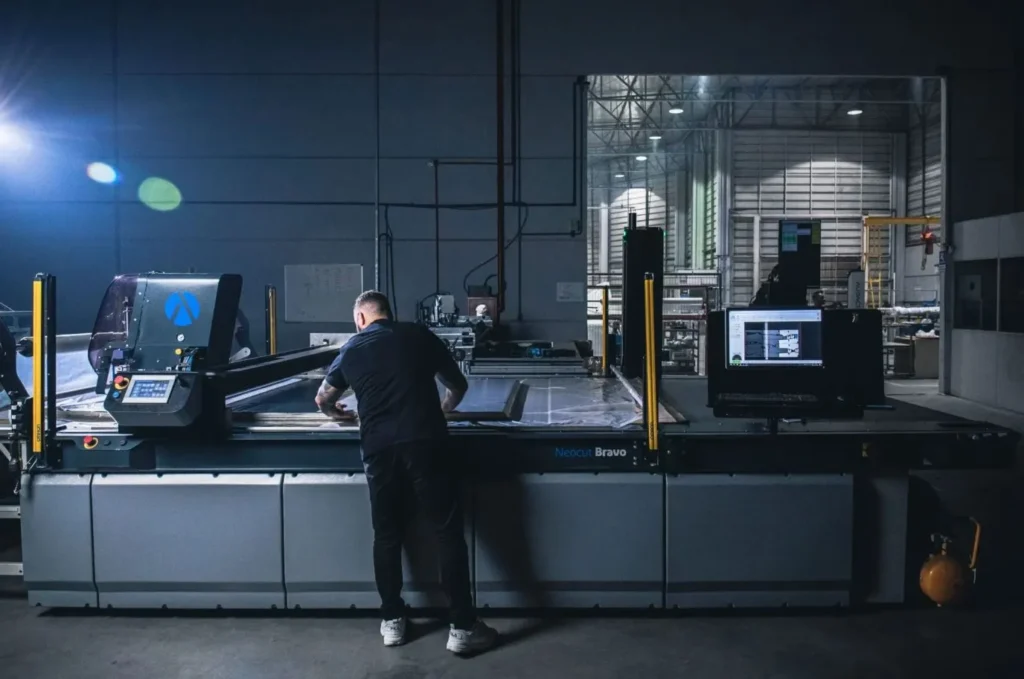
Audaces Cutting Room
By embracing cutting-edge technology, manufacturers can achieve significant improvements in the production process. From greater design flexibility to enhanced efficiency and reduced costs.
This is where Audaces Cutting Room steps in! Rely on Audaces’ cutting-edge machinery to automate your production process.
Achieve impeccable cuts on curves and details, speeding up your deliveries and minimizing fabric waste through automation.
Audaces ICF
An intelligent technology that connects people and cutting room equipment with high security. It provides the best tools for planning and managing spreading and cutting processes.
In addition to streamlining your workflow, the online platform ensures access for all stakeholders. All information is available in real time via smartphone. Managers can effortlessly schedule cut orders, specifying details like spreads, layers, cuts, and fabric quantities.
Moreover, Audaces ICF monitors and alerts about differences between planned and actual results, with automatic correction suggestions.
At first, this uniform company thought growth had to come before automation. But Audaces technology proved they could achieve both together. See how in this success story!

FAQ
Automatic cutting is a technology-driven process that uses machinery to cut fabric with precision, speed, and consistency.
Manual cutting depends on the experience and accuracy of the operator. In contrast, automatic cutting relies on digital files and advanced mechanisms to deliver consistent results.
An automatic cutting machine reads digital layouts to cut fabric with accuracy and speed. It uses technologies like vacuum systems, sharp blades, and automated positioning to ensure each layer stays aligned.