
Table of contents
Summary
- Design-led businesses place user needs at the center of product decisions from the earliest stages.
- Apparel manufacturers that adopt a design-led model tend to see stronger product-market fit, lower rework rates, and shorter approval cycles.
- Get monthly fashion insights straight to your inbox. Subscribe to our newsletter!
Apparel manufacturing has always balanced two forces: what a garment should look and feel like, and what it takes to produce it efficiently. For decades, many organizations resolved that tension by letting engineering, sourcing, and production schedules drive the conversation, with design brought in to adapt to constraints already set in motion.
A different model has been gaining ground among mid-size and large manufacturers. Design-led companies invert that sequence. Instead of asking design to fit around production logic, they build production logic around what design and customer insight indicate a collection needs to become.
Curious to learn more? Dive into the next sections and discover how your business can benefit from this model.
Happy reading!
What does it mean to be a design-led company?
A design-led company treats design as a strategic function that shapes decisions across the entire product lifecycle, not a department that receives a brief and executes it.
Design leaders participate in early conversations about collection direction, target segments, and pricing, alongside merchandising and production teams.
In practice, this means design input arrives before major commitments are locked in. Fabric selection, silhouette development, and grading strategy get evaluated through the lens of the customer experience the company wants to deliver, rather than being adjusted after the fact to accommodate a production schedule that was set independently.
The result is a product development process where creative direction and manufacturing feasibility develop in parallel, informing each other continuously instead of colliding at the sampling stage.
How design influences product strategy from the beginning?
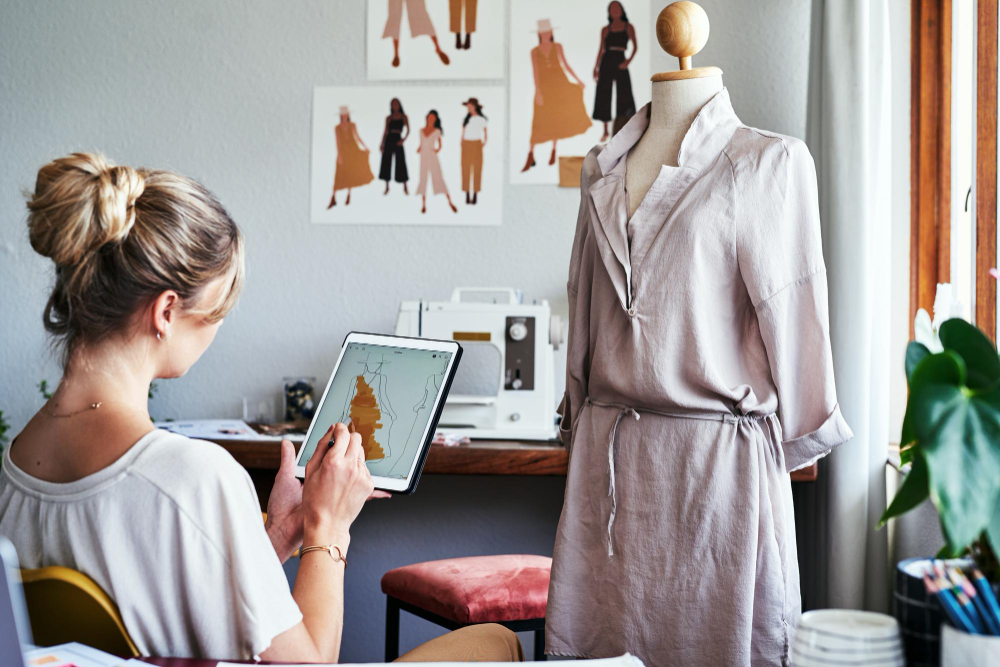
When design has a seat at the strategy table, its influence shows up long before a single pattern gets cut.
Collection planning starts with questions about who the customer is and what problem the product solves for them, and those answers inform decisions about fit, fabrication, and price architecture.
This early involvement changes how risk gets managed. A design-led team can flag that a proposed silhouette will not perform well for a target body type, or that a fabric choice undermines the durability a customer segment expects, while there is still room to adjust course.
Manufacturers that wait until sampling to surface these issues typically pay for them twice: once in the cost of rework, and again in the time lost getting a corrected version through approval.
Design-led strategy also extends into how a brand differentiates itself. Two companies working with similar fabrics and comparable production capacity can end up with entirely different market positions depending on how deliberately design decisions were tied to a defined customer need from day one.
Read more: Agile manufacturing in fashion starts with integration
What are the challenges of being design-led?
Adopting a design-led model is not a simple reorganization. It requires production, merchandising, and design teams to share information earlier and more continuously than many legacy workflows are built to support, and that shift tends to expose gaps that were previously hidden by sequential handoffs.
One common challenge is misalignment on decision rights. When design gains more influence over early-stage choices, other departments need clarity on where their authority still applies, particularly around cost targets and delivery timelines.
Without that clarity, design-led ambitions can stall in negotiation rather than translate into faster execution.
A second challenge is tooling. Teams accustomed to working from static specs and physical samples often lack a shared system for validating design decisions digitally before committing to physical production. This slows the feedback loop that a design-led approach depends on, and it is usually the point where manufacturers start evaluating platforms built specifically to support this way of working.
Cultural resistance is the third recurring obstacle. Long-established manufacturers sometimes carry a strong engineering-first identity, and shifting that mindset takes consistent leadership reinforcement, not a single directive.
Read more: How tech packs build apparel supply chain transparency
Fashion brands are reinvesting in design, quality and differentiation to compete on more than price. Download the material below to see exactly why!
The difference between design-led and engineering-led businesses
The clearest way to understand a design-led operation is to compare it directly with the engineering-led model many manufacturers still run today, starting with what sets each one apart.
Design-led
Design-led companies start product development with customer insight and creative direction, then work backward to determine how production can support that vision. Feasibility conversations happen early and iteratively, which keeps design intent largely intact through to the finished product.
Decision-making tends to be cross-functional, with design holding meaningful influence over collection direction rather than reacting to constraints set elsewhere.
Engineering-led
Engineering-led businesses typically start from what current production capacity, machinery, and cost structures can efficiently deliver, then ask design to work within those parameters.
This sequence protects manufacturing efficiency in the short term, but it can compress creative options and lead to products that are easier to produce than they are compelling to the customer.
Why do design-led companies build better products?
The advantages of a design-led model become concrete once they are broken down by outcome, as the following points show.
Creating solutions that solve real user problems
Design-led teams build from customer insight rather than internal assumptions about what a collection should include.
That grounding makes it more likely that a finished garment addresses an actual need, whether that is fit consistency across a size range, durability for a specific use case, or a price point aligned with what a target segment is willing to pay.
Improving product usability and customer satisfaction
Usability in apparel shows up as fit, comfort, and how a garment performs in real conditions. Design-led development keeps these factors central throughout the process, instead of treating them as a final check before shipment, which reduces the number of products that underperform once they reach the customer.
Read more: How pattern grading keeps fit consistent at scale
Reducing friction throughout the customer journey
When design decisions account for the full customer experience, from how a product is discovered to how it fits and wears over time, fewer issues surface downstream.
That reduces returns, complaints, and the operational cost of resolving problems that could have been caught earlier in development.
Building stronger product-market fit through user insights
Design-led companies validate assumptions against real customer data at multiple points in development, not only at launch.
This ongoing validation makes it more likely that a collection resonates with its intended segment, rather than relying on a single upfront assumption that goes untested until sales data arrives.
Read more: How versatile clothing creates collections customers love
Increasing customer loyalty and brand perception
Products that consistently solve real problems and perform as expected build trust over time. That trust translates into repeat purchases and a brand reputation that is harder for competitors to replicate, since it is built on demonstrated product performance rather than marketing claims alone.
How can design-led companies reduce product development costs?
Cost reduction in a design-led model comes primarily from catching problems earlier.
Fit issues, fabric performance gaps, and structural flaws are far cheaper to correct during digital or early sampling stages than after a product has moved into bulk production or, worse, reached the customer.
Design-led companies also tend to reduce the number of physical samples required per style, since design decisions get validated and refined before committing to physical production. Fewer physical iterations mean less fabric waste, less time on the cutting table, and faster movement from concept to approved style.
Finally, tighter alignment between design intent and production capability reduces the back-and-forth that typically drives up development timelines.
When feasibility is assessed alongside design rather than after it, fewer styles need to be reworked or dropped late in the process, which protects both budget and calendar.
Read more: Smart strategies to optimize your garment manufacturing now
How does technology support design-led product development?
Technology closes the gap between creative ambition and production reality.
Digital tools that allow teams to visualize, adjust, and validate a design before cutting a single piece of fabric give design-led manufacturers the speed they need to iterate without the cost of physical sampling at every step.
Pattern development and grading software plays a particular role here, since it lets technical teams translate a design concept into a production-ready specification while preserving the fit and proportions the design team intended.
Collection and product lifecycle management tools add another layer, giving cross-functional teams a shared, real-time view of where a style stands, what has been approved, and what still needs review.
That visibility is what allows a design-led process to scale beyond a single collection or team, without losing the speed and alignment that made the model worthwhile in the first place.
Read more: How fashion design software cuts costs and speeds production
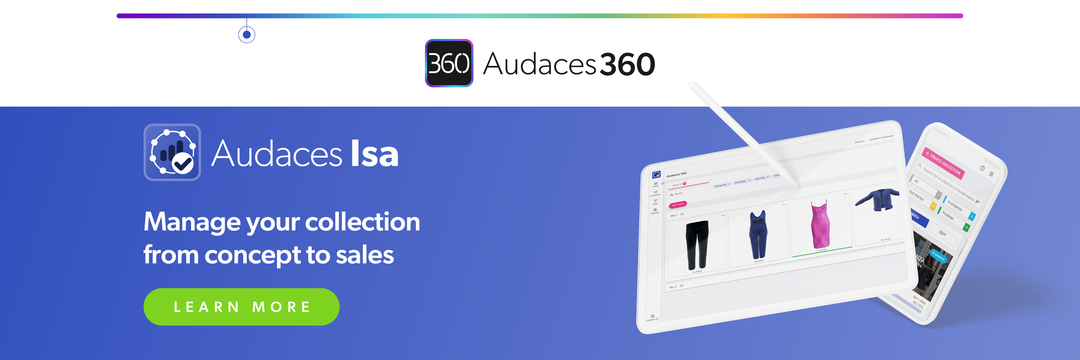
Build design-led products with the power of the Audaces360 ecosystem
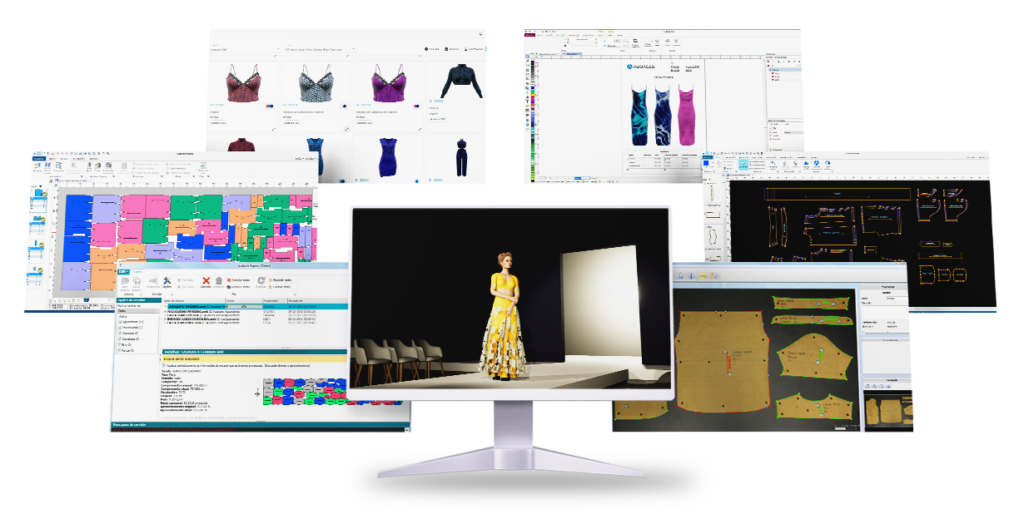
Audaces360 integrates cutting-edge digital innovations to optimize workflows in the textile and apparel industry.
It caters to companies of all sizes and types, offering the flexibility to scale with your business needs.
All solutions were carefully developed to address the specific challenges of the field. They streamline the design and production processes, saving valuable time and resources.
The platform boasts a comprehensive range of functionalities, including pattern making, marking, collection management, vector drawing, and 3D creation.
In addition, a fashion Artificial Intelligence to assist you along the way.
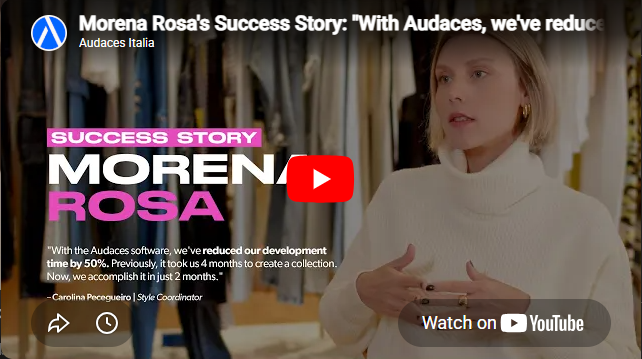
Success Story
nnovation and technology go hand in hand — and Audaces leads the way. We created the first platform to integrate every step of fashion production, from design to sales. This way, we can help brands achieve smarter and faster results.
Discover the story of how a major women’s fashion company reinvented its business with our solutions!
Want to achieve these results too? Click here and get in touch with one of our consultants.
FAQ
A design-led company treats design as a strategic function that shapes product decisions from the earliest stages, rather than a step that adapts to production constraints already set in motion.
Design-led companies start from customer insight and work backward to production feasibility, while engineering-led businesses start from production capacity and ask design to work within those limits.
Technology allows teams to visualize, validate, and adjust designs digitally before physical production, connecting collection management, pattern development, grading, and cutting into one workflow.