
Table of contents
Summary
- Virtual try-on brings the experience of trying on a garment into the digital environment.
- This technology helps consumers make purchase decisions with greater confidence.
- Discover how to bring more technology to your business with Audaces360 solutions!
Shopping for clothes online often means looking at a photo and trying to imagine how a garment will actually look once worn. Virtual try-on technology is changing that experience by offering a visualization that comes much closer to reality.
Instead of imagining how a garment will fit, consumers can see it on a representation of their own body before deciding to buy. This brings the digital experience closer to that of a physical fitting room.
The evolution of artificial intelligence has also expanded what this technology can do, making these experiences increasingly realistic.
Want to know how it works and what it can bring to your business? Keep reading!


What is a virtual try-on?
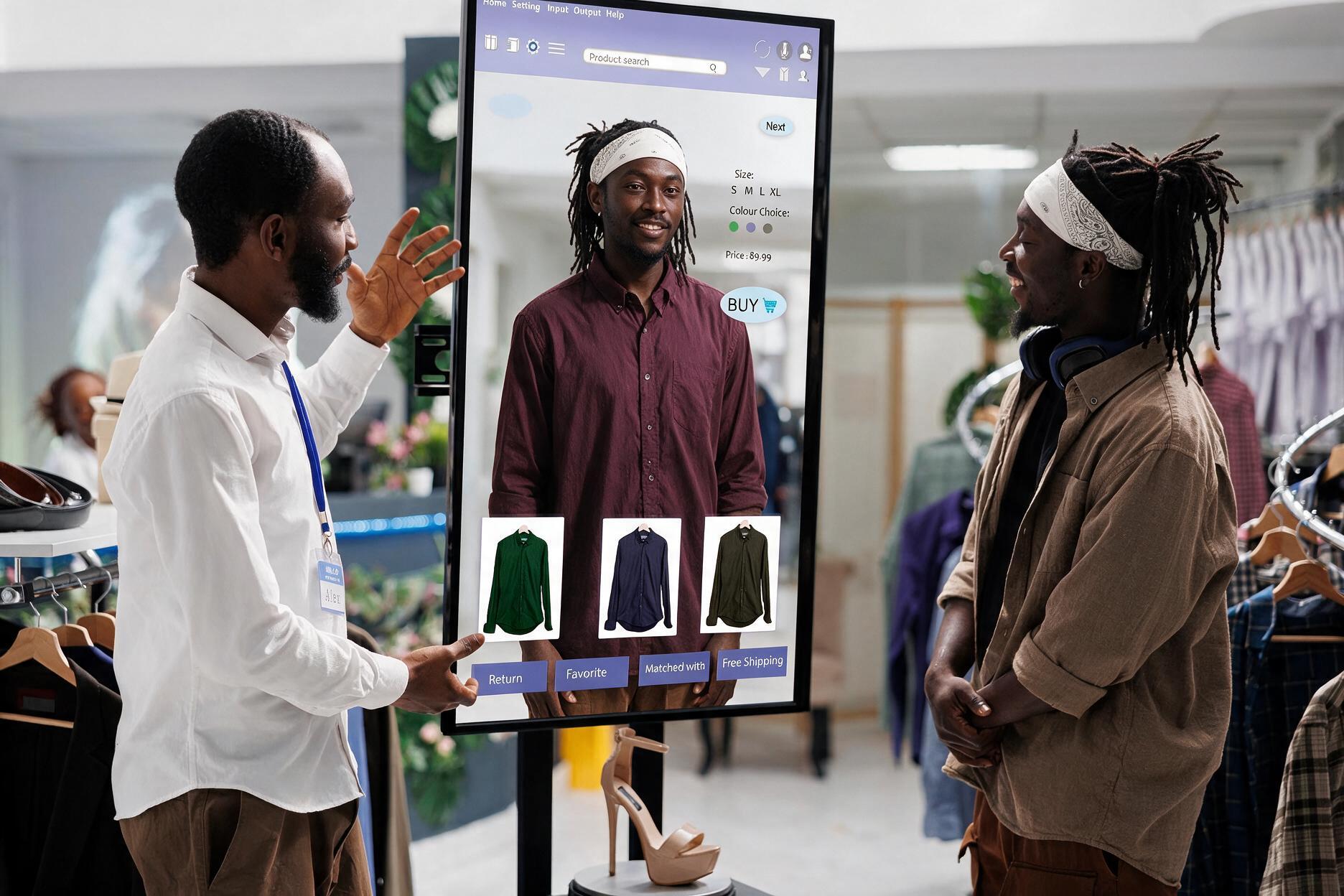
Virtual try-on is a technology that allows consumers to try on garments digitally before buying them from an e-commerce store.
In its early versions, virtual try-on relied on digital avatars to represent the consumer and simulate how a garment would look. With the evolution of artificial intelligence, it’s now possible to generate a far more realistic representation based on the user’s own images.
Although the concept is closely associated with AI today, it actually dates back to the 1990s. The earliest experiences came from kiosks that used cameras, screens, and graphics to simulate garments on the body.
During the 2000s, platforms like Polyvore, launched in 2007, brought outfit creation into the digital space, allowing users to mix garments from different brands and shop them directly from online stores.
In the 2010s, the rise of smartphones drove new augmented reality experiences. Snapchat’s filters helped popularize this technology, paving the way for applications such as virtual try-on tools for accessories and beauty products.
Between 2018 and 2020, solutions built specifically for clothing e-commerce began to emerge. However, limitations in body representation and fabric behavior still affected the quality of the results.
The rise of generative AI from 2022 onward marked a turning point for virtual try-on. AI models made it possible to generate increasingly realistic images of people wearing specific garments.
Today, virtual try-on continues to evolve, giving brands new ways to present their products and enrich the online shopping experience.
Read more: Here’s why your fashion e-commerce needs a measure tool
Why integrate this technology into my sales strategy?
Integrating virtual try-on into your sales strategy can improve the shopping experience and help consumers decide with greater confidence.
For those who prefer to shop from home, a virtual fitting room answers one of e-commerce’s biggest questions: how will this garment actually look once worn?
If you don’t have a physical store, or your store isn’t located in the consumer’s city, this technology becomes even more valuable. It brings the experience of trying on a garment closer to shoppers who buy exclusively online.
Virtual try-on can also boost customer engagement. Offering a virtual fitting experience makes shopping more interactive and engaging, encouraging consumers to explore more of the site and its products.
This kind of experience is becoming increasingly relevant as AI becomes part of the shopping journey. According to The State of Fashion 2026, nearly a quarter of consumers worldwide already use generative AI as a starting point for their purchases.
The technology can also help reduce returns. Seeing how a garment fits before buying gives consumers a clearer sense of the product than photos alone can offer.
The comparison below shows what virtual try-on can add to the traditional e-commerce experience.
Read more: The ultimate guide to creating a size guide that sells
How does AI-powered virtual try-on work?
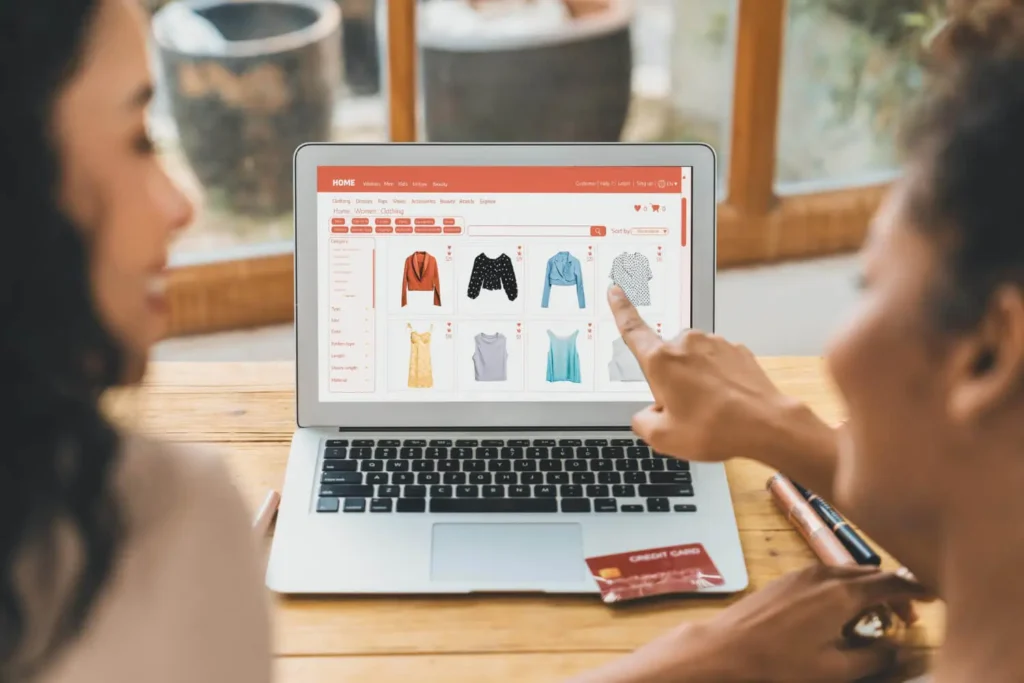
Virtual try-on uses artificial intelligence to combine an image of a person with a digital representation of a garment. The process happens in just a few steps and delivers a personalized visualization.
Image analysis
The consumer uploads their own photo to the platform. From there, the AI analyzes their body and posture to prepare the garment visualization.
Garment processing
Next, the system interprets the image of the garment so it can be adapted to the consumer’s body, keeping the garment’s appearance consistent with its original design.
Model generation
With both images processed, the AI generates a representation of the person wearing the garment. Depending on the solution, it may also allow visualization in different poses.
Real-time visualization
The result appears within seconds as the consumer explores the garment. This allows shoppers to try on different options without the wait involved in trying on each piece in a physical fitting room.
Read more: Boost your e-commerce store with a clothing virtual fitting room
Product types compatible with virtual try-on
Virtual try-on can be applied across different fashion categories. In each case, the technology helps answer specific questions that come up before a purchase.
Garments
For clothing, this experience helps consumers better understand proportions and fit on the body. A shopper considering a midi dress, for example, can check whether the hem falls near the knee or lower.
Footwear
For shoes, virtual try-on makes it possible to see how a design looks once worn, rather than relying solely on a catalog photo. This can be especially useful when choosing between styles that look nearly identical in images.
Accessories
Accessories can also benefit from an on-body visualization. With glasses, for instance, consumers can see how a frame looks on their face and judge whether it suits their features before buying.
Inclusive sizing
This technology can also broaden how garments are represented in e-commerce. Someone who doesn’t see a body similar to their own among a store’s photos can use their own image to get a closer, more relevant reference.
Want to see how AI is already reshaping fashion? Download The Fashion AI Playbook for real brand examples, a self-assessment tool, and step-by-step guidance.
How can I implement a virtual fitting room in my online store?
Implementing virtual try-on means choosing a solution that fits your catalog and how your online store operates. Before adopting it, a few key points are worth considering.
1) Choose the right technology for your product
Virtual try-on solutions work in different ways. When choosing one, it’s important to consider factors such as image realism and how long it takes to generate each result.
2) Select the app for your platform
The solution needs to integrate with the system you use to sell online. The right integration allows you to add a virtual try-on experience without creating friction in the customer journey.
3) Digitize your fashion product catalog
For the technology to generate a convincing visualization, garments need proper images and data. The better prepared your catalog is, the more consistent the virtual try-on experience will be.
Read more: What is digital clothing and how does it impact the fashion industry?
Which e-commerce platforms support virtual fitting rooms?
The main e-commerce platforms that support virtual fitting rooms are:
- Shopify: it allows you to integrate virtual try-on solutions through apps available in its ecosystem.
- WooCommerce: it can incorporate virtual fitting rooms through plugins and tools compatible with WordPress.
- PrestaShop: it allows you to add this functionality through third-party modules and integrations.
How much does virtual try-on software cost?
The cost of virtual try-on software depends on factors such as the type of system, the number of credits available, the number of try-ons allowed, and the resources included in each plan.
On the market, some services offer plans ranging from $39 to $500 a month.
Does virtual try-on really reduce clothing returns?
Results can vary depending on the technology and how it’s used, but some cases show a concrete impact on returns.
Brazilian brand Osklen, for example, recorded zero returns over three consecutive months on orders that went through Sizebay’s Size&Fit virtual fitting room.
Read more: 6 tips to reduce your fashion retail online return cost
Is it safe to use a virtual fitting room?
Safety depends on how each solution handles consumer images and data. That’s why it’s important to choose a technology with clear privacy and data-handling policies.
Uploaded images should be used solely to generate the virtual try-on experience, in line with the platform’s terms of use. In some solutions, the photo is stored only on the user’s own device, and the user can delete it at any time.
Before implementing the technology, check how images are processed and stored. That way, your store can offer a virtual fitting room experience without compromising consumer privacy.
How accurate is virtual clothing try-on?
Virtual clothing try-on can be highly accurate. This is because it uses consumer data to estimate body measurements and cross-references that information with each garment’s specific data.
Users can provide details such as weight and height, while the algorithm estimates their measurements and adjusts their digital silhouette. It then compares this information with the store’s size chart to find the best-fitting size.
Optimize cutting calculations and save fabric with Audaces
Virtual try-on can benefit both shoppers and sellers. While consumers get a closer reference for how a garment will look, e-commerce stores can offer a more complete shopping experience.
Artificial intelligence makes it possible to take this experience even further. Audaces already offers this technology through Sizebay’s Size&Fit. Learn more about this solution below.
Size & Fit
Developed by Sizebay, this solution uses artificial intelligence to recommend the best size for each consumer based on their individual characteristics. It integrates with your online store to deliver a personalized size recommendation during the shopping journey.
The Osklen case mentioned earlier also delivered other standout results with Size&Fit:
- 19% increase in average order value
- 27% more items per purchase
- 2% increase in revenue
- 13% of product pages featured visualizations with a size recommendation
Want to bring virtual try-on to your store? Learn more about Size&Fit and discover how it can transform your customers’ shopping experience.
But there’s more coming, very soon.
Audaces keeps innovating to support the evolving needs of everyone in the fashion industry. Follow us on social media to be the first to know about what’s next.
Still have questions about virtual try-on? Leave your question in the comments!
Looksmaker
Audaces continues to innovate to meet the evolving needs of those working in the fashion industry. That’s why we developed an artificial intelligence platform specifically designed for fashion creators: LooksMaker.
The platform allows you to transform references and ideas into fashion products in just a few seconds, making it easier to create and visualize new concepts.
It also features a virtual try-on tool, allowing you to see generated garments on a realistic model before producing them.
For designers, this makes it easier to visualize each concept and make adjustments before moving into production. It also helps present creations in a way that is closer to how they would look in real life.
Your next creation can start with an idea and take shape in seconds. Discover how far your creativity can go with LooksMaker:
FAQ
It’s a technology that allows consumers to try on a garment digitally before buying it online.
Compatibility depends on the solution, but it can generally be applied to clothing, footwear, and accessories.
Yes. By offering a clearer reference of the product, it can help consumers make purchase decisions with greater confidence.