
Table of contents
Summary
- Fashion is moving faster than ever, making disconnected workflows a growing competitive risk.
- Integrating design and production reduces delays, improves decision-making, and accelerates collection launches.
- Get monthly fashion insights straight to your inbox. Subscribe to our newsletter!
The fashion industry is changing. Shorter trend cycles, growing consumer expectations, and increasing pressure for efficiency are transforming the way collections are created and delivered.
In this scenario, relying on disconnected teams and fragmented processes is becoming harder to sustain. For many brands and manufacturers, the traditional separation between design and production can create problems. They include delays, rework, and communication gaps that directly impact time to market.
This is why more companies are rethinking how they develop collections and adopting fashion design software to connect creative decisions with production execution.
Enjoy your reading!

What is fashion design software and what should it do?
Fashion collections no longer move through isolated stages. Today, design decisions directly impact production costs, timelines, material consumption, and product quality. That is why fashion design software has evolved from a creative support tool into a strategic platform that connects development with execution.
At its core, fashion design software helps transform ideas into production-ready products faster and with fewer errors.
Instead of concentrating only on sketch creation, modern solutions support the entire product development journey, allowing teams to build collections with technical consistency and operational visibility.
This integration becomes increasingly important as brands face pressure to launch more collections in less time. A design that looks visually appealing but cannot be efficiently manufactured creates bottlenecks throughout the production chain.
On the other hand, when design teams can anticipate production requirements early, they reduce adjustments and accelerate approvals.
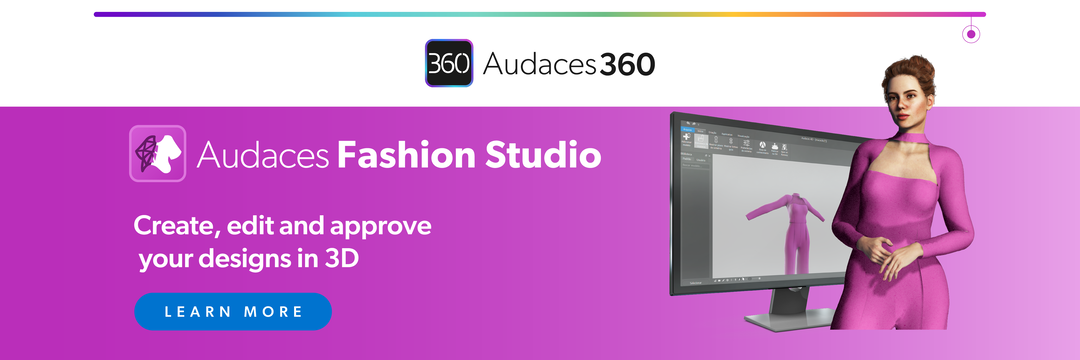
To support this reality, fashion design software should centralize information, connect teams, and eliminate disconnected workflows. Features such as digital pattern making, 3D visualization, technical specifications, marker planning, and production integration help companies move collections from concept to market with greater speed.
6 gaps between concept and production where money is lost
Many fashion companies focus on reducing material costs or increasing production capacity, but some of the biggest financial losses happen much earlier.
The good news is that most of these losses are preventable.
By identifying the critical gaps between creative development and production execution, brands can gain a stronger competitive advantage.
1) Designs that are difficult to produce
Every collection starts with an idea, but not every idea reaches production efficiently. One of the most common sources of hidden costs happens when design teams create products without considering manufacturing constraints from the beginning.
Fashion companies that integrate design and production reduce this gap significantly.
By validating feasibility earlier and creating products with production requirements in mind, teams avoid unnecessary revisions and develop collections that maintain creativity while remaining viable and scalable.
2) Failures in technical communication
Even strong creative concepts can lose value when technical information does not flow clearly between departments.
Technical communication becomes even more challenging when teams rely on disconnected tools and manual processes.
Designers, pattern makers, and production managers may end up working with different versions of the same product, increasing the risk of mistakes and duplicated work.
3) Excessive sample production

Physical samples remain important in fashion development, but producing too many prototypes can become an expensive habit.
Multiple rounds of adjustments consume fabrics, labor hours, and production capacity that could be directed toward final manufacturing.
Digital development processes reduce this dependency by allowing teams to validate fit, proportions, construction, and design details earlier.
With more accurate decision-making before physical production starts, brands can reduce unnecessary samples and shorten development cycles.
Read more: 6 signs you’re ready to move to 3D prototyping
4) Loss of efficiency in marker making and cutting
Marker making and cutting directly influence profitability in apparel production.
Small inefficiencies in fabric utilization can generate substantial losses over time, especially in high-volume operations. Decisions made during product development often determine whether materials will be used efficiently later.
Without integration between design and production, teams may discover only during cutting that a product requires excessive fabric consumption or creates operational challenges.
At that stage, correcting the issue usually means delays and additional costs.
5) Rework caused by late adjustments
The later a problem is identified, the more expensive it becomes to fix. Adjustments made after pattern approval or after production preparation often trigger a chain reaction that affects technical documents, material planning, and manufacturing schedules.
Integrated processes reduce these risks by enabling earlier validation and faster feedback cycles.
Instead of correcting problems after they spread through the workflow, teams solve issues at the source and maintain project momentum throughout collection development.
6) Time lost between approvals
Approval stages are essential to maintain quality, but they frequently become hidden bottlenecks.
Waiting for feedback, searching for updated files, or repeating validation cycles can extend collection timelines without adding real value.
Companies that connect design and production create more agile approval flows. Centralized information and faster collaboration allow decisions to happen earlier, reducing idle time.
When you can’t really speed up, the real competitive advantage is the product. Download our e-book for free and enjoy your fashion brand while transforming quality, design and perceived value into a competitive advantage.
How does integrated fashion design software eliminate these gaps?
Closing the distance between design and production requires more than speeding up individual tasks. It requires creating a connected workflow where information moves continuously across teams and decisions are made with visibility into the entire development process.
Changes made during product development automatically become accessible to other teams, reducing version conflicts, duplicated work, and communication delays.
This way, teams can validate feasibility, anticipate production requirements, and identify issues before they generate costs.
As a result, collections move faster from idea to execution while maintaining quality and operational efficiency.
How can my company close the gap between concept and real production?
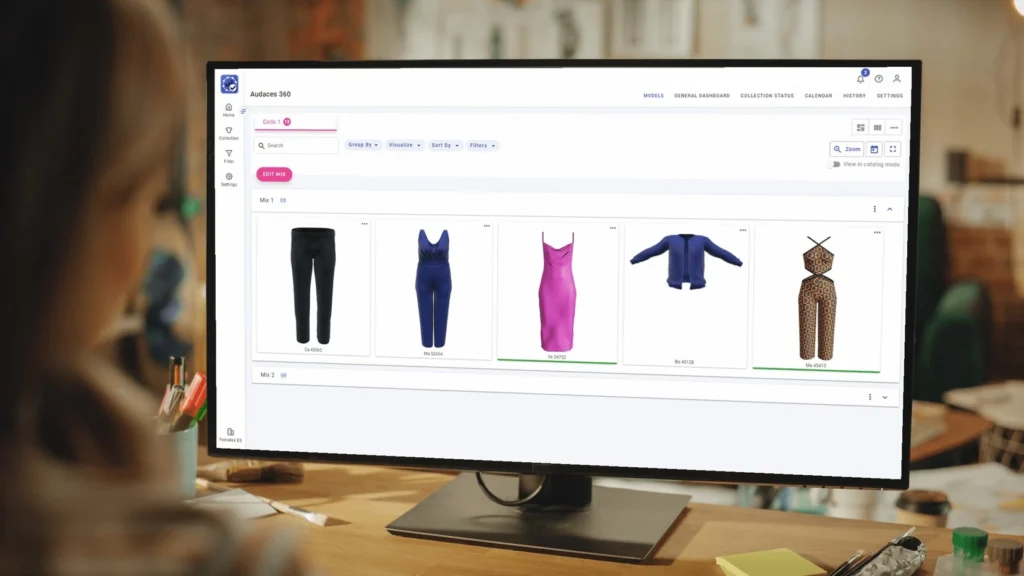
Reducing the distance between creative ideas and manufacturing execution starts with building processes that connect decisions.
Native integration between design, pattern making, and production
A fragmented approach increases the risk of inconsistencies and slows collection delivery. On the other hand, native integration changes this dynamic by allowing all areas to work with connected data from the beginning.
Design decisions become immediately visible to pattern development, while production teams gain early access to technical requirements and manufacturing considerations.
As a result, teams spend less time transferring information and more time developing products.
Read more: Explore the best fashion software options for your company
Automatic generation of technical documentation
Technical documentation plays a critical role in transforming creative ideas into manufacturable products.
However, creating specification sheets, measurements, construction details, and production instructions manually consumes time and increases the possibility of errors.
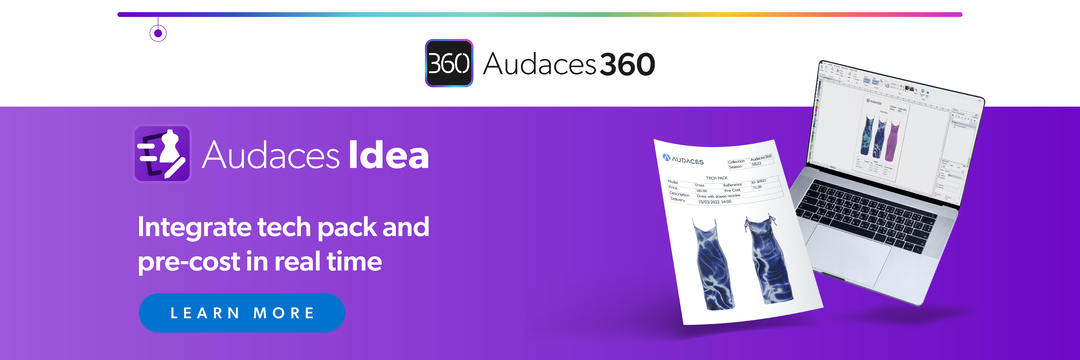
Integrated fashion design software automates much of this process by generating updated technical documentation directly from product development data.
This reduces repetitive work, improves consistency, and ensures production teams always have access to reliable information.
Compatibility with the factory floor
Digital transformation only creates value when it extends beyond product development and reaches production execution.
If design systems operate independently from manufacturing realities, companies continue facing delays and operational friction.
Compatibility with the factory floor allows technical information generated during development to be directly applied to production processes. Marker planning, cutting preparation, technical instructions, and manufacturing parameters remain aligned throughout the workflow.
Read more: How can fashion technology boost your production?
How can I structure a workflow with integrated software?
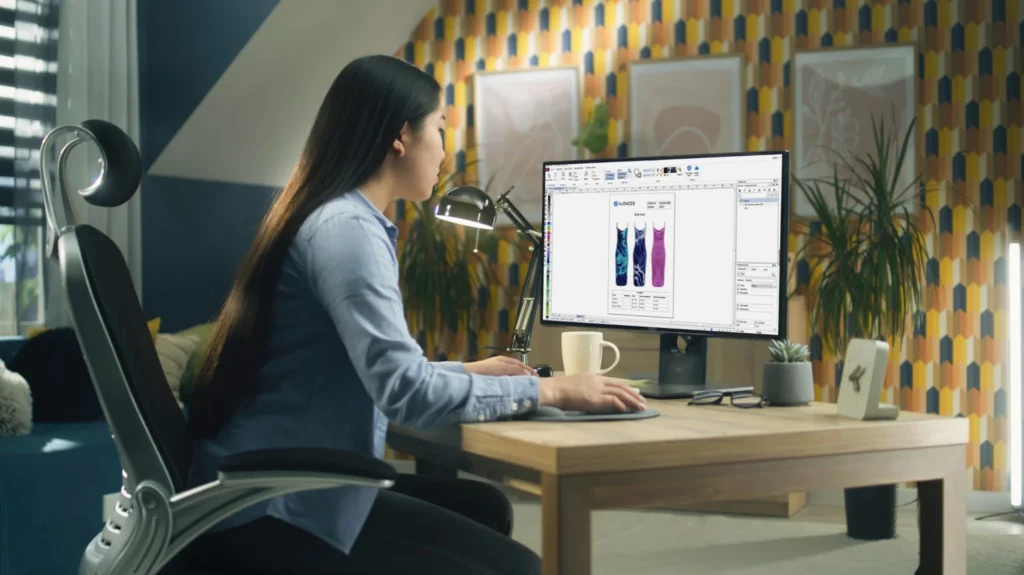
Building an integrated workflow does not mean changing every process overnight. The goal is to create a connected development journey where information flows naturally between teams, reducing manual tasks, minimizing errors, and accelerating collection delivery.
To better understand how this connection works in practice, take a look at an example of an integrated workflow:
Designers create the sketch and define materials
The collection starts with creative development, where design decisions, fabrics, trims, and product specifications are registered from the beginning and become accessible to the next stages.
Read more: How can smarter sketching optimize fashion designers’ work?
Pattern making automatically generates the size range
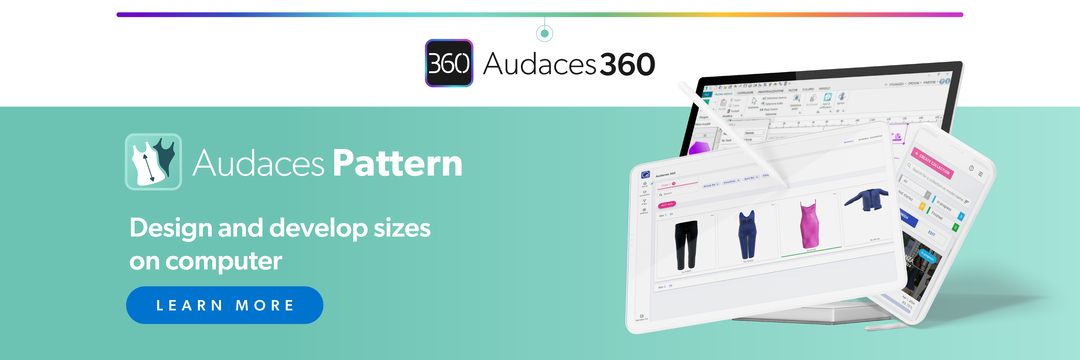
Once the model is approved, grading processes can be generated more efficiently, reducing repetitive work and ensuring consistency across sizes.
Read more: Explore clothing pattern making techniques for your production
Technical sheets are generated and approved within the system
Product information is centralized and transformed into updated technical documentation, making approvals faster and reducing communication failures.
Files move directly to marker making and cutting
Approved production data flows directly into manufacturing preparation, improving material usage and reducing delays between development and execution.
Read more: The ultimate guide to create a marker for fabric cutting
Integrate every stage of your production with Audaces360
Audaces360 integrates cutting-edge digital innovations to optimize workflows in the textile and apparel industry.
It caters to companies of all sizes and types, offering the flexibility to scale with your business needs.
All solutions were carefully developed to address the specific challenges of the field. They streamline the design and production processes, saving valuable time and resources.
The platform boasts a comprehensive range of functionalities, including pattern making, marking, collection management, vector drawing, and 3D creation.
In addition, a fashion Artificial Intelligence to assist you along the way.
Discover Audaces360 and unlock a world of possibilities for fashion design and production. Explore our comprehensive suite of solutions today.
FAQ
At its core, fashion design software helps transform ideas into production-ready products faster and with fewer errors. Instead of concentrating only on sketch creation, modern solutions support the entire product development journey.
It creates a connected workflow where information moves continuously across teams and decisions are made with visibility into the entire development process.
It can be done by adopting technologies with integration between departments, automatic generation of technical documentation, and compatibility with the factory floor.