
Table of contents
Summary
- Several AI tools now exist specifically for creating clothing designs
- Designers benefit from the speed and creative range these tools offer
- Streamline collection creation in one place with Audaces360!
Generative AI serves many purposes, including creating clothing designs digitally. Like other technologies before it, it isn’t here to replace fashion designers. It’s here to strengthen their work.
General-purpose tools can help with parts of this process. AI built specifically for fashion professionals works differently, since it understands drape, cuts, and garment construction.
Curious about how AI to create clothing designs actually works? This article digs into the topic and looks at where the technology is headed next.
Happy reading!

Does AI to create clothing designs exist?
Yes, several artificial intelligence tools built for creating clothing already exist. They go far beyond the generic image generators most people already know.
These platforms are trained to understand technical fashion concepts like drape, pattern-making, fabric types, and seam construction.
That means typing a prompt produces something close to a real garment, not just a pretty illustration with no practical use.
Some tools focus on print generation, others on silhouette creation, moodboard assembly, or fabric simulation. Each one serves a specific function within the creative process. The key is figuring out which stage of a workflow stands to gain the most from these solutions.
Why use an AI clothing generator?
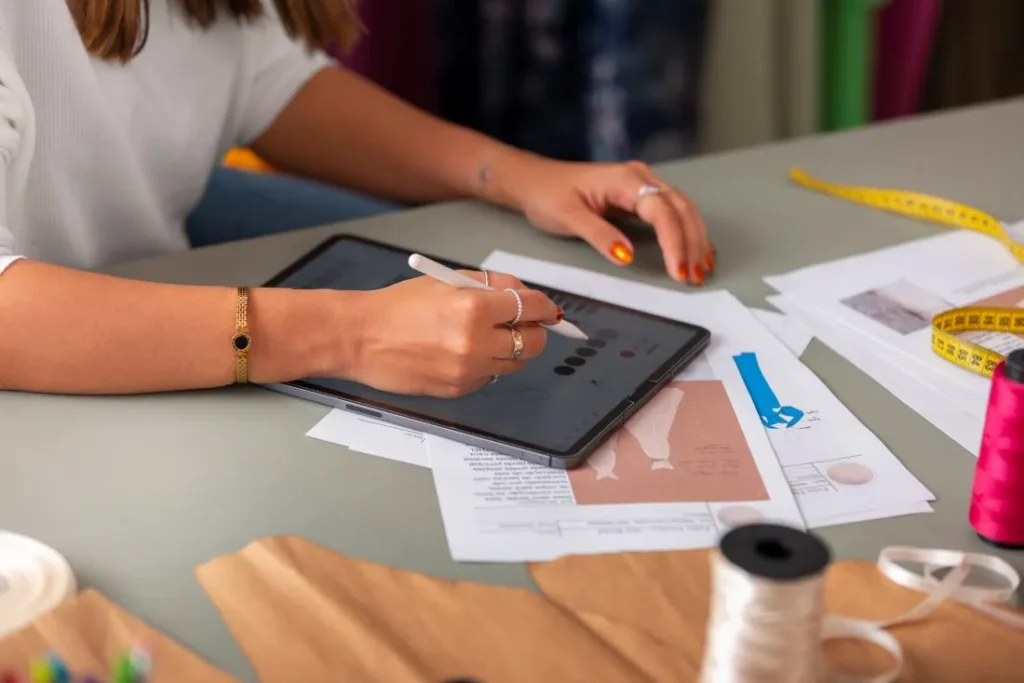
Using an AI-powered clothing generator helps designers explore more possibilities in less time.
Instead of manually sketching every variation of a piece, the tool generates different versions from a single prompt. That frees up time for more strategic collection decisions.
Here’s a closer look at the reasons why.
On-demand idea generation
Describe what’s needed and the AI delivers options instantly. This avoids creative block and widens a designer’s visual repertoire during the research phase.
Clothing concepts in minutes
What would take hours of manual sketching can shrink to a few minutes with AI support, accelerating the pace of development for entire collections.
Browser-based execution
Many of these tools run directly in a browser, with no need to install heavy software. That makes them accessible from any computer or tablet, anywhere.
Random or customized styles
Designers can request fully random suggestions for inspiration, or fine-tune every detail, such as fabric, color, and cut, to match brand identity.
Read more: Artificial Intelligence design: how to use it in your fashion creation
Will artificial intelligence replace the fashion designer?
This is probably the most common concern among fashion professionals when the topic turns to artificial intelligence. The answer is no.
AI doesn’t replace the aesthetic sensibility, cultural knowledge, and interpretive skill a designer builds over a career.
What the technology does is take over operational, repetitive tasks, like generating variations of the same piece or testing color combinations quickly. That leaves more time for the designer to focus on concept, collection narrative, and connection with the brand’s target audience.
The designer’s role becomes even more strategic in this scenario. Those who learn to use artificial intelligence as an ally will produce more, test more ideas, and reach sharper results, without losing the creative identity only a human professional can bring to a brand.
Read more: The 4 most common myths about fashion AI you should know
What do the numbers say about AI use in fashion?
The numbers show artificial intelligence already holds a meaningful place in the fashion market.
According to Fortune Business Insights, the global market for AI applied to fashion was valued at roughly $1.81 billion in 2025, with projections putting that figure above $40 billion by 2034.
That rapid growth reflects how urgently brands feel the need to adapt to an increasingly competitive, digital market.
Another relevant data point comes from industry studies: stores that apply AI to personalized shopping experiences tend to see a meaningful jump in customer satisfaction. On the production side, estimates suggest AI could help cut production waste by as much as 50% within a few years, supporting more sustainable practices. This happens because the technology makes it possible to forecast demand and test pieces digitally before any physical production begins.
Read more: Discover the current landscape of the fashion market and how to stay competitive
How does AI help cut collection creation costs?
Building a collection involves expensive stages, especially when it comes to sample garments.
Every physical prototype consumes fabric, labor, and time, even when the piece ends up discarded because it doesn’t meet the team’s expectations.
With artificial intelligence, it becomes possible to preview how a piece will look before producing it physically. This drastically cuts the number of samples needed before final approval. Fewer prototypes means less wasted raw material and fewer hours from the pattern-making team.
AI also speeds up stages like trend research and moodboard assembly, tasks that once required hours of manual digging through social media and magazines.
Communication between departments matters too. When styling, pattern-making, and product development teams work from clearer, more realistic visual references, rework drops. Fewer back-and-forths between departments translate into direct savings in time and money for a manufacturer, regardless of size.
Read more: Discover how to reduce costs in wholesale clothing production
How to use AI to create clothing designs?
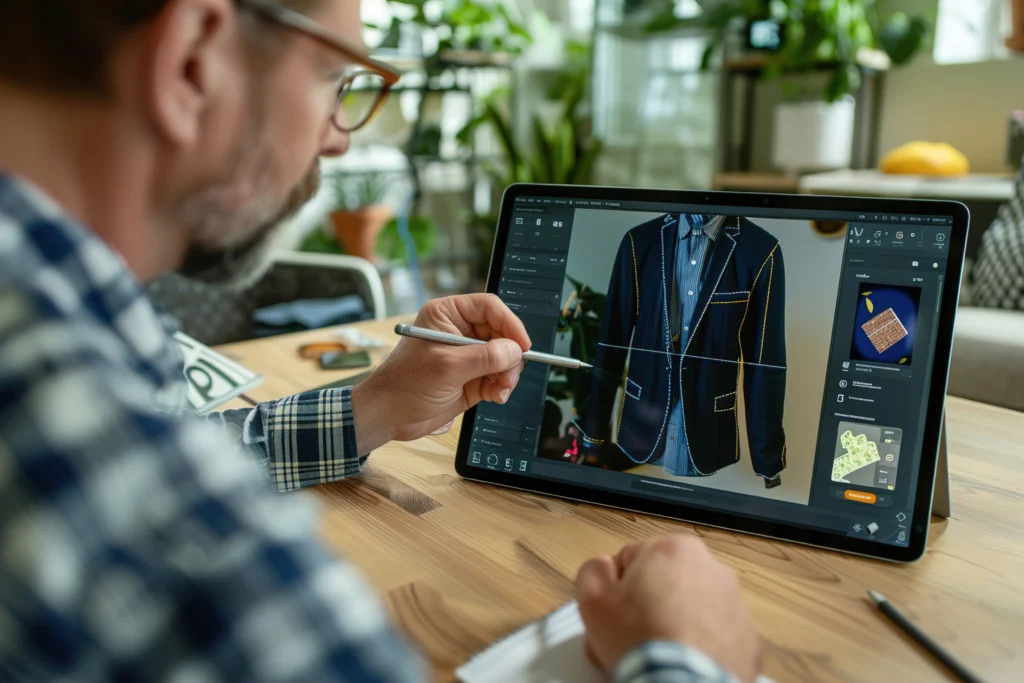
Adjust the settings
Before generating any piece, set parameters like fabric type, color palette, and visual references for inspiration. These settings shape the result the AI delivers.
Write the prompt
Write a clear description of the piece in mind, including shape, construction details, and desired drape. The more specific the prompt, the more precise the result.
Choose a style
Pick from the style options available in the tool, or combine personal references to land on a result aligned with brand identity.
Save the image and start using it
Once generated, the image can be saved to a design library. From there, it’s ready to move into flat sketches and tech packs.
Read more: Learn the most practical way to use AI drawing in fashion
Do I need to code to use AI in fashion?
No, coding knowledge isn’t required to use artificial intelligence for creating clothing. Current tools were built specifically to remove that technical barrier and make the process more accessible.
In practice, the interaction happens through prompts, meaning commands written in natural language. A designer describes what they want using everyday words, like “long silk dress with puffed sleeves,” and the tool interprets that text to generate a matching image.
Many platforms also offer visual features, such as uploading reference images, picking colors from a palette, and adjusting results through buttons and menus.
This accessible format is intentional. The companies behind these solutions know their audience is designers, pattern makers, and creative professionals, not programmers. The focus stays on making the technology a natural extension of the creative process, with no coding background required to get strong results.
How does an AI-generated image become a real garment?
Generating an image is only the first step of the creative process. Turning that visual reference into an actual piece requires technical stages that connect creation to product development.
The first step is usually the flat sketch, also called a technical drawing, which shows the piece from front and back with every construction detail. Some AI tools can already generate this sketch automatically from the realistic image created earlier.
Next comes the tech pack, an essential production document that gathers information like fabric type, trims, colors, and construction notes. More advanced tools can interpret the generated image and suggest this technical data automatically, which a professional can then review.
Finally, this information moves to pattern-making and, later, to sample production. The more integrated this flow between creation and technical development, the lower the chance of errors and rework before a piece leaves the page and becomes a real product.
What impact does AI have on fashion sustainability?
The fashion industry ranks among the sectors with the heaviest environmental footprint in the world, largely due to the sheer volume of garments produced and discarded every year.
Artificial intelligence emerges as an important ally in reducing that impact across different stages of the production chain.
One of the biggest gains comes from cutting down on sample garments. Since it’s already possible to preview a piece digitally before producing it physically, less fabric gets wasted and less raw material is lost during fit and drape testing.
Read more: How to master sustainable creation and production in the eco fashion era
Which brands are already using AI in fashion?
Major fashion groups have gone public with their artificial intelligence strategies, especially around visual creation and inventory management. A few examples stand out worldwide:
Zara (Inditex) uses generative AI to create fashion imagery from real photographs of models, and also identifies slow-moving products in a given region to redirect them to stores with higher demand.
H&M leans on AI-driven analytics to predict demand with precision, aiming for fewer unsold items and less textile waste. The retailer combines computer vision with large-scale behavioral data to read customer patterns and adjust production accordingly.
Nike applies machine learning to sharpen SKU-level planning across its retail network. By forecasting demand and placing products closer to customers, the brand cuts lead times, lowers stockouts, and keeps more items selling at full price.
These examples show the technology is no longer exclusive to a handful of pioneers. More companies of every size are beginning to test and adopt artificial intelligence tools across processes that range from creation to inventory management.
Want to see how brands like Zalando, Ralph Lauren, and Ganni are already using AI in practice?
Going beyond digital sketches requires strategy. In the free e-book The Fashion AI Playbook, you’ll explore real industry case studies, run a diagnostic to measure your company’s tech readiness, and get a step-by-step guide to structuring your first AI pilot project.
Can small manufacturers use AI to create clothing designs too?
Yes, and this is one of the most interesting aspects of how this technology is becoming more accessible.
Unlike complex systems that demand heavy infrastructure investment, many fashion AI tools run directly in a browser, with no steep implementation cost.
That means a small manufacturer with a lean team can use the same visual creation resources already applied by large brands. The difference lies in volume of use, not access to the technology itself.
For smaller businesses, the biggest gain tends to be time. Since the creative team usually juggles several roles, having a tool that generates pieces quickly frees up time for other parts of the business, like sales and client relationships.
Another direct benefit is lower prototype costs. For a small manufacturer, every wasted sample garment weighs proportionally heavier on the budget. Previewing a piece digitally before physical production helps save fabric and reduce errors, making the creative process more financially accessible.
Does AI-created clothing carry copyright protection?
This question doesn’t have one simple answer, and the legal landscape looks different depending on where a company operates.
Most jurisdictions, including the United States and the European Union, currently require meaningful human authorship for copyright protection to apply. Purely AI-generated images, created without significant human input, tend to fall outside that protection or land in a legal gray area. The U.S. Copyright Office, for instance, has stated that works lacking human creative control generally can’t be registered.
In practice, when a designer uses AI as a support tool, making adjustments, curating results, and applying creative judgment, most legal frameworks treat human authorship as preserved. AI functions more like an instrument, similar to design software, rather than an independent author of the work.
The situation shifts when an image is generated in a fully automatic way, without meaningful human creative input. In these cases, legal consensus remains unsettled across most countries, which calls for extra caution from brands operating internationally.
For that reason, designers and manufacturers should document their creative process: saving prompts, references, and manual adjustment steps. This practice helps demonstrate human authorship if it’s ever questioned, and keeps a clear record of how a piece came together within the company.
What’s the best AI for a fashion designer?
There’s no single right answer, since the best tool depends directly on the specific needs of each designer or manufacturer.
General-purpose image generators work well for quick inspiration, but tend to fall short on technical details like drape and seam structure.
Tools built specifically for the fashion sector understand details like fabric types, trims, and garment construction. That produces images much closer to reality, making communication between creative and product development teams easier.
Integration with the rest of a workflow matters too. Tools that connect visual creation to flat sketches and automatic tech packs eliminate repetitive manual steps, speeding up the path from inspiration to final sample.
Platform accessibility is worth considering as well. Solutions that run directly in a browser, without requiring installation or powerful hardware, make adoption easier across entire teams.
Create your fashion design projects with Audaces technology
Technology can support different stages of the fashion design process, from an initial idea to preparation for production.
With the Audaces360 ecosystem, you can combine 2D creation, 3D visualization, management, and artificial intelligence tools within a connected ecosystem.
LooksMaker
The LooksMaker platform uses artificial intelligence to transform your ideas into fashion design concepts in seconds.
But it goes beyond image generation: it was developed specifically for fashion creators, with tools that support the process from the initial idea to visualization.
From a reference or concept, you can generate a garment, edit it your way, and visualize it on a realistic model, both in static images and video.
It also allows you to create technical drawings from your concepts, making it easier to move from an idea to product development.
As an intuitive online platform, it is practical both for those starting out in fashion design and for experienced professionals in the industry.
Bring your ideas to life. Discover how LooksMaker can help you create and visualize your designs.
Which part of the fashion design process would you like to master better? Tell us in the comments!
FAQ
It’s an artificial intelligence tool that generates realistic images of garments from text prompts or visual references.
No. It only speeds up operational tasks, while creativity and strategic decisions remain human.
No. Most AI tools for creating clothing work with natural language prompts and require no technical knowledge.