Summary
- Discover how AI drawing can support creativity and make design development faster and smarter.
- Understand how technology can help you transform ideas into visuals with more confidence and precision.
- Get monthly industry insights straight to your inbox. Subscribe to our newsletter!
Artificial Intelligence is opening new possibilities for every kind of business, and the fashion industry is no exception. It does not replace talent, intuition, or style. Instead, it works as a powerful partner.
Technology becomes part of creativity, not a limitation to it. It’s an essential tool in creative workflows, helping test ideas quickly and supporting visual exploration.
In the next lines, we’ll share practical tips on how to use AI drawing with creativity while speeding up your process. You’ll learn how to make technology work in your favor and how to turn innovation into real value.
Happy reading!

Why use AI in fashion drawing?
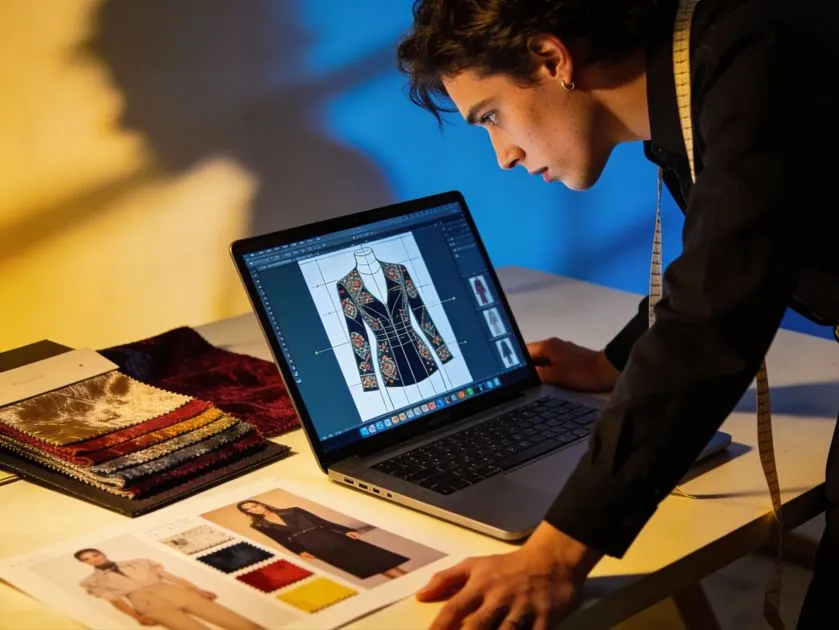
Generative technology is becoming an essential partner for fashion designers. It helps expand creative possibilities without replacing human talent.
You can explore more ideas, test concepts faster, and visualize new aesthetics with less effort.
Using AI also helps reduce the time spent on repetitive tasks. Instead of starting every idea from scratch, you can rely on digital tools to create a base.
This frees more time for strategic thinking, refinement, and decision-making. The process becomes more fluid and dynamic.
In addition, it democratizes creativity by making advanced tools more available to everyone. With resources like an AI art generator, fashion professionals can experiment with design styles and innovative aesthetics.
You can achieve better design quality, stronger concepts, and more confident creation processes.
How to use AI to create fashion drawings
Using AI to create fashion drawings starts with defining what you want to achieve. It can be a new, a variation of something that already exists, or a realistic image based on a sketch.
Then, you guide the tool with clear descriptions, visual references, or examples that help it understand your idea.
To better understand how AI can support your work, take a look at everything it can do for fashion creation:
Style and trend recognition
Some types of AI can analyze large volumes of content and identify emerging style directions faster than manual research.
It reviews runway images, social media posts, fashion archives, and consumer behavior to detect patterns.
With this knowledge, fashion professionals can design with more awareness and intention.
Read more: Uncover how fashion trends emerge and why you should keep up
Pattern creation
AI is extremely useful for creating unique and visually rich prints. Designers can describe inspirations such as nature, geometry, or artistic styles. The tool generates visuals that you can develop into textile designs.
The process also encourages experimentation. Adjust colors, repeat patterns, and refine elements until you reach the desired result.
Fabric simulation
This feature allows designers to visualize how materials behave in garments before physical production.
AI helps show drape, texture, shine, and structure, making it easier to understand how a design works in real conditions. You can compare options such as silk, denim, knit, or leather and evaluate how each one affects movement and style.
Read more: 5 benefits of simulating fabric texture digitally
Details and trims
These finishes play a crucial role in defining the personality of a garment. AI drawing tools help test buttons, zippers, embroidery, lace, and other elements in a visual and practical way.
It becomes easier to test ideas and see their impact on the overall design.
Virtual prototyping
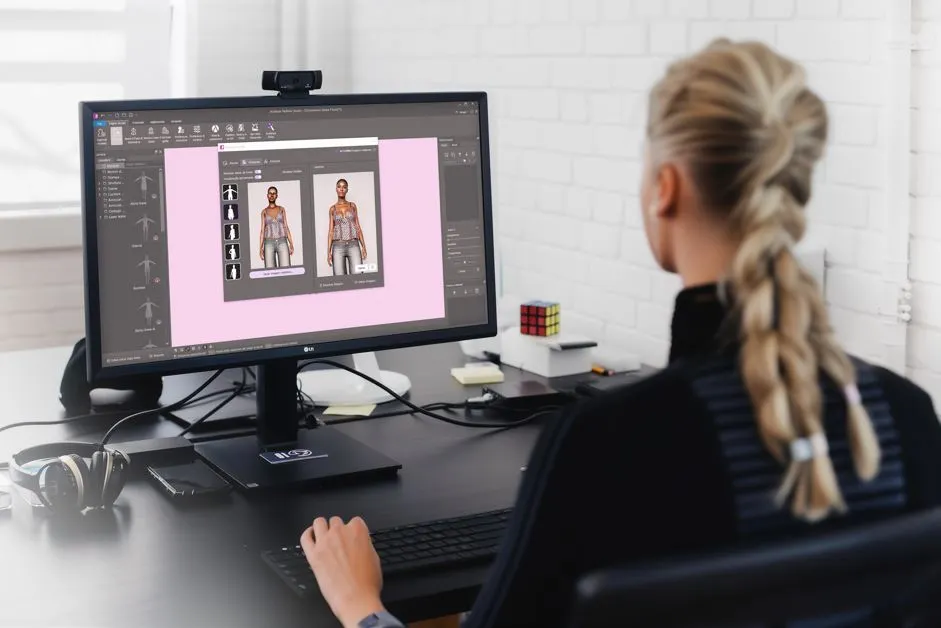
Virtual prototyping allows you to visualize garments in a more realistic way before producing physical samples. Using AI generated imagery, it’s possible to see proportions, structure, and style with greater clarity.
It also helps simulate how pieces would look in real bodies and contexts. Analyze fits, silhouettes, and design behavior in motion. This way, you can achieve more accurate creations and reduce unnecessary waste.
Read more: 6 signs you’re ready to move to 3D prototyping
Automatic customization
Artificial Intelligence makes customization faster and more efficient by adapting designs to specific preferences.
At the same time, designers maintain control of artistic decisions. AI simply accelerates execution and supports smarter, customer-focused creation.
It becomes easier to respond to consumer expectations and adapt designs to different markets or profiles. Creativity becomes more flexible and strategic.
Design variation creation
Creating different versions of the same design is a common part of fashion development.
But instead of creating every version manually, you can rely on tools to expand possibilities and discover unexpected combinations. Each AI image becomes a starting point for refinement and creative evolution.
This process also supports better decision-making. With multiple variations ready in less time, brands can analyze results, compare options, and choose the best directions.
Realistic visual applications
Realistic visuals enhance client presentations and brand storytelling. When customers and teams can see designs in a lifelike context, understanding and engagement increase significantly.
It creates stronger emotional connection and clearer perception of the product.
By generating high quality visuals, AI supports marketing, sales, and creative processes at the same time. Designers present their ideas with more impact, confidence, and professionalism.
Looking to see how technology can assist your creative process? Download our exclusive resource and learn how to apply Artificial Intelligence in fashion!
What are the benefits of using AI drawing in fashion?
AI brings much more than visual experimentation to fashion drawing. It helps you expand creative possibilities, make smarter decisions, and work with greater efficiency!
Inspiration and creativity
Digital tools work like a creative partner, turning abstract ideas into visual possibilities.
You can explore different aesthetics, silhouettes, and concepts without always facing a blank page. Inspiration becomes easier to access and express.
This approach also makes experimentation safer and more exciting. It encourages bold ideas, unusual combinations, and more daring concepts.
Read more: How to use Artificial Intelligence design in your fashion creation
Efficiency in the creative process
This speed is especially valuable in a competitive market. Approvals happen quicker, collaboration improves, and communication between design, development, and production becomes clearer.
With a more efficient workflow, productivity increases without compromising artistic quality. Designers gain time to think strategically and polish results.
Personalization
Customization becomes easier when technology supports design adaptation.
You can adjust colors, prints, proportions, and details to different audiences, brand identities, or market needs without excessive effort.
This flexibility helps brands create stronger emotional connections with consumers. Fashion becomes more personal, meaningful, and better aligned with expectations.
Trend forecasting
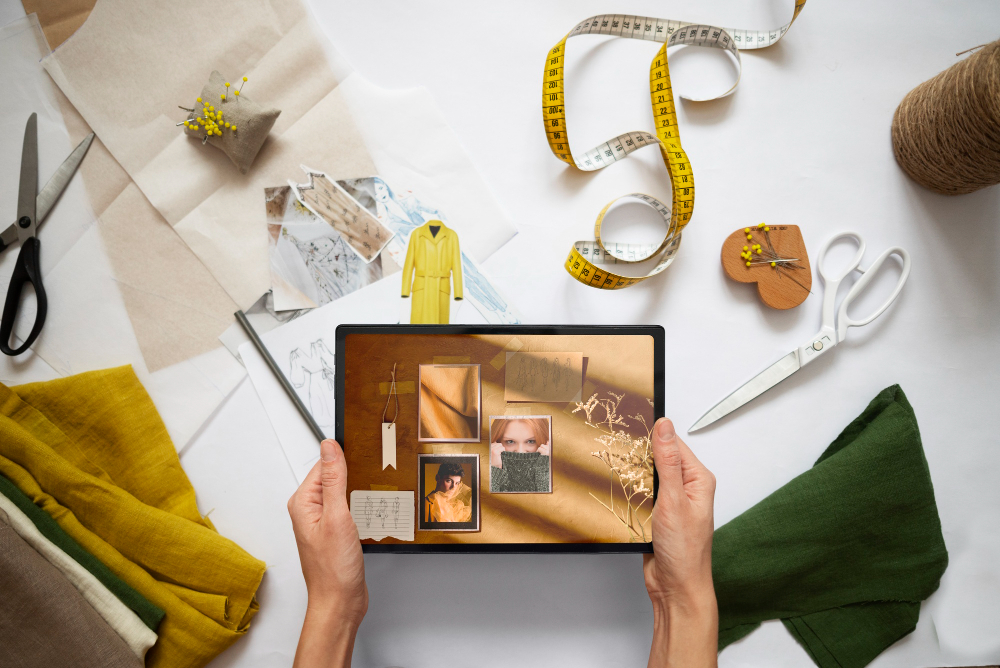
Access to powerful visual and behavioral analysis allows designers to understand trends earlier. Information gathered from runway shows, online behavior, and cultural movements turns into valuable creative insight.
With clearer visibility of what is gaining relevance, design decisions become more strategic. You’ll be able to develop collections with greater confidence and stronger connection to market reality.
Production and inventory optimization
Better visual planning leads to smarter production decisions.
When you validate concepts earlier through realistic representations, the risk of developing unsuccessful pieces decreases significantly.
For designers, it creates a more responsible and sustainable creative environment, where artistic value and business strategy work together.
Read more: 5 steps to optimize your process of textile production
Instant feedback
Immediate visual response changes the way brands evaluate ideas.
Instead of relying only on imagination or waiting for physical samples, it’s possible to see results almost instantly. This way, you can understand how each creative decision shapes the final design.
Collaboration benefits as well. Teams can discuss visuals based on concrete images instead of abstract descriptions.
In the end, this fast and continuous feedback loop leads to better outcomes. Processes become smarter rather than simply faster. Designers keep control of creativity while working with stronger visual guidance.
The result? More consistent and well-structured collections.
How to ask AI to create clothing variations
Requesting clothing variations from AI starts with clarity. Designers need to define what kind of change they expect, whether it involves colors, fabrics, silhouettes, or stylistic adjustments.
The clearer the direction, the more relevant the result will be.
Instead of simply asking for “different versions,” it is far more effective to specify what you want.
To make AI results truly useful, it is important to give clear and objective instructions. So, here are practical tips to help structure better prompts:
- Be clear about what should change: Mention if you want color variation, fabric change, silhouette adjustment, or detailing differences.
- Give style direction: Include references like “minimalist,” “streetwear,” “couture,” “romantic,” or “sporty.”
- Define the garment type: For example, “evening dress,” “oversized jacket,” “tailored pants,” “summer blouse,” etc.
- Be descriptive but not excessively long: Objective instructions usually produce clearer results than very long, confusing descriptions.
Read more: The 4 most common myths about fashion AI you should know
What is the best AI for creating fashion images?
Many tools promise good results, but not all of them truly understand the reality of the industry.
Fashion creation requires precision, style sensitivity, technical coherence, and visual consistency. That is why the ideal AI tool must go beyond simply generating images and actually support the design workflow.
In this scenario, Audaces Sofia stands out as the best option. Unlike generic image generators, it was created with the needs of fashion professionals in mind.
Its resources support real creation processes, helping designers visualize ideas with coherence, realism, and alignment to fashion standards.
Audaces Sofia
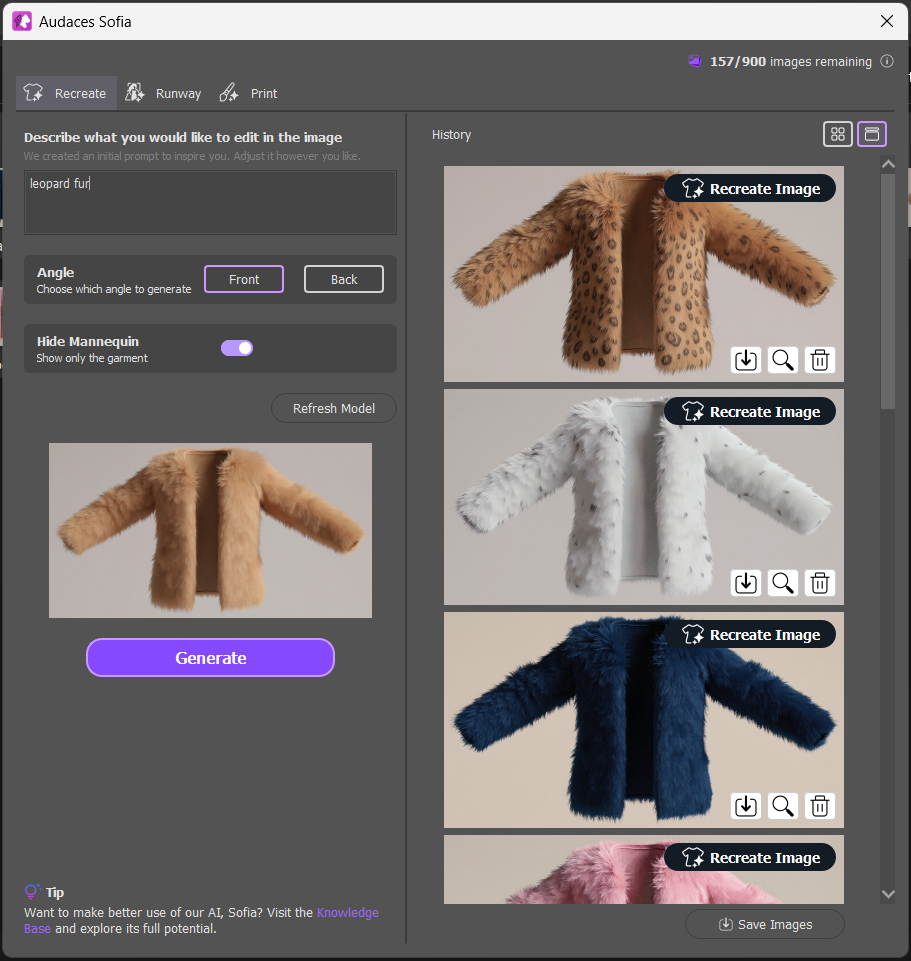
Our cutting-edge fashion Artificial Intelligence helps you enhance your creations with an unlimited source of inspiration.
This solution has the power to transform concepts into reality in a matter of minutes. Some simple prompts are all you need to generate print variations.
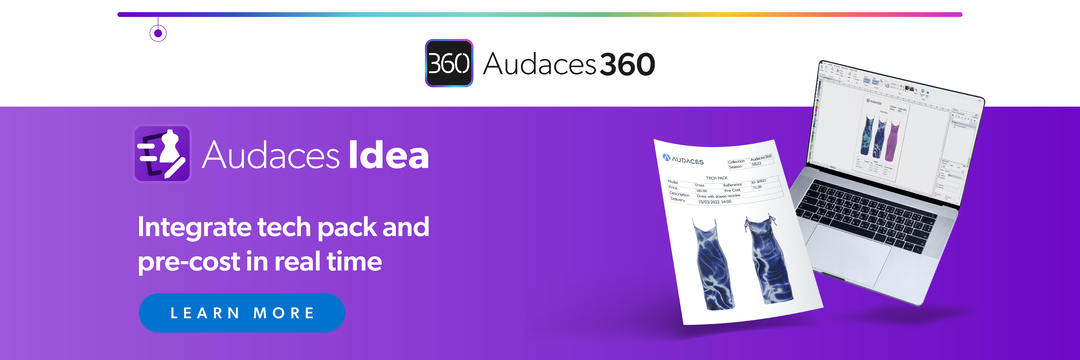
Audaces Sofia integrates with Audaces Idea and Audaces Fashion Studio, providing you with the complete solution to create effortlessly
Discover Audaces360 and unlock a world of possibilities for fashion design and production. Explore our comprehensive suite of solutions today!
FAQ
Generative technology helps expand creative possibilities without replacing human talent. You can explore more ideas, test concepts faster, and visualize new aesthetics with less effort.
AI is helpful for style and trend recognition, pattern creation, fabric simulation, virtual prototyping, and design variation creation.
The benefits include inspiration, efficiency in the creative process, personalization, trend forecasting, and instant feedback.