


Summary:
- Textile engineering studies and develops fibers, yarns, and fabrics across every stage of production.
- The field extends far beyond fashion, shaping materials for the automotive, aerospace, and furniture industries too.
- Want to build textile pieces digitally from scratch? Discover Audaces360!
Textile engineering touches far more than clothing. It also shapes the materials behind car interiors, furniture upholstery, and aerospace components.
Professionals in this field, known as textile engineers, research new materials, oversee production, and manage manufacturing processes from start to finish. Their days can shift between a laboratory bench, a factory floor, and a planning meeting.
Curious what a career in textile engineering actually looks like? This guide covers the fundamentals: what the field involves, how the work breaks down day to day, what it pays, and where these professionals typically find jobs.
Happy reading!
Sumário
Why understanding textile engineering matters
Understanding textile engineering helps production managers see every stage of the factory with more clarity and strategy. This knowledge connects fiber selection, fabric production, and the final finishing of a garment into one coherent picture.
Once these processes make sense, decisions about materials, machinery, and delivery timelines get easier. It also becomes simpler to speak the same language as suppliers and the technical team on the factory floor.
As a result, manufacturers improve quality, cut waste, and deliver more competitive products.
Read more: Understand the importance of the textile industry and its evolution





What is textile engineering?
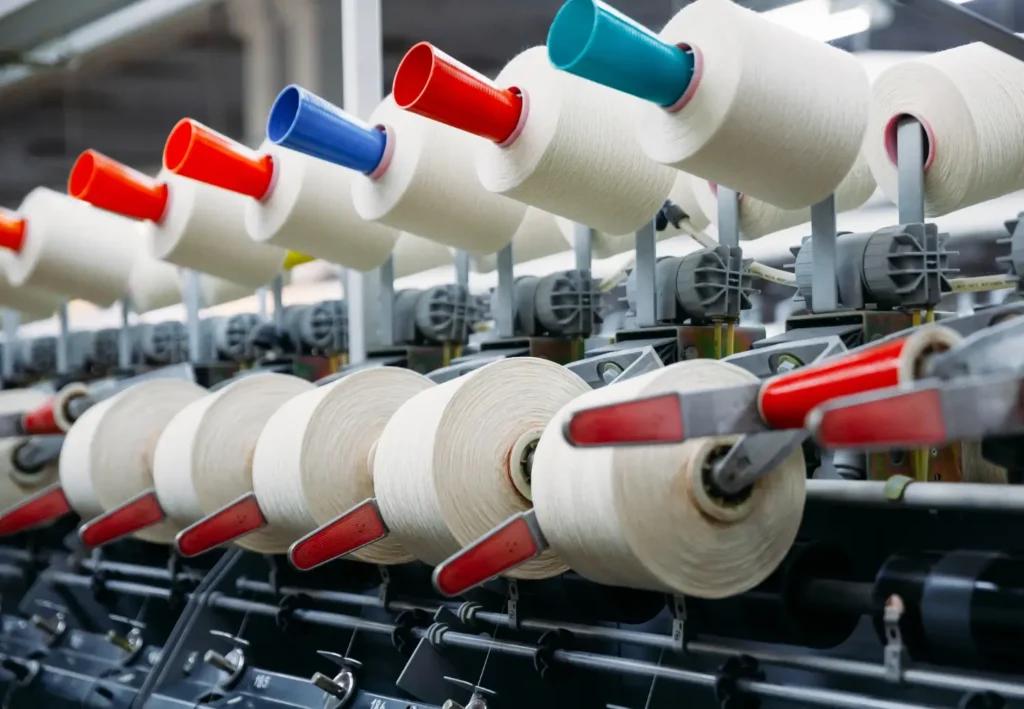
Textile engineering is the branch of engineering that studies the manufacturing and treatment of fibers, yarns, and fabrics. It follows the entire production cycle, from raw material creation through to the finishing of the final product.
This field blends chemistry, physics, and mathematics to develop materials with specific properties. A flame-resistant fabric, for instance, is the result of careful work by a textile engineer. Beyond fashion, the discipline serves the automotive, medical, and aerospace sectors, turning simple fibers into high-value technical products across industries.
Read more: Learn all about textile fibers in our comprehensive guide
How textile engineering works in practice
The discipline breaks down into a handful of core processes, each building on the one before it. Here’s what happens between raw fiber and finished fabric:
Spinning and weaving processes
Spinning turns natural or synthetic fibers into resistant yarns, ready for the next stages of textile production. During this step, professionals set the thickness, twist, and overall quality of each yarn.
Different weaving techniques create different structures and drapes. A single yarn, depending on the technique applied, can become a lightweight fabric, a heavier one, or something with stretch.
Treatments and finishing
Treatments and finishing give a fabric its final characteristics: color, sheen, softness, and strength. After weaving, the material goes through processes like dyeing, printing, and softening.
Each step improves both appearance and everyday performance. A water-repellent finish, for example, protects a fabric from moisture and extends its lifespan.
Some treatments also make garments easier to clean or more resistant to staining, letting the textile engineer tailor the fabric to how it will actually be used.
Quality control
Quality control monitors the entire production run to confirm that fabrics meet market standards. Professionals test for strength, colorfastness, shrinkage, and finish quality at multiple points in the process.
When a flaw turns up, the team corrects it before it reaches the final product. That single habit prevents rework, reduces waste, and protects a brand’s reputation. Strong quality control also builds customer trust, which is why it has become non-negotiable for any company chasing competitiveness and growth.
Read more: Understand what textile quality control is and how it works
Sustainability and innovation
Sustainability pushes textile engineering toward processes that use less water, energy, and raw material. Factories increasingly invest in technologies that cut pollution and reuse production waste.
Innovation moves alongside that effort, bringing smart materials that respond to temperature or humidity. Nanotechnology, for example, produces fabrics that resist wear and clean more easily.
Together, these two forces combine productive efficiency with environmental responsibility, and companies that embrace them tend to stand out to increasingly conscious consumers.
Read more: Find out how fast fashion and sustainability can coexist in the apparel industry
What does a textile engineer do?
A textile engineer works across the entire production chain, from fiber creation to the delivery of the finished product. This role combines technical knowledge with strategic thinking to develop materials and streamline processes.
Day to day, that means researching new fabrics, monitoring production, and safeguarding quality.
It also means coordinating teams and finding ways to cut costs and waste on the factory floor. Responsibilities shift depending on the position and the sector, but three main areas define the role.
Materials research and development
In research and development, a textile engineer creates and refines fibers, yarns, and fabrics with specific properties. This work covers textures, prints, and dyeing techniques, always in search of more efficient and innovative materials.
Testing and analysis confirm the strength and performance of each product. Much of this happens in specialized labs, working alongside multidisciplinary teams. This is where smart, sustainable fabrics tailored to different market needs come from.
Production processes
In production, a textile engineer monitors and supervises each stage of manufacturing within the factory. This includes tracking output, organizing logistics, and keeping machines running efficiently.
When a problem surfaces on the floor, this professional diagnoses the cause and proposes a quick fix. They also plan the production line and choose the right equipment and technology for the job, keeping the pace steady and the quality consistent.
Read more: 4 key steps to streamline your fashion production process
Industrial management
In industrial management, a textile engineer coordinates teams, controls costs, and organizes factory resources. This role connects the technical side of the business to the administrative one, keeping projects on schedule.
With a management background, this professional also supports strategic decisions about suppliers and clients, contributing to leaner, more profitable production.
Technology and automation increasingly strengthen this side of the job and expand what the role can accomplish.
Read more: 8 ways to adopt Industry 4.0 technologies in fashion
Textile engineer vs. fashion designer: What sets them apart?
A fashion designer and a textile engineer work side by side, but they own different parts of production. The designer creates the garments, handling sketches, patterns, and the aesthetic and functional sides of a design.
A textile engineer, meanwhile, develops and optimizes the material so it performs within that design.
One thinks about appearance and concept; the other guarantees technical quality in the fabric itself. In practice, the two roles complement each other, turning ideas into finished, durable, well-built products.
Read more: Virtual fashion designer: uncover this crucial role and its benefits!
Why pursue a career in textile engineering?
Choosing textile engineering means entering a broad, promising market with opportunities across several sectors.
Several of the world’s largest garment-producing economies, including China, Bangladesh, Vietnam, India, and Turkey, continue to look for qualified professionals to support growing production.
Beyond fashion, textile engineers find work in the automotive, medical, aerospace, and construction industries. The field also rewards people drawn to research, innovation, and new technology.
Because relatively few universities offer this specific degree, competition for open roles tends to stay lower than in more crowded engineering fields, giving graduates solid odds for growth and stability.
Read more: Explore the role and benefits of a virtual fashion designer
What do textile engineers earn?
Pay for textile engineers varies widely by country, experience, industry, and employer, so there’s no single global figure.
In the United States, for example, entry-level roles tend to start somewhere in the $55,000 to $65,000 range, while experienced or senior engineers can earn well over $100,000 depending on the employer and specialization.
Location plays a major role too. Manufacturing hubs and companies working on technical textiles for automotive or aerospace clients often pay above the general market average.
As with most engineering fields, salary tends to climb steadily with specialization and years on the job, so a long-term view of this career usually pays off.
How can I become a textile engineer?
Becoming a textile engineer typically requires a bachelor’s degree in textile engineering or a closely related field, such as materials science or chemical engineering, from an accredited institution.
Most programs run four to five years and include hands-on lab work along with a capstone or thesis project.
Early semesters usually cover foundational math, physics, and chemistry. Later coursework dives into textile-specific subjects like fiber science, dyeing and finishing, and quality control.
Depending on the country, graduates may also need to register with a professional engineering body or obtain a license before practicing formally.
Requirements here vary significantly: in the United States, that typically means a Professional Engineer (PE) license, while in the United Kingdom, chartered status through a body like the Institution of Engineering and Technology or the Textile Institute serves a similar purpose.
Ready to level up production and management with 10 practical strategies? Download the free ebook here and start applying them today!
Top textile engineering schools worldwide
A relatively small number of universities offer dedicated textile engineering programs, which makes it worth knowing the strongest options. A few consistently stand out internationally:
- North Carolina State University (Wilson College of Textiles, USA)
- The University of Manchester (United Kingdom)
- The University of Leeds (United Kingdom)
- TU Dresden (Germany)
Program strengths differ. Some emphasize technical textiles and research, others lean toward fashion and design integration, so it’s worth comparing curricula against career goals before applying.
Where can a textile engineer work?
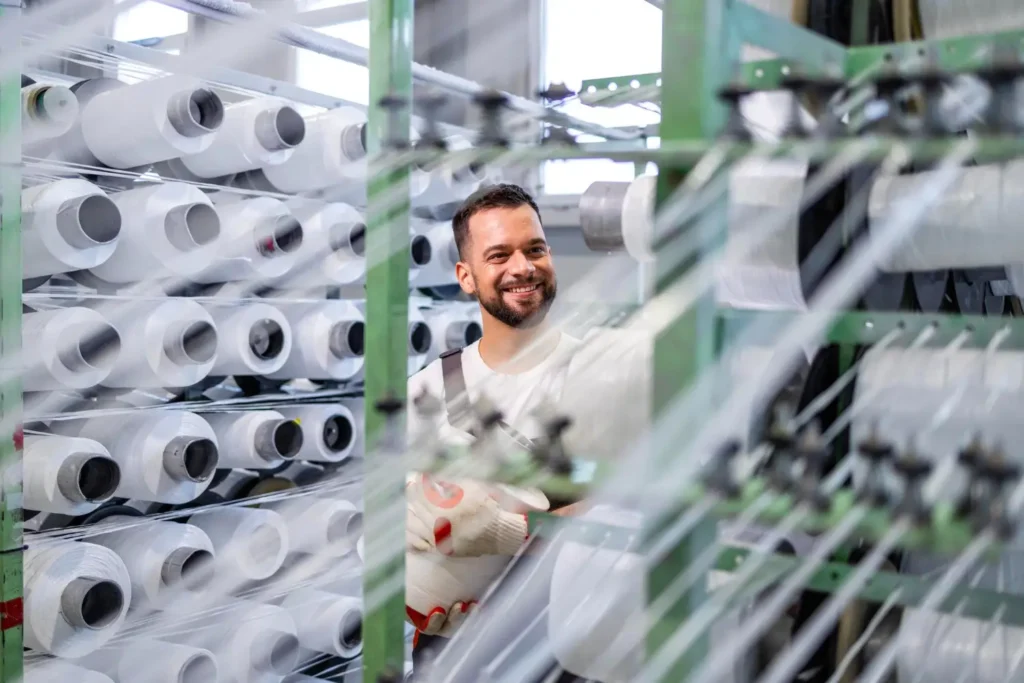
Textile engineers aren’t limited to garment factories. Here’s where the role tends to show up across industries.
Textile and apparel manufacturers
In textile and apparel manufacturing, a textile engineer works across the whole chain, from yarn production to the finished garment.
This includes monitoring fabric production, controlling quality, and optimizing factory-floor processes, while also developing materials that match current trends and consumer needs.
Automotive and aerospace industries
In automotive and aerospace manufacturing, a textile engineer develops technical materials for upholstery, seatbelts, interior linings, and specialized components.
These fabrics need to withstand heat, friction, and extreme conditions, so the work draws heavily on chemistry and materials-strength knowledge to deliver safer, lighter, more durable products.
Research and innovation labs
In research and innovation labs, a textile engineer investigates new materials and tests solutions for the industry’s future. This means studying smart fibers, applying nanotechnology, and developing fabrics with entirely new properties.
It’s detail-heavy work that rewards curiosity and rigorous method, and it’s where many of the field’s biggest breakthroughs originate.
Sustainability-focused startups
In sustainability-focused startups, a textile engineer builds solutions that pair innovation with environmental responsibility.
This includes developing recyclable materials and cleaner processes that reduce production’s overall impact.
The pace here tends to be fast and experimental, giving professionals room to test new ideas.
Consulting and certification audits
In consulting and certification auditing, a textile engineer helps companies work toward quality and sustainability certifications.
This involves evaluating processes, identifying gaps, and recommending improvements that meet industry standards, all of which demands a sharp eye, technical depth, and strong communication across teams.
Career outlook for textile engineers
The outlook for textile engineers stays largely positive worldwide, driven by steady global demand for apparel and technical textiles alike.
Many manufacturing regions report a shortage of qualified graduates, especially as factories modernize and lean further into automation and sustainable practices.
Because relatively few institutions offer this specialization, competition among employers for skilled graduates keeps increasing. For anyone weighing this path, that combination points to a career with genuine room to grow.
Where Audaces technology fits in
Audaces Cutting Room automates fabric cutting, adding precision, speed, and savings to production. It reduces material waste and increases yield with every layer laid.
The equipment cuts fabric layers with exact accuracy, freeing teams for more strategic work, while keeping quality consistent piece after piece.
Audaces ICF connects the cutting room to smarter, more connected production management. This tool plans cuts, organizes resources, and cuts down the time spent on daily planning.
With more accurate data, decisions happen faster and both fabric and time waste drop, improving material yield and overall factory efficiency.
Success story: LIVE!
LIVE!, one of Brazil’s leading activewear brands, needed to remove production bottlenecks after moving from manual to automated processes.
After discovering Audaces, the company adopted Audaces Cutting Room and Audaces ICF to streamline operations, cutting roughly 275 hours of cutting-room planning per month. Watch the full success story here!
FAQ
Textile engineering is the branch of engineering that studies the manufacturing and treatment of fibers, yarns, and fabrics.
A textile engineer researches materials, oversees production, and safeguards fabric quality across different industries.
A textile engineer can work in textile and apparel manufacturing, automotive and aerospace industries, research labs, sustainability-focused startups, and consulting firms.