


Table of contents
Summary
- Credit-based systems help control usage and balance performance across AI platforms.
- Understanding how AI credits work allows users to optimize results and manage costs.
- Get monthly insights straight to your inbox. Subscribe to our newsletter!
Artificial Intelligence (AI) has transformed the way we create images. Tasks that once required hours of manual work can now be completed in seconds, opening new creative possibilities.
Behind this efficiency, many platforms operate using credit-based systems. Instead of unlimited usage, users spend credits to generate images. While this model may seem complex at first, it plays an important role in balancing performance and user demand.
In this article, you will find everything you need to know about how Artificial Intelligence credits work. The goal is to help you understand and use these systems more effectively.
Enjoy your reading!

What is an Artificial Intelligence credit?
An Artificial Intelligence credit works as a digital unit that measures how much computing power a user consumes when interacting with AI tools. Instead of offering unlimited access, platforms use credits to control usage and distribute resources more efficiently.
Each action, such as generating an image, improving resolution, or applying advanced effects, usually requires a certain number of credits. This system allows users to understand the value of each operation and manage their usage based on real needs.
Credits also help platforms maintain performance stability. By limiting excessive consumption, providers avoid system overload and ensure consistent response times for all users.
In tools powered by generative AI, credits become even more important. Image creation demands high processing power, especially when users request detailed visuals, high resolutions, or complex compositions.
Overall, AI credits create a balanced environment. They protect platform performance, give users better cost control, and make advanced technology more accessible.
How does AI credit usage work?
Instead of charging only for final results, platforms measure how much processing power each request consumes during generation and refinement.
For example, when a user generates an image and then decides to adjust the prompt to improve colors, composition, or style, the system runs a new generation cycle. Each new request requires additional computing resources, which usually means more credits.
This is similar to editing a document and exporting multiple drafts. Even if the final version looks close to the first one, every new attempt demands processing in the background. The more iterations you run, the more resources the platform uses.
Across different AI solutions, this approach helps balance performance and fairness. It encourages users to plan prompts more carefully while still allowing experimentation and creative exploration.
Read more: Learn the most practical way to use AI drawing in fashion
How many credits does each prompt use?
The number of credits each prompt uses depends on the AI model and the platform that provides the service.
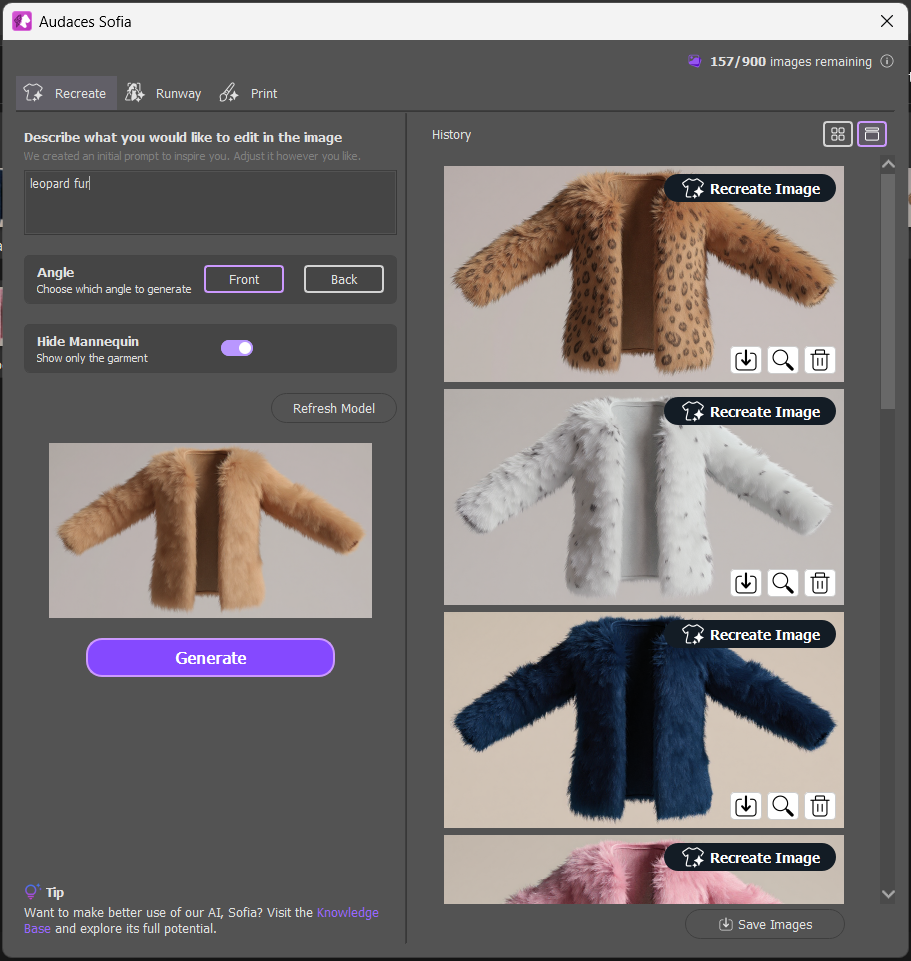
There is no universal standard across the market. Some tools consume one credit per generated image, as is the case with Audaces Sofia. Meanwhile, others may require multiple credits to produce a single result.
Because of these differences, you should always check how each platform calculates credit usage. Understanding this logic helps avoid unexpected consumption and supports better planning.
What are the benefits of a credit-based model?
More cost control and predictability
One of the biggest benefits of a credit-based model is knowing exactly how much you are using.
You can track consumption and adjust your activity based on your creative needs and budget. Instead of facing unexpected charges or paying for features you rarely use, you can align credit usage with specific projects or creative sessions.
Many platforms allow users to monitor their credits in real time. This immediate feedback helps you stay in control.
With better visibility, planning also becomes easier. You can decide when to generate more content, when to save credits, and how to distribute usage across different tasks.
Lower risk when adopting new technologies
A credit-based system makes it easier to explore new AI tools without major commitments. You don’t need to invest heavily upfront to start experimenting.
This approach allows you to test features, understand how the platform works, and evaluate results before fully relying on the tool in your workflow. As a result, you can adopt new technology gradually, learning at your own pace while reducing risk.
Read more: The 4 most common myths about fashion AI you should know
Greater accessibility
Advanced AI tools have become accessible to a much wider audience thanks to usage-based access models. Users no longer need enterprise-level subscriptions to work with powerful creative technology.
Beginners, freelancers, and independent creators can adjust usage according to their needs, without committing to expensive long-term plans or fixed monthly limits. As projects become more complex, it becomes easy to increase credit usage and expand output without changing platforms or workflows.
By lowering entry barriers, these systems allow more people to explore AI tools and actively participate in digital creativity.
Looking to go beyond generative AI? Download our exclusive guide and learn which Artificial Intelligence tools fashion brands rely on today.
What types of credits exist and when do they expire?
Different platforms offer multiple credit formats to match how people use AI technologies in daily workflows. Each type comes with its own rules, expiration policies, and usage limits.
Understanding these differences helps users choose the option that best fits their needs and avoid losing unused credits.
Prepaid credits
Prepaid credits work like a digital wallet. You purchase a set number of credits and use them whenever you need, without recurring commitments. However, these credits usually come with an expiration date.
Platforms define this period to encourage active usage, so it’s important to check validity timelines and plan creative sessions accordingly.
Credits included in recurring plans
Some platforms include a fixed amount of credits in monthly or annual subscriptions.
Users receive a new credit balance at the beginning of each billing cycle. In most cases, unused credits do not roll over. This means it is important to use the available balance before the renewal date to avoid wasting potential usage.
Read more: How to use Artificial Intelligence design in your fashion creation
Usage-based credits
Usage-based credits adjust automatically based on consumption. Instead of purchasing a fixed package, users pay according to how much they generate or refine content.
This model works well for people with fluctuating demand. When activity increases, more credits become available. When usage drops, costs remain lower.
Promotional or trial credits
These allow new users to test AI tools before committing financially. They are common as part of limited campaigns and serve as a learning tool rather than a long-term solution.
What happens when my credits run out?

When credits reach zero, most platforms temporarily block new generations or advanced features.
Users can still access their existing content, but they cannot create new outputs until credits are replenished. For this reason, some tools offer notifications or warnings before this happens. These alerts help users plan purchases or adjust usage before hitting the limit.
Running out of credits can interrupt creative workflows, especially during active projects. For this reason, many users prefer to monitor balances and maintain a small reserve.
To restore access, users usually need to purchase additional credits or wait for the next billing cycle if they use a subscription plan.
Once credits renew, normal functionality resumes.
Read more: How can easy clothing help you speed up fashion creation?
How to buy credits on Audaces Sofia
To use Audaces Sofia, you need access to the Creative package from Audaces. Sofia operates as an integrated solution inside Audaces Idea and Audaces Fashion Studio, allowing users to generate AI images directly from their 2D and 3D creations.
This integration makes the buying process simple. Once you have access to the Creative environment, you can purchase Sofia credits directly within the platform, without needing external tools or separate accounts.
Audaces Sofia works with a prepaid credit model. Users can buy credit packages at any time, choosing between 100, 300, or 600 credits depending on their creative demand and project volume.
After completing the purchase, credits become available immediately. You can then start generating images, refining concepts, and enhancing visual content.
Read more: Discover how 3D sketch works and its benefits for fashion
How to manage Artificial Intelligence credit usage
Managing AI credit usage starts with understanding how your prompts affect consumption. Clear instructions and well-structured requests reduce the need for multiple regenerations, which helps preserve credits.
Another important strategy is planning creative sessions. Instead of generating content randomly, defining visual goals and references beforehand leads to more efficient usage and better results.
It also helps to monitor your balance regularly. Keeping track of remaining credits allows you to adjust your activity and avoid interruptions during active projects.
To optimize usage even further, consider these practical tips:
- Write detailed prompts to reduce trial-and-error generations
- Avoid unnecessary regenerations when small adjustments are enough
- Test variations in batches instead of one by one
- Keep a small credit reserve for urgent creative needs
Read more: Explore all you need to know about fashion creation
Unlock your creative potential with Audaces Sofia
Our cutting-edge fashion Artificial Intelligence helps you enhance your creations with an unlimited source of inspiration.
This solution has the power to transform concepts into reality in a matter of minutes. Some simple prompts are all you need to generate print variations.
Audaces Sofia integrates with Audaces Idea and Audaces Fashion Studio, providing you with the complete solution to create effortlessly.
Discover Audaces360 and unlock a world of possibilities for fashion design and production. Explore our comprehensive suite of solutions today!
FAQ
An Artificial Intelligence credit works as a digital unit that measures how much computing power a user consumes when interacting with AI tools. Instead of offering unlimited access, platforms use credits to control usage and distribute resources more efficiently.
The number of credits each prompt uses depends on the AI model and the platform that provides the service. There is no universal standard across the market.
When credits reach zero, most platforms temporarily block new generations or advanced features. Users can still access their existing content, but they cannot create new outputs until credits are replenished.