
Table of contents
Summary
- Discover how Rei Kawakubo began her career and built an influential fashion empire.
- Understand the philosophy behind Comme des Garçons and its impact on contemporary design.
- Get monthly fashion insights straight to your inbox. Subscribe to our newsletter!
Rei Kawakubo is one of the most unconventional figures in modern fashion. Famous for challenging traditional beauty standards and redefining what clothing can represent, her work goes far beyond trends.
Her journey did not start inside a traditional fashion system. With no formal training in design, Kawakubo built her career through experimentation, intuition, and a strong creative vision.
In this article, you’ll learn how she built Comme des Garçons and why her work remains relevant decades later. We’ll also explore the principles that define her creative process and the legacy she continues to shape.
Enjoy your reading!





Who is Rei Kawakubo?
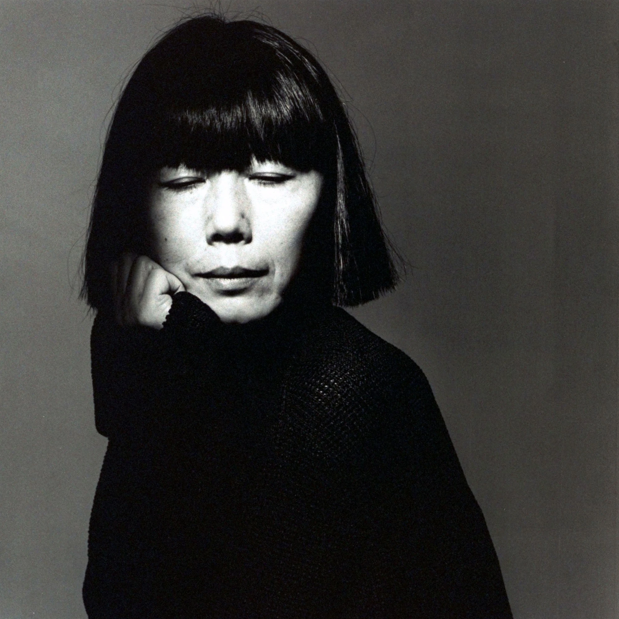
Rei Kawakubo is a fashion designer best known as the founder and creative force behind Comme des Garçons.
Born in Tokyo, Japan in 1942, she became one of the most influential figures in contemporary fashion. She achieved this by rejecting traditional aesthetics and redefining how clothing can communicate ideas.
Unlike many designers, Kawakubo did not follow a formal path in fashion education. She studied fine arts and literature at Keio University, which strongly influenced her conceptual approach to design.
This academic background helped her see fashion as a cultural and artistic language, not just a commercial product.
Her early professional experience came from working in advertising. Later, she began styling clothes for photoshoots, which gradually led her to create her own designs. This transition allowed her to experiment freely, without being tied to established industry standards.
As a result, her creative identity developed outside traditional fashion structures.
International recognition arrived in the early 1980s, when she presented her collections in Paris. At the time, her work shocked audiences with oversized silhouettes, distressed fabrics, and dark color palettes.
Critics initially described the Japanese fashion designer aesthetic as radical and disruptive. Over time, however, these same elements became symbols of innovation and artistic freedom.
Kawakubo also stands out for maintaining a low public profile. She rarely gives interviews and avoids personal publicity. Instead, she allows her collections and runway presentations to speak for her.
How was Comme des Garçons founded?
The label Comme des Garçons was founded in Tokyo in 1969 by Rei Kawakubo. At the beginning, the brand operated as a small company focused on women’s clothing. Kawakubo’s goal was not to follow existing fashion trends, but to create designs that reflected her personal vision.
The brand name, which translates to “like boys” in French, already hinted at the unconventional direction she was planning.
From the start, Comme des Garçons challenged traditional ideas of femininity, elegance, and silhouette. Loose shapes, asymmetry, and minimal ornamentation became key elements of the brand’s identity.
During the 1970s, Comme des Garçons gained popularity in Japan. Its aesthetic stood out from mainstream fashion, attracting customers who were interested in originality and self-expression.
However, the major turning point came in 1981, when the brand debuted in Paris Fashion Week.
The collection caused strong reactions from critics and audiences. Dark tones, distressed textures, and deconstructed forms contrasted sharply with the polished European fashion of the time. While controversial, the show positioned Comme des Garçons as a disruptive force on the global stage.
Over the following decades, the brand expanded internationally and diversified its product lines. It introduced menswear, accessories, fragrances, and collaborative projects with other designers and global brands.
Despite this growth, Comme des Garçons remained committed to experimentation, innovation, and creative independence.
Read more: Dive into Japan fashion history, style and top designers
What makes Rei Kawakubo’s design unique?
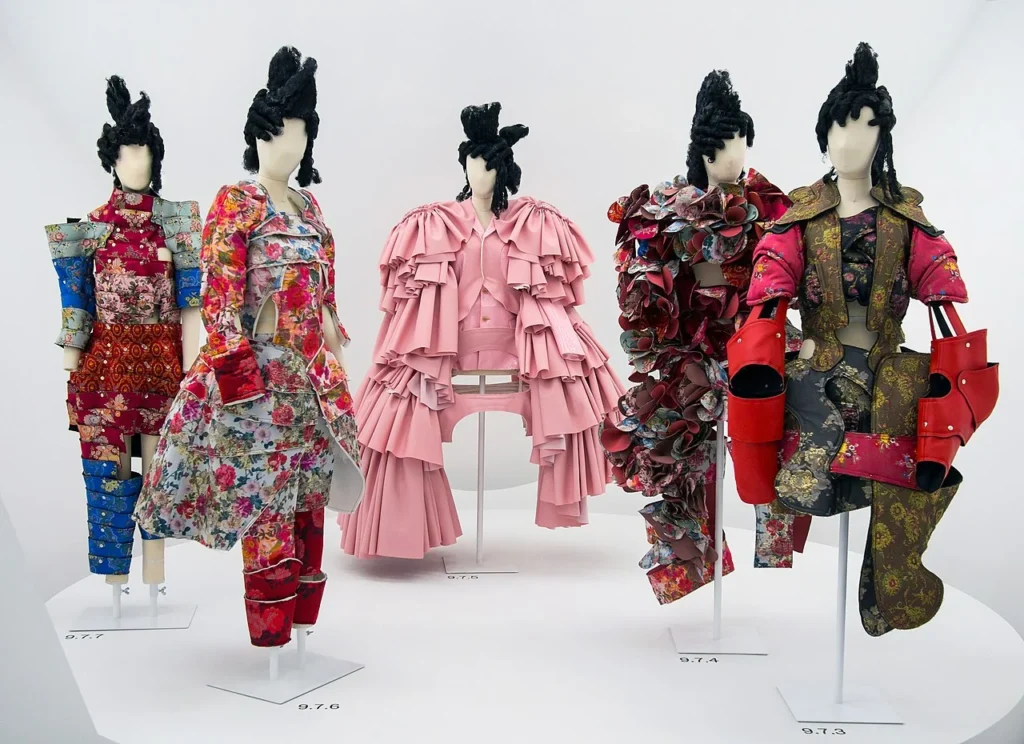
Conceptual and experimental fashion
She often starts her collections with abstract ideas rather than visual trends.
Themes such as imperfection, asymmetry, and emotional tension frequently appear in her work, transforming garments into storytelling tools.
Instead of designing clothes only for aesthetic appeal, Kawakubo uses fashion to communicate messages and provoke reflection.
Fashion shows become immersive experiences where shapes, textures, and movement work together to express deeper concepts. This approach allows her collections to function as artistic statements.
Read more: Meet 8 iconic fashion designers of the moment to inspire you
Deconstruction in design
One of the most striking characteristics of Kawakubo’s work is her treatment of garment structure.
Seams, linings, and inner layers often become visible parts of the design. What is normally hidden turns into a central visual element.
This approach creates garments that feel raw, dynamic, and intentionally imperfect. Asymmetry, irregular finishes, and layered construction add complexity to each piece. The result is a silhouette that feels alive and constantly in motion.
Beyond aesthetics, deconstruction also changes the perception of clothing. Garments stop being fixed objects and become flexible forms.
The idea of anti-fashion
Anti-fashion, in this context, becomes a statement. It challenges the idea that fashion must always be pleasing, easy to wear, or commercially predictable. Instead, it encourages reflection and critical thinking about consumption and identity.
This attitude has influenced an entire generation of designers. Many creatives who prioritize concept, individuality, and experimentation trace their inspiration back to this disruptive mindset.
Read more: How to apply the color of the year to your fashion collection?
Gender neutrality
Blurring gender boundaries has been part of Kawakubo’s design language for decades.
Similar silhouettes, shapes, and structures often appear across menswear and womenswear collections. This creates a more fluid approach to clothing.
Focus shifts away from gender labels and toward form, movement, and personal expression.
As a result, her work aligns naturally with contemporary conversations about identity and inclusivity, reinforcing her long-standing role as a cultural innovator.
Looking for an easier way to plan your collection? Download our free resource and simplify your entire process!
What is Rei Kawakubo’s most iconic design?
One of Rei Kawakubo’s most iconic fashion moments is the Spring/Summer 1997 Comme des Garçons collection. It was officially titled Body Meets Dress, Dress Meets Body.
This collection became a landmark in fashion history. It challenged traditional ideas of beauty, silhouette, and the relationship between clothing and the human body.
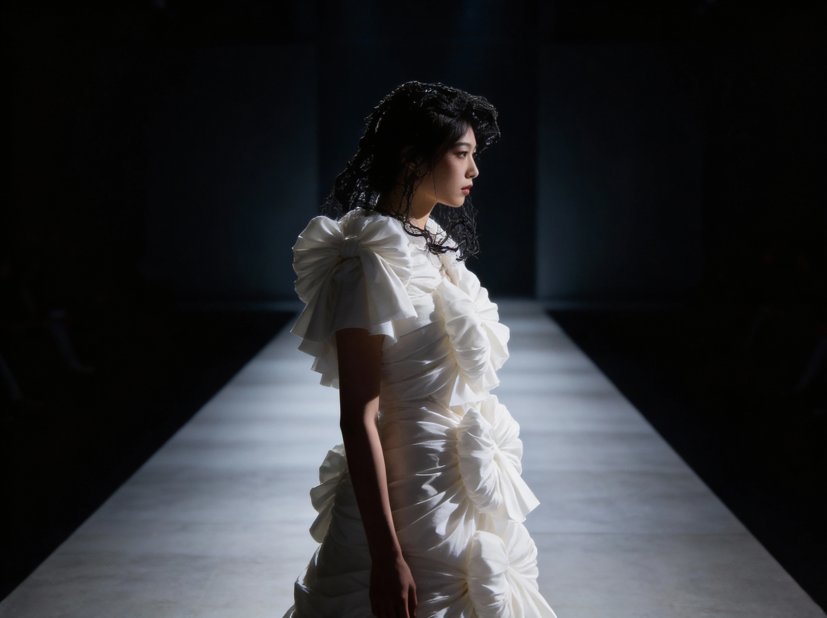
The pieces became famous for its exaggerated, padded shapes. Kawakubo placed rounded padding in unexpected areas such as the hips, back, shoulders, and torso. Instead of highlighting the natural figure, the garments reshaped it.
Conceptually, the designs treated clothing as sculptural forms rather than decorative pieces. The designer used fashion as a tool to provoke thought and emotional response. She invited audiences to rethink the purpose of clothing, moving away from pure aesthetics and toward deeper artistic expression.
When the collection debuted on the runway, reactions were intense. Some critics described it as shocking, while others recognized it as revolutionary.
Over time, however, it became one of the most referenced examples of conceptual fashion. Today, it is frequently studied in design schools and cited in discussions about avant-garde fashion.
Read more: How Valentino Garavani changed high fashion worldwide
Where can I buy Rei Kawakubo’s designs?
Access to Rei Kawakubo’s work goes far beyond traditional retail. Comme des Garçons operates flagship stores in major fashion capitals such as Tokyo, Paris, New York, and London.
These spaces reflect the brand’s experimental identity, often functioning as concept stores rather than conventional boutiques.
Moreover, Dover Street Market, founded by Kawakubo, offers curated selections of Comme des Garçons alongside other avant-garde designers.
Read more: How does the Asia Pacific market impact fashion?
How does Rei Kawakubo approach innovation?
Innovation in Kawakubo’s work begins with curiosity and constant experimentation. New ideas often emerge from questioning established design rules, production methods, and aesthetic standards.
Technology, materials research, and construction techniques also influence her creative process. Unconventional fabrics, sculptural volumes, and hybrid garment structures regularly appear in her collections.
Another key aspect of her innovative approach lies in collaboration and cross-disciplinary inspiration. Partnerships with artists, architects, and designers from other fields help expand creative possibilities.
Through this exchange of ideas, her work remains relevant, progressive, and forward-thinking.
Read more: 5 reasons why fashion houses should innovate with quality
Create collections inspired by Kawakubo with Audaces technology

Audaces Fashion Studio
Audaces Fashion Studio is a groundbreaking innovation for fashion designers within Audaces360 multisolution.
This innovative technology empowers professionals to create smarter sketches on a 3D mannequin. It provides tools and functionalities to enhance your design process.
Its features enable you to examine fit, drape, and movement in different body types. Explore fabrics, colors, textures, and apply prints in a few clicks.
Audaces Idea
Audaces Idea is your solution for creating and applying prints to your designs.
It helps end errors and streamline communication between design and the other teams. This way, you can reduce the development cycle and ensure timely deliveries.
Audaces Idea also includes integrated tech packs and automatic pre-cost calculations. You can visualize all your creation information on a single screen during the process.
Automating technical tasks frees up your time for more design exploration!
Audaces Sofia
Meet Audaces Sofia our cutting-edge fashion Artificial Intelligence. It helps you enhance your creations with an unlimited source of inspiration.
This solution has the power to transform concepts into reality in a matter of minutes. Some simple prompts are all you need to generate print variations.
Audaces Sofia integrates with Audaces Idea and Audaces Fashion Studio. This combination provides you with the complete solution to create effortlessly
Discover Audaces360 and unlock a world of possibilities for fashion design and production. Explore our comprehensive suite of solutions today!
FAQ
Rei Kawakubo is a fashion designer best known as the founder and creative force behind Comme des Garçons. Born in Tokyo, Japan in 1942, she became one of the most influential figures in contemporary fashion.
The label Comme des Garçons was founded in Tokyo in 1969 by Rei Kawakubo. At the beginning, the brand operated as a small company focused on women’s clothing.
Experimental fashion, deconstruction in design, the idea of anti-fashion, and gender neutrality.