


Summary
- Understand what automotive textile is and where it is used in vehicles.
- Learn how digital technologies are improving development and production.
- Get monthly fashion insights straight to your inbox. Subscribe to our newsletter!
Automotive textile plays a fundamental role in modern vehicles. It appears in seats, interior panels, carpets, safety systems, and many other components that drivers and passengers interact with every day.
These materials go far beyond aesthetics. Automotive textiles must combine durability, comfort, safety, and technical performance. Manufacturers also need to meet strict quality standards while maintaining efficient production processes.
At the same time, the automotive industry moves faster than ever. New models reach the market quickly, which pushes suppliers to develop materials, prototypes, and production strategies in shorter cycles. Digital technologies are helping companies respond to this challenge with greater precision and efficiency.
Enjoy the reading!
Sumário
What are automotive textiles?
Automotive textiles are fabrics and textile-based materials designed specifically for use in vehicles. They appear in many components of the interior, including seats, carpets, door panels, and roof linings.
Unlike conventional fabrics, these materials must meet strict technical requirements. Resistance to abrasion, UV exposure, temperature changes, and fire safety are essential factors in their development.
Because people use vehicles daily and in very different environments, durability becomes a key requirement.
Another defining characteristic of automotive textiles is their multifunctionality. In many cases, a single material contributes to comfort, aesthetics, insulation, and structural performance at the same time.
This combination explains why manufacturers invest heavily in engineered textile solutions rather than traditional fabrics.

What are the main types of automotive textiles used today?
Automotive interiors rely on a diverse range of textile technologies. We’ve listed the main ones below:
Fabrics for automotive seats and upholstery
Seat fabrics represent one of the most visible uses of automotive textiles. They directly influence how passengers perceive comfort and quality inside the vehicle.
These materials must resist constant friction caused by daily use. Passengers slide across the seat surface, adjust their position, and expose the fabric to heat, sunlight, and humidity over time.
To handle these conditions, manufacturers often rely on high-resistance synthetic fibers such as polyester. Multilayer textile constructions are also common, combining surface fabrics with foam and support layers that improve comfort and durability.
Textile coverings for panels, doors, and headliners
Textile coverings appear across several interior surfaces in modern vehicles. Door panels, pillars, and headliners frequently use fabric-based materials to create a softer and more refined interior environment.
These textiles also improve acoustic comfort inside the cabin. Soft surfaces help absorb sound waves and reduce the reflection of noise generated by the engine, tires, and road contact.
Automotive carpets and acoustic insulation solutions
Many carpet systems use multilayer constructions that combine textile surfaces with foam, felt, or nonwoven structures. These layers help absorb vibrations and reduce the transmission of road noise.
Weight reduction has also become an important design consideration.
Manufacturers increasingly develop lightweight textile solutions that maintain acoustic performance while supporting broader vehicle efficiency goals.
Technical textiles for safety systems
Some of the most critical automotive textile applications are about to safety systems. Materials used in airbags, seatbelt components, and reinforcement structures must perform reliably under extreme conditions.
Airbag fabrics, for example, are made to deploy in milliseconds while resisting very high pressure. They are typically produced using high-strength synthetic fibers and tightly controlled weaving techniques.
Because these components play a direct role in passenger protection, manufacturers apply strict testing and certification processes throughout development and production.
Read more: Explore tech solutions for the global automotive industry
What production challenges impact automotive textiles?
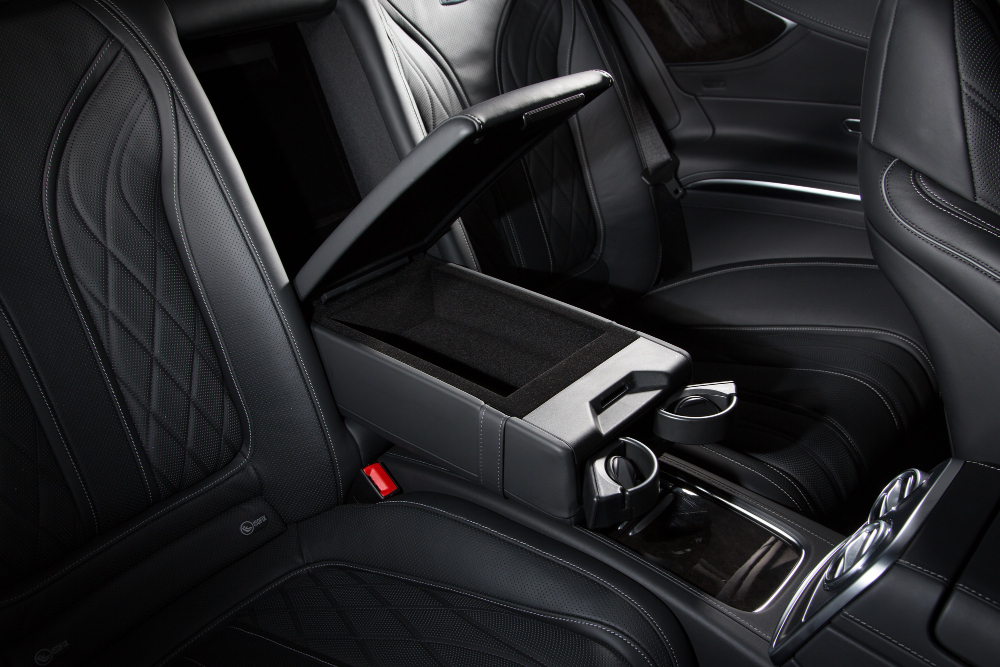
Quality standardization
Maintaining consistent quality across large production volumes is one of the main challenges in automotive textile manufacturing.
Automotive components must meet precise technical specifications, including color consistency, mechanical strength, abrasion resistance, and dimensional stability. Even small variations can create assembly issues or affect the perceived quality of the vehicle interior.
Because multiple suppliers and production lines may contribute to the same project, companies rely on strict testing protocols and standardized manufacturing processes to maintain uniform results.
Waste reduction and raw material optimization
Fabrics for interior components are often cut into complex shapes, which can lead to unused areas and material loss.
Improving marking strategies during the cutting stage helps manufacturers maximize fabric usage. Optimized layouts allow the production of more components from the same material roll.
Beyond cost savings, reducing waste also supports sustainability goals.
Efficient material use lowers the demand for raw fibers and reduces the environmental impact of production.
Read more: Benefits of investing in an automatic fabric cutting machine
Cost control without compromising technical performance
Advanced materials, coatings, and reinforcement structures can improve performance. However, they also increase production complexity if not carefully managed.
For this reason, manufacturers increasingly focus on process optimization and digital planning tools. These technologies help balance technical performance with production efficiency.
Adapting to increasingly shorter development cycles
The automotive industry operates with increasingly fast product development timelines. New models and updates reach the market more frequently than in the past.
This trend affects the entire supply chain. Textile suppliers must respond quickly to new design specifications, testing requirements, and production volumes.
Companies that adopt flexible workflows and digital development tools are better equipped to keep pace with these accelerated cycles.
Want to reduce material waste in your cutting process? Download our guide and discover practical ways to improve efficiency.
How is digitalization transforming automotive textile development?
Digital technologies are changing the way we design, test, and produce automotive textiles. Virtual tools now allow professionals to analyze materials, evaluate surface behavior, and refine components before physical production begins.
Virtual simulation of textile materials and surfaces
Simulation technologies allow professionals to analyze how textile materials behave under different conditions. You can evaluate surface appearance, elasticity, and interaction with other components in digital environments.
This capability helps designers explore different material options before committing to physical samples.
Read more: 4 advantages of technology in automotive furniture design
Integration between CAD, product engineering, and production
Digital integration connects different stages of automotive textile development. Design systems, engineering tools, and production planning platforms can share information in real time.
This connectivity improves communication between teams. Design updates can quickly reach engineering and manufacturing departments, reducing delays and misunderstandings.
Integrated digital workflows also improve traceability, making it easier to track design decisions and production parameters throughout the project lifecycle.
Reducing physical prototypes and improving efficiency
Physical prototypes have traditionally been a necessary step in automotive development. However, producing multiple iterations requires time, materials, and testing resources.
Digital tools allow many validation steps to happen in virtual environments before manufacturing begins. This reduces the number of prototypes required and accelerates product development without compromising reliability.
Read more: Emerging auto trends that are shaping the future of textiles
Data and automation supporting decision making
Modern manufacturing generates a large amount of operational data. You can collect and analyze information related to materials, machine performance, and production in real time.
With better data visibility, manufacturers can identify inefficiencies, adjust processes, and improve planning accuracy.
Automation also plays an important role.
Digital systems reduce manual intervention, helping maintain consistent quality and improving overall production reliability.
Optimize automotive textile cutting with Audaces
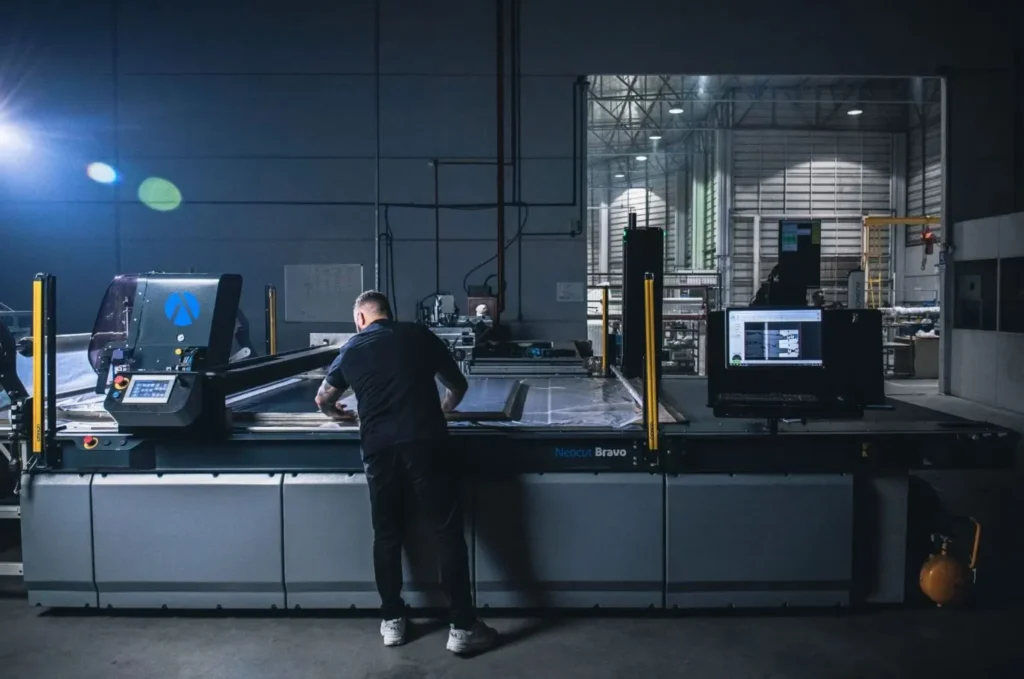
Audaces Cutting Room
By embracing cutting-edge technology, manufacturers can achieve significant improvements in the production process. From greater design flexibility to enhanced efficiency and reduced costs.
This is where Audaces Cutting Room steps in! Rely on Audaces’ cutting-edge machinery to automate your production process.
Achieve impeccable cuts on curves and details, speeding up your deliveries and minimizing fabric waste through automation.
Audaces ICF
An intelligent technology that connects people and cutting room equipment with high security. It provides the best tools for planning and managing spreading and cutting processes.
In addition to streamlining your workflow, the online platform ensures access for all stakeholders. All information is available in real time via smartphone. Managers can effortlessly schedule cut orders, specifying details like spreads, layers, cuts, and fabric quantities.
Moreover, Audaces ICF monitors and alerts about differences between planned and actual results, with automatic correction suggestions.
Ready to improve your automotive production performance? Talk to an Audaces consultant and get a free manufacturing diagnosis tailored to your business!
FAQ
Automotive textiles are fabrics and textile-based materials designed specifically for use in vehicles. They appear in many components of the interior, including seats, carpets, door panels, and roof linings.
Fabrics for automotive seats and upholstery, textile coverings for panels, doors, and headliners, and automotive carpets and acoustic insulation solutions.
They include quality standardization, waste reduction and raw material optimization, and cost control without compromising technical performance.