

Summary
- A hem is a finishing technique applied to raw fabric edges to create a clean and polished look.
- The right hem choice depends on the fabric weight, garment design, and available machinery.
- Get monthly fashion insights straight to your inbox. Subscribe to our newsletter!
Finishing details can completely transform a garment, and hems play a key role in that process. More than just a functional element, they influence the overall look. From subtle finishes to bold design statements, the right hem can elevate even the simplest design.
Different types of hems also respond to different needs in production. Some offer speed and efficiency for large-scale manufacturing. Meanwhile, others focus on refinement and precision for high-end pieces.
In this article, you’ll explore the main types of hems and how you can apply each one in practice.
Happy reading!




Why does understanding types of hems matter?
Not every type of hem works on every garment. Knowing your options directly impacts the quality of your finished collection.
Take fine, smooth fabrics like silk: they require a blind stitch hem. Denim, on the other hand, handles a plain single-fold hem with ease. Having command of the different types of hems speeds up your workflow and ensures a more professional finish across your line.
What is a hem, exactly?
A hem is a finishing technique applied to the raw edges of a garment. It varies depending on the style and the desired finish.
Its primary function is to secure the fabric’s edge so it doesn’t fray or unravel, while also giving the piece a polished final look. Hems are also common to shorten sleeves, t-shirts, trouser legs, dresses, skirts, or shorts.
One practical advantage: hemming doesn’t cut the fabric. If you ever need to let out the length again, you can simply release or adjust the hem without losing material.
Hems are straightforward to execute and deliver a clean finish. However, it’s worth noting that some garments intentionally forgo a hem altogether, embracing a raw or frayed edge. This approach is common in fabrics like jersey, wool, felt, and denim.
Read more: Create your own pants pattern in 5 simple steps
Main types of hems used in garment manufacturing
There are many ways to construct the different types of hems. If you’re running a garment manufacturing business or developing a new collection, understanding which type of hem to use and when can meaningfully elevate your output quality.
Here are the key types of hems to know:
Single-fold hem (plain hem)
The most widely used among all types of hems. The single-fold hem is typically associated with sportswear or heavyweight fabrics where a double-fold would be too bulky.
To construct it, finish the raw edge on a serger (overlocker) and press with an iron. Then, fold the fabric inward one to two centimeters, and stitch along the edge.
A key technical note: if you’re working on a curved edge, keep the hem allowance narrow. A wide hem on a curved edge causes the fabric to twist and pucker on the inside.
In those cases, aim for no more than one centimeter regardless of the type of hem used.
Read more: 7 types of waistbands to use in your garment patterns
Double-fold hem
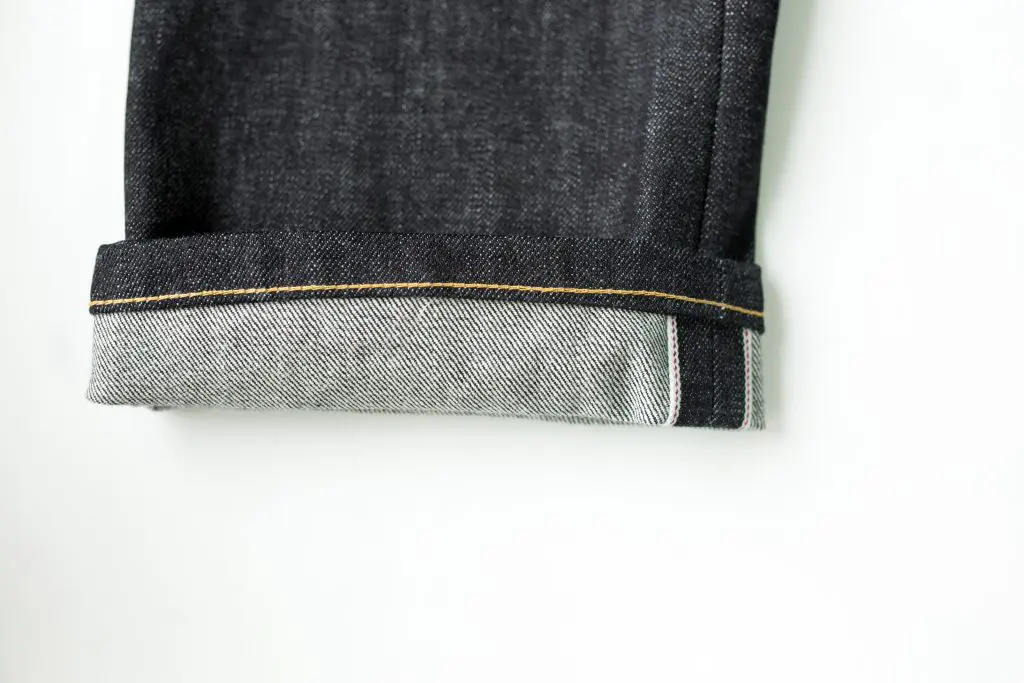
For a cleaner, more refined finish, the double-fold hem is the go-to choice among types of hems for structured garments.
Fold the fabric twice and stitch close to the upper fold. Think of it as the single-fold hem, but with an additional fold. This adds thickness and improves overall finish quality.
Because the raw edge is tucked inside the double fold, no serging is needed. This type of hem is a staple in denim production.
Handkerchief hem (narrow rolled hem)
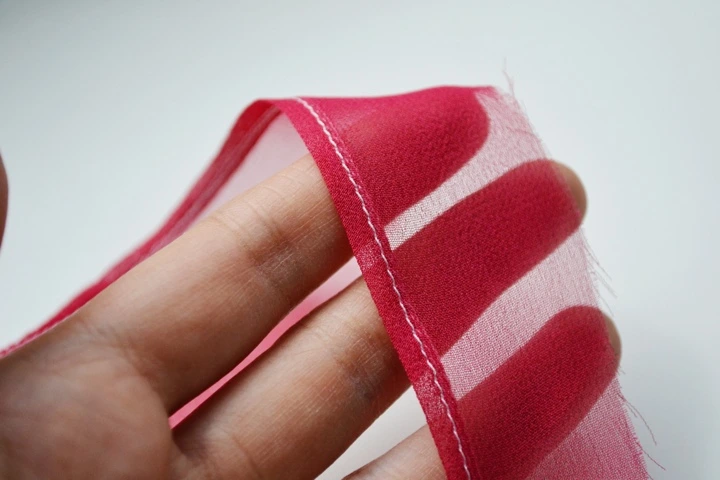
Among the types of hems designed for delicate fabrics, the handkerchief hem stands out. It’s typically reserved for lightweight materials, where a barely-there finish is the goal.
Construction involves a very narrow double fold, roughly 3 to 5 mm wide, with a topstitch right at the fabric edge.
It’s the type of hem of choice for scarves, flowing dresses, collars, and cuffs where discretion and refinement are essential.
Read more: Learn when to use each modeling technique and how to choose them wisely
Iron-on hem tape
A practical option among the more accessible types of hems. It’s particularly useful for quick alterations or for those still building their hand-sewing skills.
First, you need to place the tape inside the folded hem allowance. Next, press with a hot iron to bond it in place. Clean, efficient, and tool-free beyond a good iron.
Rolled hem
Among the types of hems suited to very fine, sheer fabrics, the rolled hem is a go-to. It’s constructed by rolling the fabric edge between your fingers and hand-stitching the roll close to the fabric.
The result is a lightweight, barely visible finish that adds no bulk to delicate pieces.
Read more: Sewing and patterns expert tips to boost productivity
Other types of hems
Beyond these core techniques, the industry uses a range of specialized types of hems. Some are designed for textured or bias-cut fabrics. At the same time, others are an exclusive signature construction of a brand.
Custom types of hems can also be created by combining multiple stitch passes. For example, layering two seams one over the other for a distinctive effect.
Discover how to use CAD software to create perfect hem patterns. Download our exclusive free guide now!
How can technology support your choice of hem types?
Technology has become a powerful asset for fashion manufacturers looking to increase precision and reduce rework.
By digitally prototyping a garment before cutting any fabric, you can test how specific types of hems behave on a given material.
This way, you can identify fit issues and construction challenges before they make it to the sewing floor.
Read more: 6 signs you’re ready to move to 3D prototyping
Achieve more precise types of hems with Audaces technology
For a collection to succeed, every detail needs to be right, from fabric selection through to final hem execution.
Audaces offers a suite of tools designed to support fashion businesses at every stage of production:
Audaces Pattern
With Audaces Pattern, you can build precise patterns, automate grading, and create a structured library of reusable components.
This not only improves daily productivity but also ensures consistency across collections. The result is a more efficient workflow, from design to production, with fewer errors and better use of resources.
Audaces 3D
With Audaces 3D, you can virtually test the patterns created in Audaces Pattern. They work together to transform the way your company develops new products.
Make your company more sustainable by ensuring the precision of details, fit, and measurements with digital prototypes.
Discover Audaces360 and unlock a world of possibilities for fashion design and production. Explore our comprehensive suite of solutions today!
FAQ
Not every type of hem works on every garment. Knowing your options directly impacts the quality of your finished collection.
A hem is a finishing technique applied to the raw edges of a garment. It varies depending on the style and the desired finish.
They include single-fold, double-fold, handkerchief, and rolled hem.