
Table of contents
Summary
- CAD software for pattern making has become essential for brands that want to scale with consistency and precision.
- It reduces errors, improves productivity, and connects creative work with industrial execution.
- Get monthly fashion insights straight to your inbox. Subscribe to our newsletter!
Creating patterns is one of the most technical steps in garment development. Every line, curve, and measurement directly affects fit, production efficiency, and final quality. At the same time, the fashion industry demands speed.
Collections need to move faster, with fewer errors and lower costs. In this context, relying only on manual processes can limit growth. That is where CAD software for pattern making changes the game. It brings accuracy, agility, and control to a stage that used to depend heavily on time and repetition.
In this article, you’ll discover how to choose the right solution and apply it to optimize your processes.
Happy reading!




What does CAD software for pattern making solution need to deliver?
First, technical precision is essential. Pattern construction requires exact measurements and consistent geometry. A reliable system ensures that every piece fits perfectly within the intended specifications.
Standardization is another key factor. Teams can create and reuse consistent bases, reducing variations between collections. This improves both internal communication and production results.
On top of that, error reduction plays a major role. Manual modeling often leads to inconsistencies that only appear later in production. With CAD, many of these issues are identified and corrected earlier.
Finally, productivity increases in a tangible way. Tasks that used to take hours can be completed in minutes, freeing up time for creativity and strategic decisions.
Which features are decisive in CAD software for pattern making?
Choosing the right solution depends on understanding which functionalities truly impact performance.
Here are a few examples:
Advanced pattern construction and editing tools
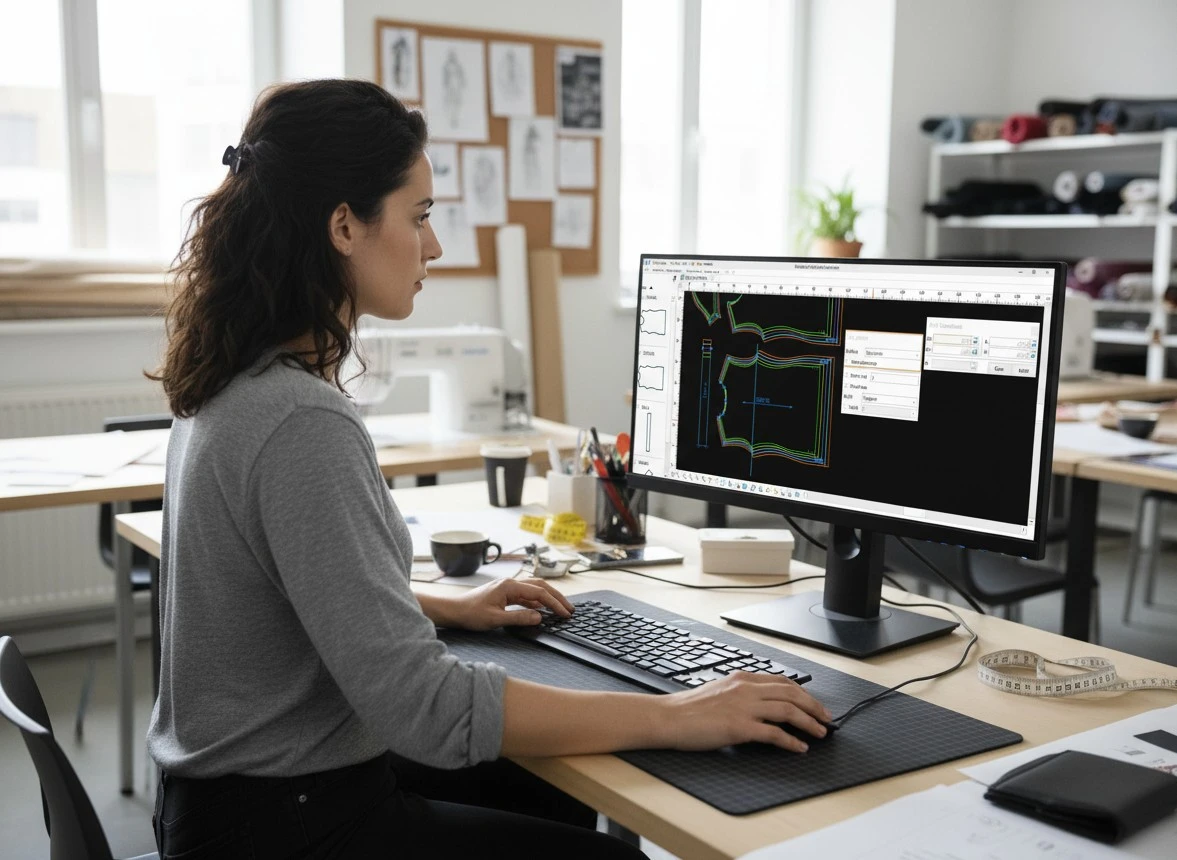
A strong CAD system must offer precise and flexible tools for building patterns from scratch or editing existing ones.
Pattern makers need control over curves, measurements, and proportions. At the same time, the interface should allow quick adjustments without compromising accuracy.
Automatic and parameterized grading
Grading is one of the most time-consuming steps in manual processes.
With CAD software, this task becomes automated and consistent. Parameterized grading ensures that size variations follow predefined rules, maintaining fit quality across the entire size range.
Read more: Why is a grading tool essential in efficient software?
Library of reusable blocks and components
Reusability is a major advantage.
A well-structured library allows teams to store base patterns, components, and construction details. This reduces repetitive work and speeds up the development of new models.
Quick adjustments and change history
Fashion development rarely follows a straight line. And efficient CAD software makes it easier to test variations, adjust measurements, and track changes.
Having a history of edits also improves decision-making and avoids losing previous versions.
When should I move from manual pattern making to CAD?
The transition usually happens when limitations start to appear clearly in daily operations:
Signs of bottlenecks in pattern creation
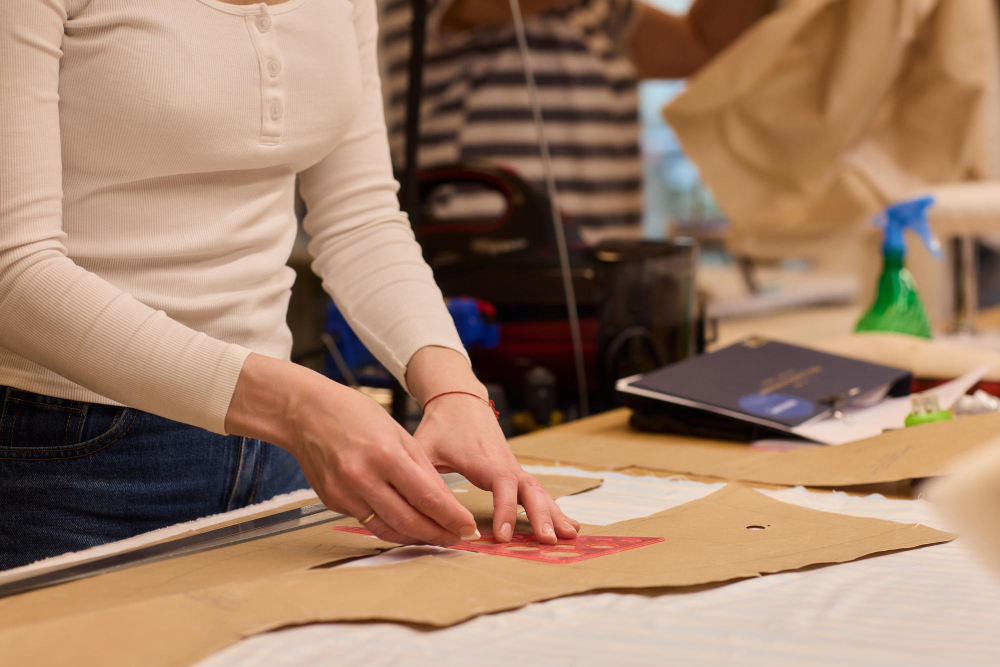
Delays in pattern development are often the first warning sign. If creating or adjusting patterns takes too long, it directly impacts the entire production timeline.
Read more: 7 reasons to go digital with your handmade pattern
Increase in product volume and complexity
As collections grow, manual processes struggle to keep up.
More models, more variations, and more technical requirements demand a system that can handle complexity without slowing down.
Need to reduce development lead time
Speed has become a competitive advantage. Brands that adopt CAD software can shorten development cycles and respond faster to market demands.
Read more: Master the use of industrial patterns in apparel production
Pressure for cost, deadline, and quality
Balancing these three factors is challenging with manual methods. The good news is CAD tools help maintain consistency while meeting tighter deadlines and controlling costs.
Download our exclusive ebook now and learn how to choose the best solutions for your business!
How does CAD software impact garment costs?
Cost reduction does not happen in a single step. It is the result of multiple improvements across the process.
More accurate patterns reduce fabric waste. Fewer errors mean less rework. Faster development lowers operational costs.
Over time, these gains accumulate. The result is a more efficient production flow and a healthier margin per piece.
What criteria should I evaluate before choosing the best CAD software for pattern making?

Not all solutions deliver the same value. Choosing the right one requires a careful technical evaluation.
Compatibility with your production process, for example, is essential. The software must adapt to your product types and manufacturing reality.
Ease of use also matters, but it should not come at the expense of technical depth. A good system balances accessibility with advanced capabilities.
Integration is another critical point.
The CAD software should connect with marker making, cutting systems, and management tools.
Moreover, consider support and updates. A solution that evolves with your business and offers reliable technical assistance makes a significant difference in the long term.
Read more: Which pattern maker software is worth the investment?
Why integrate CAD software with cutting?
Integration connects development directly to production.
With a seamless flow, pattern data moves straight to cutting without manual conversions. This reduces errors and saves time.
Marker making becomes more efficient, improving fabric usage. Better layouts lead to less waste and lower costs.
In addition, eliminating manual steps reduces the risk of failures during cutting and sewing. The result is a smoother and more reliable production process.
Read more: What makes industrial CAD a game-changer in fashion?
How can I calculate the ROI of CAD software for pattern making?
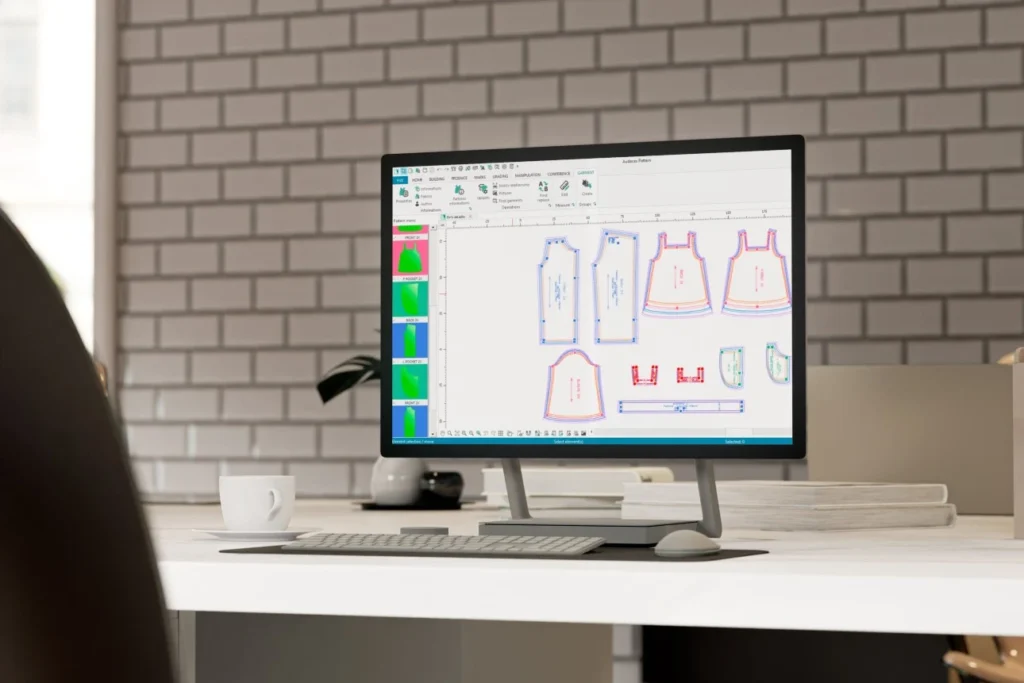
Understanding return on investment helps justify the transition and measure its impact. You should consider the following points:
Time saved in pattern making and grading
Automation significantly reduces the time spent on repetitive tasks. This allows teams to focus on higher-value activities, increasing overall productivity.
Reduction of production errors and waste
Fewer mistakes mean fewer corrections. Less rework and lower fabric waste directly impact operational costs.
Read more: 5 fashion production performance indicators to monitor
Impact on cost per piece
Efficiency gains translate into lower production costs per unit. Even small improvements can generate significant savings at scale.
Financial return in the medium and long term
The investment in CAD software pays off over time. As processes become more efficient, the business gains speed, consistency, and profitability.
Create standardized patterns with Audaces Pattern
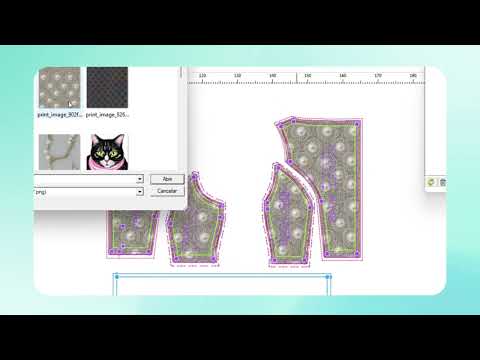
Standardization is one of the biggest advantages of using a professional CAD solution.
With Audaces Pattern, you can build precise patterns, automate grading, and create a structured library of reusable components.
This not only improves daily productivity but also ensures consistency across collections. The result is a more efficient workflow, from design to production, with fewer errors and better use of resources.
Discover Audaces360 and unlock a world of possibilities for fashion design and production. Explore our comprehensive suite of solutions today!
FAQ
Advanced pattern construction and editing tools, automatic and parameterized grading, and quick adjustments and change history.
The signs include bottlenecks in pattern creation, increase in product volume and complexity, and need to reduce development lead time.
Consider time saved in pattern making and grading, reduction of production errors and waste, and impact on cost per piece.