
Table of contents
Summary
- Jeanswear is the fashion category centered around garments made from denim.
- From classic jeans to jackets, skirts, and dresses, denim clothes have evolved from functional workwear into a global fashion category.
- Want to develop your jeanswear collections more efficiently? Discover the technology behind Audaces360.
Jeanswear is deeply connected to contemporary fashion, but its roots are firmly grounded in workwear.
Created to meet the need for durable clothing, denim garments gradually moved beyond their original purpose to become a global fashion language worn across generations, cultures, and styles.
Today, denim clothes range from timeless blue jeans to complete collections exploring different silhouettes, washes, colors, and finishes. The category continues to evolve alongside new technologies, changing consumer preferences, and new approaches to product development and manufacturing.
Want to understand how denim became such an important part of the fashion industry and what goes into developing a denim collection? Keep reading!

What are denim clothes?
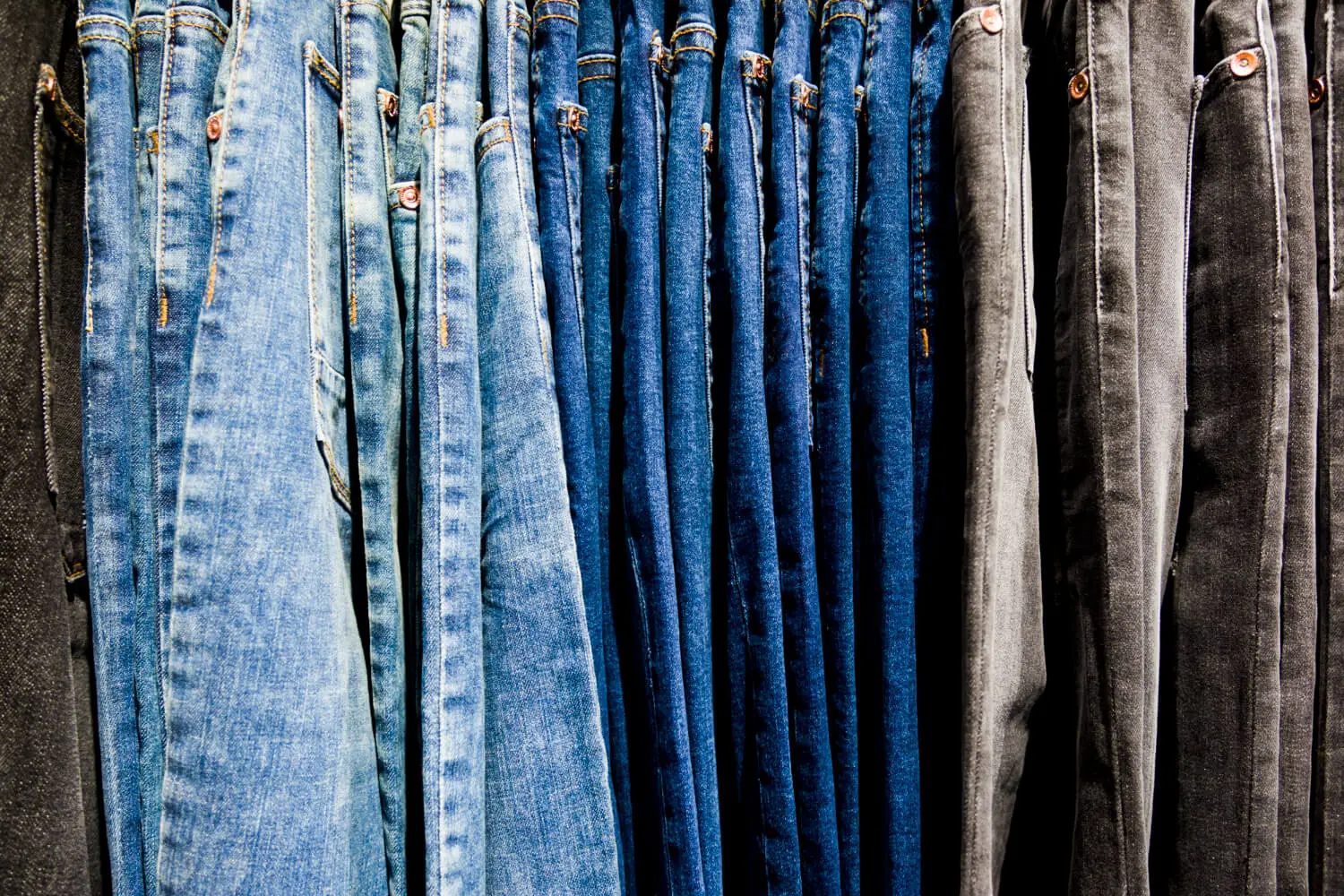
Denim clothes are garments made from denim, a durable twill fabric traditionally associated with jeans.
Although jeans are the most recognizable denim product, the category extends far beyond trousers. Denim jackets, shirts, skirts, dresses, shorts, overalls, and accessories can all be part of a jeanswear collection.
Today, denim clothes encompass a wide variety of products designed for different occasions, seasons, and consumer profiles.
The category continues to evolve through changes in fit, construction, washes, finishes, color, and styling while maintaining denim as its defining material.
Jeans, denim, and jeanswear: what’s the difference?
These terms are closely connected, but they do not mean exactly the same thing:
- Denim is the fabric. Traditionally made primarily from cotton, it is known for its durable twill construction and is often dyed with indigo.
- Jeans are trousers made from denim.
- Jeanswear is the broader fashion category that includes jeans and other garments developed with denim.
- Denimwear is also commonly used in the fashion industry to describe clothing made from denim and can often be used interchangeably with jeanswear.
Understanding the difference is especially useful when discussing materials, product categories, sourcing, and collection development.
How are denim clothes different from workwear?
Denim clothes and workwear are closely connected, but they describe different concepts.
Denim clothes are defined primarily by the fabric used to make them, while workwear is a broader category rooted in clothing originally designed for physical labor and functional environments.
The connection between them is historical. The first blue jeans were developed as hard-wearing trousers for workers who needed garments capable of withstanding demanding conditions.
That functional heritage is still visible in denim fashion today. Reinforced seams, sturdy fabrics, practical pockets, utility details, and durable construction all reflect its workwear origins.
Contemporary workwear, however, is no longer limited to industrial uniforms. Its utilitarian shapes, practical details, and robust materials have also become influential across streetwear and everyday fashion.
For that reason, denim collections frequently draw inspiration from workwear even though the two categories are not the same.
Read more: Fashion styles: 7 trends to supercharge your collection
How did denim clothes become a fashion staple?
Denim existed before the modern blue jean, but one of the defining moments in its history came in the United States in 1873.
That year, Levi Strauss & Co. and tailor Jacob Davis received a U.S. patent for reinforcing work trousers with metal rivets at points of strain. The innovation made the garments more durable and helped establish what would later become known as blue jeans.
Originally associated with workers, jeans gradually moved into mainstream wardrobes and became closely connected with different youth movements, subcultures, music scenes, and fashion trends.
Over time, designers and brands reinterpreted denim through new silhouettes, washes, finishes, and construction techniques. As a result, denim clothes evolved from practical garments into products found across virtually every segment of the global fashion market.
The global market for denim clothes
Denim is now at the center of a major global fashion business supported by an international network of fiber producers, textile mills, garment manufacturers, finishing facilities, brands, and retailers.
Grand View Research valued the global denim jeans market at USD 91.2 billion in 2025 and projects it to reach USD 146.3 billion by 2033.
The textile supply chain is equally international. World Bank WITS data for one of the main denim fabric trade classifications, covering denim with at least 85% cotton and weighing more than 200 g/m², shows that the leading exporters in 2024 were China, Pakistan, India, Türkiye, and Egypt.
China exported approximately USD 634.7 million in this category, followed by Pakistan at USD 508.5 million.
These figures highlight how globally distributed the industry has become. Denim fabric can be produced in one country, cut and sewn in another, finished elsewhere, and ultimately sold by brands serving markets around the world.
At the same time, the category continues to change. Premium denim, new silhouettes, alternative fibers, lower-impact finishing technologies, and digital product development are creating new opportunities for brands developing denim clothes across different price points and market segments.
Read more: A full guide on how to create a clothing brand from scratch
How are jeans actually made?
Jeans are one of the most familiar garments in everyday wardrobes, but producing them involves several development and manufacturing stages.
Denim has particular characteristics related to weight, rigidity, shrinkage, stretch, and finishing, so decisions made throughout the process can directly affect fit and final appearance.
Whether a brand is developing classic jeans or a complete range of denim clothes, the main stages of production follow a similar structure.
Design
Every product starts with an idea.
During the design stage, teams define the silhouette, fit, proportions, pockets, seams, trims, wash direction, and other details that give the garment its identity.
With denim, it is especially important to consider the desired final appearance early in the process because washing and finishing can affect color, texture, measurements, and overall look.
Digital design technologies can help teams explore alternatives and communicate product concepts before moving into physical development.
Read more: What is the best 3D clothing design software to invest in?
Pattern making
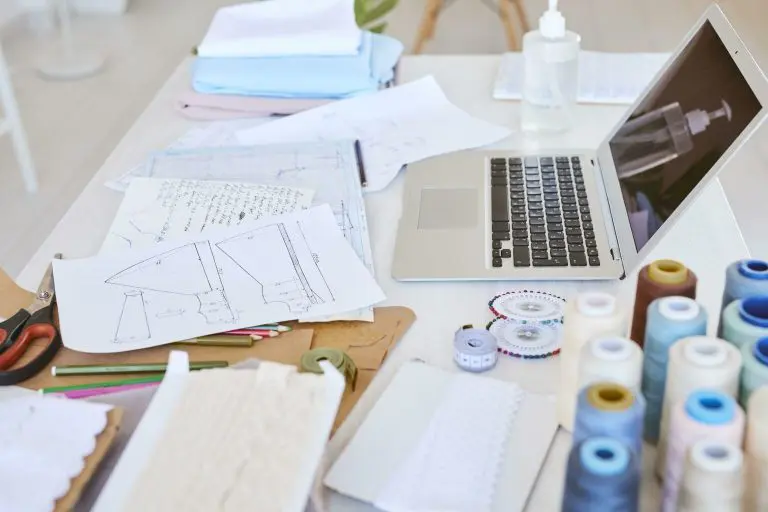
Pattern making translates the design into the individual pieces needed to construct the garment.
Patterns define dimensions, proportions, fit, seam placement, pockets, and construction details.
For denim garments, pattern makers also need to consider the characteristics of the selected fabric and the changes that may occur after washing and finishing.
Read more: Explore clothing pattern making techniques for your production
Cutting
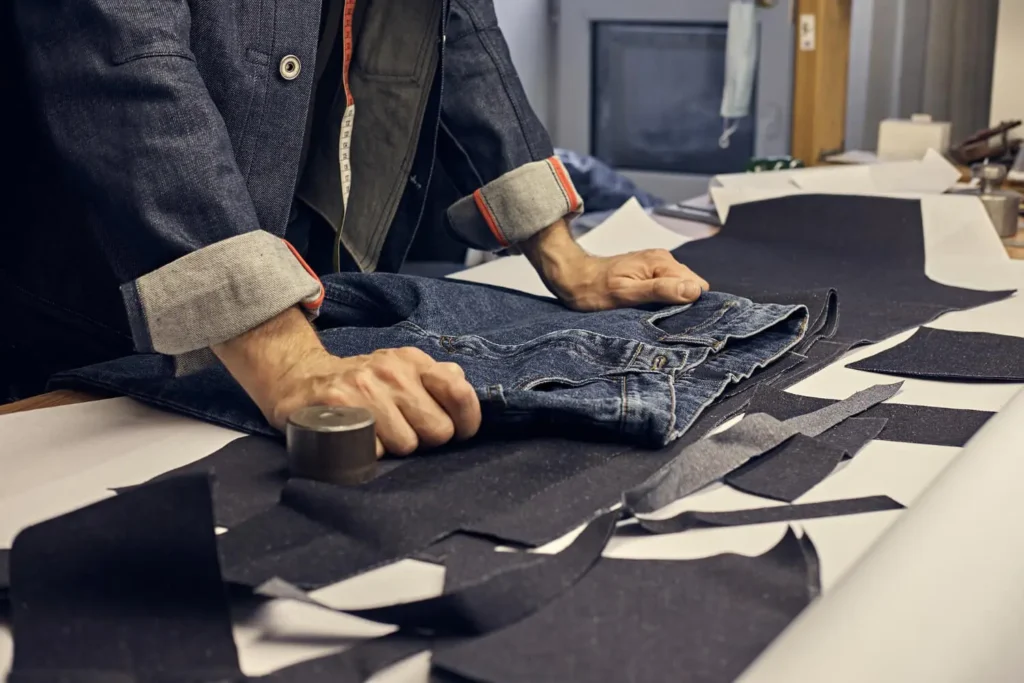
Once the patterns are approved, the denim is spread and cut into individual garment pieces.
Accurate grain alignment and consistent fabric positioning are essential to prevent twisting, distortion, and inconsistencies in the finished garment.
Efficient marker planning can also improve fabric utilization, an important consideration given the volume and cost of material used in large-scale denim production.
Read more: 7 pro tips on how to cut fabric for garment manufacturing
Sewing
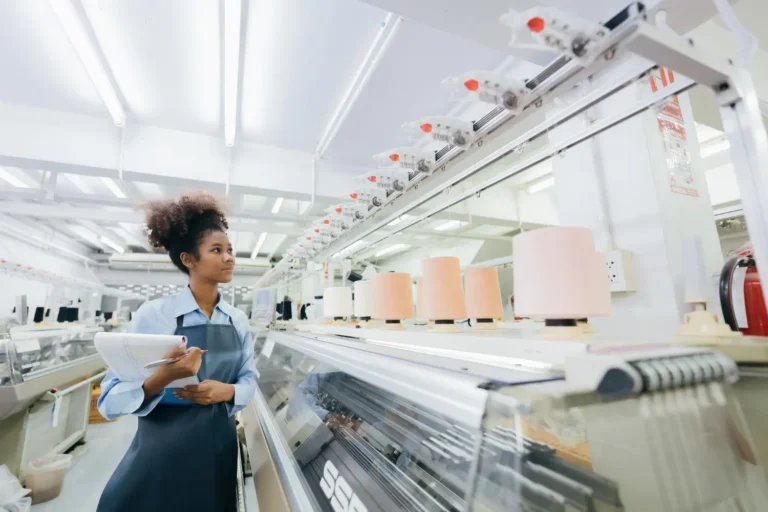
The cut pieces are assembled into the garment using industrial sewing equipment.
Because denim can be thicker and denser than many apparel fabrics, production may require appropriate needles, strong threads, reinforced seams, and machinery suited to the selected fabric weight.
Construction details such as topstitching, bartacks, rivets, pockets, waistbands, and belt loops also play an important role in the visual identity and durability of denim products.
Washing and finishing
Washing and finishing are among the most distinctive stages of denim production.
They can transform raw denim into products with different colors, textures, softness levels, fades, contrasts, and worn effects.
These processes also have significant environmental implications.
A Levi Strauss & Co. lifecycle assessment estimated that one pair of Levi’s 501 jeans accounted for 3,781 liters of water across its full lifecycle, including cotton cultivation, manufacturing, and consumer care. Cotton cultivation represented 68% of the total in that study, while consumer care represented 23%.
It is important to note that this figure applies specifically to the product and methodology studied by Levi Strauss & Co., rather than representing a universal water footprint for every pair of jeans.
The environmental impact of denim has encouraged manufacturers to explore lower-water finishing techniques, water reuse, alternative fibers, and processes that reduce the resources required to achieve specific effects.
Dry processes
Dry finishing techniques create visual effects without relying primarily on traditional water-based washing.
They can be used to create fading, abrasion, whiskers, and other surface effects with greater control over specific areas of a garment.
Technologies such as laser finishing have expanded the possibilities for reproducing consistent effects while reducing reliance on some conventional manual processes.
Wet processes
Wet finishing uses water together with dyes, chemicals, enzymes, or other treatments to modify the color, hand feel, texture, and appearance of denim.
Different wash recipes can soften the fabric, alter the indigo color, create faded surfaces, and achieve effects that would be difficult to reproduce through dry processes alone.
The exact process depends on the fabric, design, desired aesthetic, production scale, and environmental targets of the manufacturer.
Final inspection
After washing and finishing, garments need to be evaluated again.
Teams can inspect fit, measurements, shade consistency, stitching, trims, wash effects, surface defects, and overall construction to ensure the finished product meets the collection’s specifications and quality standards.
Because denim finishing can change both the dimensions and appearance of a garment, this final review is especially important for denim clothes.
What types of denim clothes can a collection include?
Classic blue jeans may be the first product that comes to mind when we think about denim, but the fabric can support a much broader product mix.
Brands can develop complete collections of denim clothes rather than relying on a single product category.
The exact assortment depends on the brand’s positioning, target customer, season, price point, and creative direction, but a denim collection may include:
- Jeans and denim trousers
- Jackets
- Shirts
- Skirts and dresses
- Shorts
- Overalls and utility garments
- Accessories
The assortment can also explore different denim weights, colors, stretch levels, washes, surface treatments, and silhouettes to create variety while maintaining a cohesive collection identity.
Read more: Fashion collection development guide for beginners
Create denim clothes from your references with LooksMaker
Developing a collection of denim clothes often begins with a mix of references: a silhouette from one garment, the wash of another, a specific pocket construction, a color direction, or details collected across different sources.
With Audaces LooksMaker, fashion professionals can bring those visual references together and transform them into realistic garment concepts using an AI-powered platform created specifically for the fashion industry.
Upload references for silhouettes, fabrics, prints, colors, and concepts, then use AI to generate and refine new product proposals without starting over after every adjustment.
Turn your denim references into new fashion products and discover a faster way to create, refine, and validate your next collection with LooksMaker!
FAQ
Denim clothes are garments made primarily from denim fabric, including jeans, jackets, shirts, skirts, dresses, shorts, overalls, and other fashion products.
Jeanswear focuses on garments made from denim, while workwear is a broader category inspired by functional clothing originally designed for physical labor.
It can include jeans and denim trousers, jackets, shirts, shorts, skirts, dresses, overalls, and utility garments.