
Table of contents
Summary
- Clothing apps support every stage of garment development, from the initial concept to the final sale.
- Today, these digital tools help teams share information and make more informed decisions.
- Discover how the Audaces360 ecosystem can support the next stage of your fashion business.
Clothing apps are changing the way fashion collections are developed. Tasks that once required physical samples or manual processes can now be completed, reviewed, and refined on screen.
This shift is also changing how teams work together. When a design is updated during development, the change can be shared with everyone involved rather than leaving each department to work in isolation.
So, which tools are available, and what does each one do? In this article, we explore six types of clothing apps, their main features, and how they fit into a fashion business.
Enjoy the read!
What are clothing apps, and what are they used for?
Clothing apps are digital tools that support different stages of a fashion business, from garment design and development to production and sales.
Depending on their purpose, they can help teams create designs, develop patterns, simulate garments, manage tech packs, plan production, or support sales.
Imagine developing a collection without these tools. Every change could mean repeating manual tasks, reworking samples, or starting parts of the process over.
With the right clothing apps, much of this work can happen digitally, with information shared across departments.
How have clothing apps changed the fashion design process?
Clothing apps have given designers more flexibility to explore ideas throughout collection development.
A concept may go through several revisions before it becomes a finished garment. Digital tools make it possible to review those decisions while the product is still being developed.
This gives teams more room to test concepts, identify necessary adjustments, and make decisions before producing a physical sample.
It also changes how people collaborate. When an update is available digitally, everyone involved can work from the same version of the design.
As a result, teams can spend less time reacting to what has already been produced and more time improving what comes next.
What types of clothing apps can help me create a collection?
Different clothing apps are designed for different stages of collection development, and each addresses a particular challenge.
The best choice depends on where manual tasks take up the most time, where mistakes tend to happen, and which information needs to move between teams.
Here are six types of fashion software that can support your workflow.
Fashion design software
Fashion design software helps turn ideas into visual garment concepts and explore different creative directions.
For example, LooksMaker uses AI developed specifically for fashion to generate garment concepts and fashion visuals from visual references.
The platform also creates flat sketches, preliminary tech packs, and virtual try-ons using digital models.
Read more: How to design a garment? Everything you need to know
Pattern making and marker making software
Pattern making and marker making software turns design concepts into the technical information needed for production.
Audaces Digiflash digitizes physical patterns, while Audaces Pattern allows teams to create and edit patterns digitally.
Audaces Marker, in turn, arranges pattern pieces into markers to improve fabric utilization during cutting.
3D garment simulation software
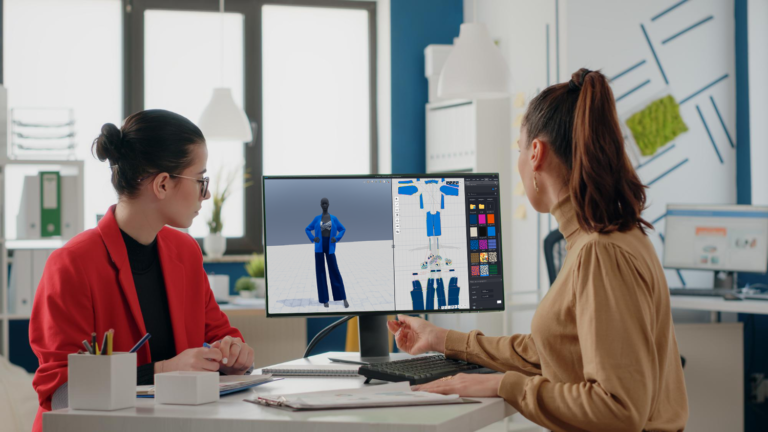
3D simulation software helps teams visualize how a garment may look and behave before producing a physical sample.
With Audaces 3D, teams can simulate garments on digital avatars and evaluate different aspects of the design during development.
This makes it possible to review concepts before investing additional time and materials in physical samples.
Tech pack software
Tech packs bring together the specifications needed to develop a garment and make that information accessible to everyone involved.
Audaces Idea enables teams to create flat sketches, tech packs, and preliminary cost estimates, while Audaces Isa provides online tech packs that can be accessed from different locations.
This keeps product information organized as the collection moves forward.
Read more: How to choose tech pack software for your fashion business
Planning and management software
At the planning stage, digital tools help organize workflows and give teams greater visibility into each part of the operation.
Audaces Isa, for example, centralizes product and project information so teams can access the data they need throughout collection development.
During marker making, Audaces Supera uses AI to process marker queues, helping reduce fabric consumption and production time.
In the cutting room, Audaces ICF provides real-time operational data, giving teams greater visibility into cutting activities.
Virtual fitting rooms and size recommendation tools
Virtual fitting and sizing tools help customers understand how a garment may fit different body types without relying only on traditional product photos.
Size & Fit by Sizebay, part of the Audaces ecosystem, uses size recommendation technology to help online shoppers choose the most suitable size with greater confidence.
This shows how digital tools can continue to add value even after a collection has been developed.
Explore fabric options for your next collection
Discover over 90 fabric types in our free guide and explore new possibilities for your next collection.
Are there clothing apps that use AI to design garments?
Yes. Some clothing apps use artificial intelligence specifically to support fashion product creation.
LooksMaker, for example, is a browser-based AI platform that combines references such as fabrics, colors, prints, and silhouettes to generate garment concepts and fashion visuals in seconds.
Because it was developed for fashion workflows, the platform helps turn early ideas into visual and technical materials that support the next stages of product development.
Read more: Learn the most practical way to use AI drawing in fashion
How can I transfer files from clothing apps to industrial cutting machines?
To understand this process, it helps to distinguish between CAD and CAM. CAD (Computer-Aided Design) is used to develop and prepare products digitally, while CAM (Computer-Aided Manufacturing) uses that information to support manufacturing.
In fashion, the workflow may begin with pattern development and marker making in a CAD system. Once prepared, the files can be transferred to the system that controls the industrial cutting machine.
This allows information to move from the digital environment to the production floor without the team having to recreate every detail manually. For a smooth transfer, file formats must be compatible with the systems in use.
Read more: 6 simple steps to choosing the perfect CAM software
Do I need to know how to use clothing apps to work in fashion?
Not every fashion role requires these skills, but knowing how to use digital tools can open up career opportunities in an increasingly technology-driven industry.
Digital skills are already part of many fashion industry roles, particularly in product development.
Learning to use clothing apps can therefore be valuable even for experienced professionals. The tools may change, but the ability to adapt to digital workflows is becoming increasingly important.
Where should I start with clothing apps?

A good starting point is to identify which stage causes the most rework, delays, or difficulty keeping information organized.
From there, choose one area to test a solution and measure the results before expanding digital processes across the business.
These strategies can help you begin.
Identify the bottleneck
Before choosing an app, look at which part of your workflow is slowing things down. It may be a stage where delays build up, tasks need to be repeated, or project progress is difficult to track.
Ask yourself: where does your team lose the most time? The answer can help you decide where to begin digitizing and which type of tool best fits your operation.
Read more: How to overcome slow cutting in your apparel manufacturing?
Start with a pilot project
Choose a specific process and test the tool on a real project with a manageable scope.
This gives the team a chance to learn how it works and compare the results with the previous workflow.
Involve the right people
The people who use these tools every day can offer valuable insights into challenges, necessary adjustments, and opportunities.
Bringing the team into the process early also makes it easier to adopt new ways of working.
Scale gradually
Once the pilot delivers results, expand the use of digital tools to other connected processes.
This allows your digital transformation to grow in line with the needs of your operation.
What changes when a fashion business adopts digital tools?
For some businesses, going digital means replacing paper-based processes that have been used for years.
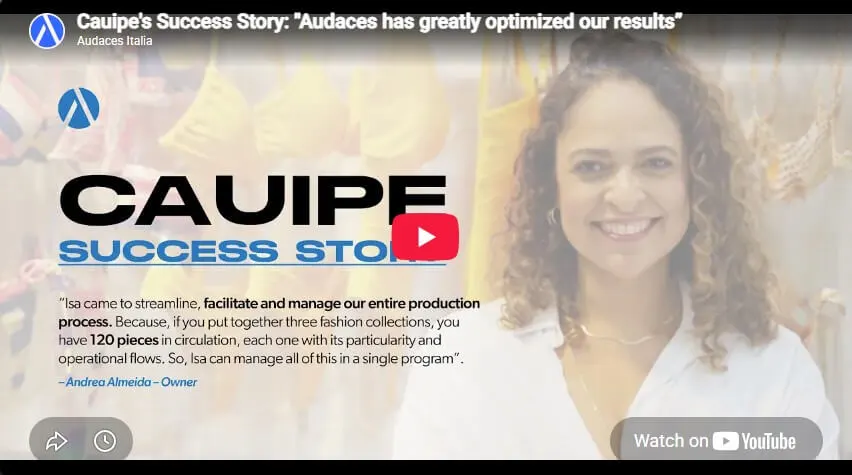
Cauípe, a swimwear brand that launches more than 40 styles each month, faced this challenge as its operation grew.
By moving its processes into a digital environment, the brand was able to track project timelines more effectively and keep the team informed about progress.
Can I design clothes using only clothing apps?
Yes. Today, much of the garment development process can take place digitally, from the initial idea to visualizing the design before physical production.
However, clothing apps do not make every decision on their own. Designers still play an essential role in shaping the creative direction and making the adjustments needed throughout development.
With digital tools, teams can develop collections without relying on paper at every stage and move into production with a more clearly defined product.
Which apps are used in apparel manufacturing?
In apparel manufacturing, clothing apps can address specific production needs, from preparing a pattern to monitoring cutting room operations.
| Need | Application | What it does |
|---|---|---|
| Digitize paper patterns | Audaces Digiflash | Converts physical patterns into digital files. |
| Develop patterns | Audaces Pattern | Creates and edits patterns digitally. |
| Optimize fabric utilization | Audaces Marker | Arranges pattern pieces to make better use of fabric. |
| Simulate garments | Audaces 3D | Visualizes garments before physical samples are made. |
| Manage product information | Audaces Idea and Isa | Centralizes information used during product development. |
| Monitor cutting operations | Audaces ICF | Tracks cutting room activities using real-time data. |
Read more: How digital technology is transforming fashion production
Bring clothing apps into your production workflow with Audaces360
When different tools operate in isolation, important information can get lost between stages.
That is why the Audaces360 ecosystem brings together solutions for different stages of a fashion business.
The platform connects tools for creating, managing, developing, producing, and selling clothing, bringing together workflows that may previously have relied on separate systems.
From product creation to sales, each solution serves a specific purpose as part of a connected workflow.
The goal is to make day-to-day operations easier, support better decisions, and ensure information reaches the people who need it.
Where could your business begin? Explore how Audaces digital solutions can help connect your processes.
Discover the Audaces360 ecosystem
Do you already use clothing apps in your apparel business? Share your experience in the comments.
FAQ
Clothing apps are digital tools that support garment design, development, management, production, and sales.
Several apps now include AI features. LooksMaker is designed specifically for fashion, helping teams generate garment concepts, flat sketches, and preliminary technical information rather than just images.
Not necessarily. However, these tools can make workflows more efficient, and digital skills may be required for certain jobs in the fashion industry.